
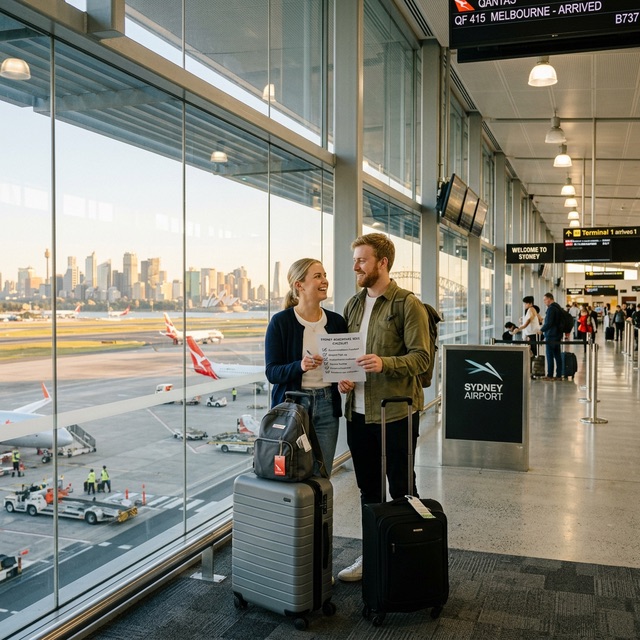
You've landed. The visa is stamped, the flight was long, and everything outside the terminal looks impossibly bright. Now what? The first seven days in Australia are when small actions - opening a bank account, grabbing a transport card, booking a GP - save you weeks of stress later. This checklist walks you through every essential task, day by day, with links to our detailed guides so you never have to guess.
Bookmark this page. It is designed as a master hub - each item links to a full guide with step-by-step instructions, costs, and tips.
Day 1: Arrive & Get Connected
Your plane-day priorities are simple: get a working phone, get to your accommodation, and get some rest.
| Task | Why It Matters | Time Needed |
|---|---|---|
| Buy a SIM card at the airport | You need data for maps, banking apps, and ride-sharing immediately | 15 min |
| Activate your bank account (if you pre-opened one) | Transfer funds and start using tap-to-pay from day one | 10 min via app |
| Get to your accommodation | Airport shuttle, taxi, or public transport - know your options before landing | Varies |
If you haven't opened an Australian bank account yet, many major banks (CommBank, NAB, ANZ, Westpac) let you open an account online before you arrive. You will need to verify your identity in-branch within 6 weeks of arrival.
Day 2: Banking & Phone Number
With jet lag fading (slightly), today is about getting your money sorted and having a local number people can call.
- Visit your bank branch - bring your passport, visa grant letter, and proof of address (even temporary accommodation counts). Read our full banking guide for migrants for tips on choosing between the Big 4 banks.
- Set up mobile banking - most everyday transactions in Australia are contactless tap-and-go.
- Buy a proper SIM plan if you grabbed a starter SIM yesterday - compare Telstra, Optus, and Vodafone prepaid plans.
Your overseas credit history does not transfer to Australia. Building Australian credit starts from day one, so getting a bank account early matters.
Day 3: Medicare, TFN & Government Essentials
This is your big admin day. These tasks can all be started online but some require an in-person visit.
Medicare Enrolment
If you hold an eligible visa (permanent residents, some temporary visa holders covered by RHCA agreements), you can apply for Medicare at a Services Australia office or online via myGov.
Bring: Passport, visa grant letter, proof of Australian address, and your travel documents.
Tax File Number (TFN)
You will need a TFN before you can start working legally. Apply online through the Australian Taxation Office (ATO) website - it takes about 5 minutes to submit and arrives by post within 28 days.
Without a TFN, your employer must withhold tax at the highest marginal rate plus Medicare levy - a combined 47%. Apply on Day 3, not Day 30.
myGov Account
Set up a myGov account and link Medicare, the ATO, and Centrelink (if applicable). This one account manages most government services. Check our guide on Centrelink & government benefits for eligibility details by visa type.
Day 4: Transport & Getting Around
Australia's cities are spread out - you'll need a transport strategy from day one.
- Get a transport card - Myki (Victoria), Opal (NSW), go card (Queensland), or MetroCard (SA). Our complete public transport guide covers every state, fare caps, and concession eligibility.
- Download ride-share apps - Uber and DiDi are widely available.
- Planning to drive? Read our state-by-state driver's licence guide to understand how long your overseas licence is valid and when you must convert.
If you're thinking about buying a car, it's worth waiting until you've settled your licence situation - but start researching now so you know what to budget.
Day 5: Housing & Rental Applications
If you're in temporary accommodation (Airbnb, hostel, or staying with friends), Day 5 is when you start the rental hunt in earnest.
Our complete renting guide for newcomers covers:
- How the Australian rental market works (inspections, applications, bonds)
- What documents you need (100 points of ID, proof of income, references)
- Typical rental costs by city - see our cost of living guide for suburb-by-suburb breakdowns
| City | Median Weekly Rent (2-bed unit) | Bond (4 weeks) |
|---|---|---|
| Sydney | $700-$800 | $2,800-$3,200 |
| Melbourne | $530-$600 | $2,120-$2,400 |
| Brisbane | $580-$670 | $2,320-$2,680 |
Rental scams are common on Facebook Marketplace and Gumtree. Never pay money before inspecting a property in person. Legitimate landlords use platforms like Domain or realestate.com.au.
Day 6: Healthcare, Childcare & Family Setup
If you're settling with family, today is about making sure everyone is looked after.
Find a GP (General Practitioner)
Australia uses a GP-first healthcare system - you cannot walk into a specialist without a referral. Read our guide on how the Australian GP system works to understand bulk billing, out-of-pocket costs, and how to find a doctor near you.
Need dental care? Our dental care costs guide explains what Medicare does (and doesn't) cover.
Childcare & Schools
- Childcare: Research centres early - waitlists in metro areas can be months long. Our childcare costs and subsidies guide covers CCS eligibility and how to enrol. Estimate your family's out-of-pocket costs with our Child Care Subsidy Calculator.
- Schools: If you have school-age children, see our public vs private schools guide for fees, enrolment timelines, and catchment zones.
Expecting a Baby?
If you're pregnant or planning, our guide on having a baby in Australia covers the private vs public hospital decision, costs, and midwifery options.
Day 7: Workplace Rights, Safety & Settling In
Your first week is almost done. Today, wrap up loose ends and prepare for life beyond the checklist.
Know Your Workplace Rights
Before starting a new job, read our guide to Australian workplace rights so you understand award rates, leave entitlements, and what your employer must provide. If you have visa conditions restricting your work hours, check them now.
Understand Your Surroundings
Australia is incredible but different. A few important reads:
- Wildlife: What to actually worry about (spoiler: less than you'd think, but some basics matter)
- Water safety: Beach rips, pool rules & hazards - essential reading, especially if you have children
- Bin system: How Australian recycling works - yes, there's a system, and your neighbours will notice
Plan Ahead
| Next Step | Guide |
|---|---|
| Learning to drive / licence conversion | Driver's licence guide |
| Buying your first home | First home buyer guide - estimate repayments with our Home Loan Calculator |
| Understanding government benefits | Centrelink & benefits guide |
| Bringing pets to Australia | Moving pets guide |
How First Migration Can Help
Settling into a new country is more than a checklist - it's a fresh start. If you have questions about your visa conditions, your pathway to permanent residency, or how to bring family members to join you, our registered migration agents are here to help.
Ready to take the next step? We invite you to submit a free visa assessment so we can understand your situation and provide tailored advice. You can also explore our full library of free migration tools to plan your journey.
RMA R. Weng
MARA 1569835Registered Migration Agent | Master of Laws (ANU) | Bachelor of Laws (Deakin)
Certified by the Migration Agents Registration Authority (MARA). Specializing in skilled migration, employer-sponsored visas, and partner visas. Admitted to practice law in Victoria.
Related Articles

CCS 3-Day Guarantee + 1 July 2026 Reset: What PR-Pathway Families Actually Get
HECS-HELP 2.8% Indexation on 1 June 2026: Why PR Doesn't Unlock the Loan

Paid Parental Leave 26 Weeks + 12% Super: 1 July 2026 Visa Guide
Disclaimer: This information is general in nature and does not constitute formal migration advice. Immigration laws and policies change frequently. Always consult a MARA-registered migration agent for advice specific to your circumstances. First Migration Service Centre (MARA 1569835) provides this content for informational purposes only.
MARA Registered Agent
Registration No. 1569835
Certified by the Migration Agents Registration Authority. Your trusted partner for Australian visa applications.
CCS 3-Day Guarantee + 1 July 2026 Reset: What PR-Pathway Families Actually Get
HECS-HELP 2.8% Indexation on 1 June 2026: Why PR Doesn't Unlock the Loan
Paid Parental Leave 26 Weeks + 12% Super: 1 July 2026 Visa Guide

Onshore vs Offshore Partner Visa in 2026-27: Why the 820 Queue Now Moves Faster Than 309

Home Affairs Processing Times May 2026: 186 Now 20 Months at 90%
Office Hours
Mon-Fri: 9AM-5PM Sat: 10AM-2PM