
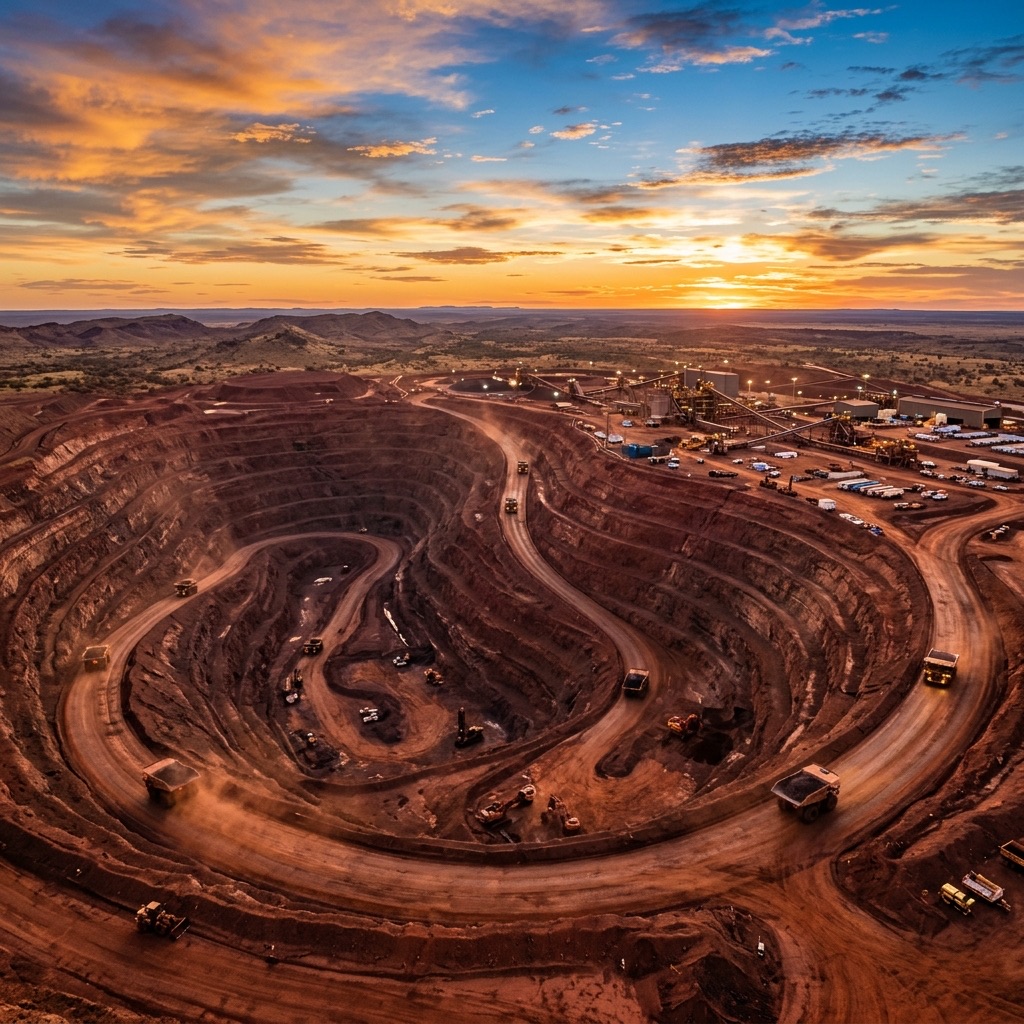
Australia is in the midst of a sustained resources and critical minerals boom, and the demand for qualified Mining Engineers (ANZSCO 233611) has never been higher. With iron ore shipments from the Pilbara underpinning Western Australia's economy, lithium and rare earth projects expanding across Queensland and the Northern Territory, and an ageing engineering workforce approaching retirement, the shortage of mining engineers has reached acute levels.
What makes this occupation uniquely attractive for migration in 2026 is the salary factor. FIFO (Fly-In-Fly-Out) mining engineers in WA and QLD routinely earn between $150,000 and $250,000+ AUD - well above the $141,210 Specialist Skills Income Threshold (SSIT) required for the fastest employer-sponsored visa processing in Australia. Combined with the fact that ANZSCO 233611 sits on the Medium and Long-term Strategic Skills List (MLTSSL), this is one of the most lucrative and well-supported migration pathways available. If you are a mining engineer from South Africa, India, the United Kingdom, Chile, the Philippines, or Indonesia, this guide is your complete roadmap.
The Role: ANZSCO 233611 - Mining Engineer (Excluding Petroleum)
To migrate under this code, your professional experience must relate to the planning, design, and safe extraction of minerals, coal, or metals from the earth. ANZSCO 233611 specifically covers mining engineers who work in the extraction of solid minerals - if you specialise in petroleum or natural gas extraction, your ANZSCO code is 233612 (Petroleum Engineer), which has different list eligibility and assessing authority requirements.
Typical duties assessed by Engineers Australia include:
- Conducting preliminary surveys and feasibility studies of mineral deposits to assess economic viability
- Determining the most efficient extraction methods - open-pit (open-cut) or underground mining
- Designing mine shafts, tunnels, haul roads, ventilation systems, and dewatering infrastructure
- Overseeing drilling, blasting, excavation, and materials handling operations
- Managing geotechnical hazards including ground control, slope stability, and subsidence risk
- Ensuring strict adherence to environmental rehabilitation, safety regulations, and mine closure planning
- Coordinating mineral processing and ore beneficiation workflows
Use our ANZSCO Search tool to confirm your exact classification before beginning the assessment process. Mining Engineer (233611) is a separate code from Petroleum Engineer (233612), Materials Engineer (233112), and Geotechnical Engineer (233212) - each has different list eligibility and assessing authority requirements.
Skills Assessment: Engineers Australia CDR for Mining Engineers
For most visa pathways - including 189, 190, 491, 186 Direct Entry, and SID Core Skills - you will need a positive skills assessment from Engineers Australia (EA), the designated assessing authority for ANZSCO 233611.
Assessment Pathways
| Pathway | Who It's For | Processing Time |
|---|---|---|
| Washington Accord accredited degree | Graduates of accredited universities (Australia, UK, Canada, South Africa, NZ, Ireland, Singapore, Hong Kong) | 4-8 weeks |
| Competency Demonstration Report (CDR) | Engineers with non-accredited qualifications (India, Chile, Philippines, Indonesia, most of South America and Africa) | 8-12 weeks |
| Fast-track assessment | Any applicant - additional fee for priority processing | ~20 business days |
If your mining engineering degree is accredited under the Washington Accord, the process is straightforward: submit your qualification documents and Engineers Australia will confirm equivalency. For everyone else, the CDR is the critical hurdle. For a detailed walkthrough of the CDR process, including how to avoid the July 2026 fee increases and AI-detection pitfalls, read our Engineers Australia CDR guide.
What the CDR Requires
The Competency Demonstration Report is Engineers Australia's way of assessing whether your knowledge and experience are equivalent to an Australian-accredited engineering degree. Your CDR must contain:
- Three Career Episodes (1,000-2,500 words each) - personal narratives demonstrating your engineering competency through specific mining projects
- Summary Statement - a cross-reference matrix mapping your career episodes against EA's 16 competency elements
- Continuing Professional Development (CPD) list - training, certifications, and conferences since graduation
- Academic transcripts and degree certificates - certified copies
- Passport copy and employment reference letters - on company letterhead
The Mining Engineer CDR Gap: Why Generic Applications Fail
Many mining engineers fail their CDR by focusing too heavily on academic theory or writing generic engineering narratives that could apply to any discipline. Engineers Australia assessors for ANZSCO 233611 specifically look for mining-specific competencies - and your career episodes must demonstrate them clearly.
Critical CDR Writing Tips for Mining Engineers:
Career Episode Focus #1 - Feasibility and Safety: EA assessors want to see how you handled risk management, geotechnical hazards, ventilation design, or emergency response protocols in real mining environments. A career episode describing how you managed ground instability in an underground operation is far stronger than one discussing theoretical mine design.
Career Episode Focus #2 - Software Proficiency: Mentioning your use of industry-standard mining software - Deswik, Vulcan (Maptek), Surpac (Geovia), MineSched, or Whittle - in your career episodes demonstrates highly relevant, practical competency that assessors recognise immediately.
Career Episode Focus #3 - Environmental and Operational Compliance: Emphasise your involvement in environmental impact assessments, mine rehabilitation planning, tailings dam management, or regulatory compliance. This demonstrates the professional responsibility dimension that EA requires.
Critical Rule: All content must be original and written in the first person ("I designed…" not "We designed…"). Engineers Australia uses plagiarism detection tools - do not copy from CDR writing services or templates.
English Language Requirements
Engineers Australia requires a minimum of Competent English for the skills assessment itself:
| Test | Minimum Score |
|---|---|
| IELTS Academic | 6.0 in each band |
| PTE Academic | 50 in each component |
| TOEFL iBT | L12, R13, W21, S18 |
| OET | B in each component |
Higher English scores earn additional points on the GSM points test - Proficient English (IELTS 7.0 each) earns 10 points, and Superior English (IELTS 8.0 each) earns 20 points. For mining engineers from non-English-speaking backgrounds (India, Chile, Indonesia), investing in English preparation can be the difference between a 65-point minimum and a competitive 80+ score.
Best Visa Pathways for Mining Engineers in 2026
Because ANZSCO 233611 is on the MLTSSL, mining engineers have access to the full suite of skilled visa pathways - more options than most occupations on the shorter STSOL or ROL lists.
Visa Pathway Comparison
| Visa | Type | Key Feature | Salary Requirement | PR Outcome |
|---|---|---|---|---|
| 189 Skilled Independent | Points-tested | No sponsor needed | N/A | Immediate PR |
| 190 State Nominated | Points-tested | +5 nomination points | N/A | Immediate PR |
| 491 Skilled Work Regional | Points-tested | +15 points; 3 years regional | N/A | PR via 191 |
| SID Core Skills | Employer-sponsored | 1-year experience minimum | ≥$76,515 (CSIT) | PR via 186 TRT (2 years) |
| SID Specialist Skills | Employer-sponsored | No skills assessment needed | ≥$141,210 (SSIT) | PR via 186 TRT (2 years) |
| 186 Direct Entry | Employer-sponsored | Immediate PR; 3-year experience | ≥$76,515 (CSIT) | Immediate PR |
| DAMA | Employer-sponsored (regional) | Age/English concessions | Varies by agreement | PR pathway available |
Employer Sponsorship and the Specialist Skills Pathway
This is where mining engineers have a massive advantage. If you secure mining jobs with visa sponsorship, you are in a prime position for the Specialist Skills Pathway under the Skills in Demand visa framework.
Here's why: typical mining engineer salaries in WA and QLD - particularly FIFO roles - easily exceed the $141,210 SSIT. Under the Specialist Skills stream, your employer-sponsored visa application receives:
- Target processing time of 7 days - not months
- No skills assessment required - saving 8-12 weeks of CDR preparation
- No occupation list requirement - the salary threshold alone qualifies you
- Direct pathway to 186 PR after 2 years of continuous employment
For senior mining engineers, mine managers, and principal engineers earning $180,000-$250,000+, this is the fastest route to Australian permanent residency.
Even if your current salary offer is slightly below $141,210, factor in FIFO allowances, site allowances, overtime, and superannuation contributions. Many mining packages exceed the SSIT once total remuneration is calculated. Discuss the remuneration structure with your migration agent - the difference between Core Skills and Specialist Skills processing can be months vs days.
General Skilled Migration (189 / 190 / 491)
For mining engineers without an employer sponsor, the points-tested GSM pathway remains viable. Use our GSM Points Calculator to estimate your score.
Typical Points Breakdown for a Mining Engineer:
| Factor | Points | Notes |
|---|---|---|
| Age (25-32) | 30 | Maximum age points |
| English (Superior - IELTS 8.0 each) | 20 | Significant boost; Proficient (7.0) = 10 pts |
| Overseas experience (8+ years) | 15 | Mining engineers often have deep field experience |
| Qualification (Bachelor's degree) | 15 | Standard engineering degree |
| State nomination (190) | +5 | Or +15 for 491 |
| STEM specialist qualification | 10 | If you hold a Master's or PhD in mining engineering |
| Partner skills | 5-10 | If partner has skills assessment + Competent English |
| NAATI / Community language | 5 | If applicable |
189 visa reality check: In the 2025-26 program year, 189 invitations for engineering occupations have required scores of 80-90+ points. The 189 pathway is competitive, but mining engineers who maximise their English score and have 8+ years of experience can reach these thresholds.
190/491 reality check: State nomination is where mining engineers gain a strategic edge. WA and QLD actively prioritise mining professionals, and the additional 5 points (190) or 15 points (491) can make a marginal 65-point score competitive.
The Regional Advantage (491 Visa)
Here is a critical advantage that many mining engineers overlook: almost all mine sites in Australia are in designated regional areas. The Pilbara, Goldfields, Bowen Basin, Hunter Valley, Central Queensland coalfields, and virtually every active mining region qualifies as a regional postcode under the 491 visa.
This means:
- You naturally accumulate regional work experience by simply doing your job
- The transition from 491 to 191 permanent residency requires 3 years of living and working in a regional area - which you are already doing
- If you're on an employer-sponsored visa (482/SID) at a regional mine site, your pathway to 186 permanent residency is equally straightforward
For mining engineers, the "regional requirement" isn't a compromise - it's your working reality.
State Nomination: Where Mining Engineers Are Most Wanted
Western Australia - The Epicentre of Mining Demand
WA is responsible for approximately 50% of Australia's mineral production value. The state is the largest employer of mining engineers in the country, with BHP, Rio Tinto, Fortescue, Mineral Resources, and hundreds of contractors operating across the Pilbara, Goldfields-Esperance, and Mid West regions.
| Criterion | Detail |
|---|---|
| Nomination allocation | 3,400 places (2,000 × 190 + 1,400 × 491) for 2025-26 |
| WASMOL status | Mining Engineer listed - high demand |
| 190 requirements | WA employment contract (full-time, 6+ months); valid skills assessment |
| 491 requirements | Less restrictive - typically no employment contract required |
| Observed invitation points | 70-75 points in recent rounds |
| Priority sectors | Mining and resources given explicit priority in invitation rounds |
WA strategy: If you already have a job offer from a WA mining company, the employer sponsorship route (SID Specialist Skills) is typically faster than state nomination. If you don't have a job offer, the 491 visa with WA nomination provides the easiest entry point - lower points required and natural regional qualification.
Queensland - Bowen Basin and Beyond
Queensland's coal, copper, and critical minerals operations in the Bowen Basin, Galilee Basin, and North West Minerals Province create sustained demand for mining engineers.
| Criterion | Detail |
|---|---|
| Occupation list | Mining Engineer on both Onshore and Offshore Skilled Occupation Lists |
| 190 onshore | Must live/work in QLD for 9 consecutive months before applying |
| 491 onshore | Must live/work in regional QLD for 6 consecutive months |
| Offshore applicants | 1 year of relevant skilled employment; must be currently employed |
| Commitment | 190: 2 years in QLD; 491: 3 years in regional QLD |
QLD strategy: For offshore applicants, Queensland's requirement of 1 year of current skilled employment is straightforward for experienced mining engineers. The 491 regional pathway through the Bowen Basin or Mount Isa region is particularly well-suited - you'll be working in regional QLD by default.
South Australia - Copper and Uranium Expansion
SA's expanding Olympic Dam copper-uranium operation (BHP), Prominent Hill (OZ Minerals/BHP), and Carrapateena mine create growing demand for mining engineers. The SA government has been actively recruiting resources sector professionals.
| Criterion | Detail |
|---|---|
| Occupation list | Mining Engineer on SA Skilled Occupation List |
| 190 requirements | Must be working in SA in a skilled occupation |
| 491 requirements | Available for both onshore and offshore applicants |
| Key advantage | Less competitive than WA - lower points thresholds observed |
State nomination requirements and occupation lists change frequently. Always confirm current list availability and specific criteria before submitting an EOI or Registration of Interest. Contact a registered migration agent for up-to-date advice on which state offers the best pathway for your specific circumstances.
DAMA: Regional Concessions for Experienced Mining Engineers
If you're over 45 or have English scores below standard thresholds, Designated Area Migration Agreements (DAMAs) can provide a lifeline. DAMAs are employer-sponsored agreements that offer concessions on age and English requirements - making them particularly attractive for highly experienced senior mining engineers who fall outside standard visa criteria. For a comprehensive overview of all available DAMAs and how they work, see our DAMA Visas Explained guide.
| DAMA | Region | Key Concession |
|---|---|---|
| WA Goldfields DAMA | Kalgoorlie-Boulder, Esperance | Mining Engineer explicitly listed; age concession to 55; English concession |
| WA Pilbara DAMA | Port Hedland, Karratha, Newman | Covers mining occupations; regional area benefits |
| WA Statewide DAMA | All WA outside Perth | Broad occupation coverage for regional employers |
| NT DAMA III | All of Northern Territory | 325 occupations; active until June 2030; age/English concessions |
DAMAs are employer-sponsored - you cannot apply independently. Your employer must be endorsed by the relevant Designated Area Representative (DAR). However, if you are a senior mining engineer aged 46-50 with decades of experience, a DAMA pathway through the WA Goldfields or NT can bypass age barriers that would disqualify you from standard skilled visas.
Registration: Do You Need It?
Unlike healthcare professions (doctors, nurses, pharmacists), there is no mandatory national registration required to work as a Mining Engineer in Australia. However, state-level registration requirements are important to understand:
| State | Registration | Requirement |
|---|---|---|
| Queensland | RPEQ (Registered Professional Engineer of Queensland) | Legally required for any engineer providing professional engineering services in or for QLD under the Professional Engineers Act 2002 |
| Western Australia | Registration of Engineers | New registration requirements introduced; recommended to have EA assessment ready |
| Other states | Voluntary | Professional membership with Engineers Australia (MIEAust, CPEng) is strongly recommended but not legally required |
For Queensland-bound mining engineers: RPEQ registration is not optional - it is a legal requirement under the Professional Engineers Act 2002. You will need your Engineers Australia assessment, 4-5 years of post-graduation experience, and an assessment from a BPEQ-approved entity. Registration fees are modest (approximately $200 total for application and practising fees), but the process takes time. Start early.
Visa Application Fees
| Visa | Primary Applicant | Partner | Child (under 18) |
|---|---|---|---|
| 189 | $4,910 | $2,455 | $1,230 |
| 190 | $4,910 | $2,455 | $1,230 |
| 491 | $4,910 | $2,455 | $1,230 |
| 482/SID | $1,730 | - | - |
| 186 | $4,770 | - | - |
Fees shown are current as of July 2025 and are subject to annual indexation (typically 1 July each year). The next fee adjustment is expected on 1 July 2026. Verify the latest fees on the Department of Home Affairs fees page.
Typical Timeline: From Offshore to Permanent Residency
Employer-Sponsored Route (Specialist Skills - Fastest)
| Step | Timeframe | Notes |
|---|---|---|
| 1. Secure job offer with salary ≥$141,210 | Variable | FIFO roles typically qualify |
| 2. Employer becomes approved sponsor | 1-2 months | If not already approved |
| 3. Employer lodges nomination | 1-2 weeks | Specialist Skills processing |
| 4. Lodge visa application (SID) | Target 7 days processing | Health exams and police checks required |
| 5. Arrive and commence work | Immediately after grant | |
| 6. Lodge 186 TRT after 2 years | 6-12 months processing | Permanent residency |
Points-Tested Route (189/190/491)
| Step | Timeframe | Notes |
|---|---|---|
| 1. English test (IELTS/PTE) | 2-4 weeks | Results valid 3 years for skills assessment |
| 2. Engineers Australia assessment | 8-12 weeks | Allow extra time for CDR pathway |
| 3. Submit EOI in SkillSelect | 1 day | Select 189 + preferred states |
| 4. State nomination (if 190/491) | 4-12 weeks | Varies by state |
| 5. Receive invitation | Variable | Depends on points score and round frequency |
| 6. Lodge visa application | Within 60 days of invitation | Health exams, police checks |
| 7. Visa grant | 6-12 months | Processing times vary by subclass |
How First Migration Can Help
Mining engineer migration combines technical skills assessment requirements with complex visa pathway selection, state nomination strategy, and salary-threshold optimisation. The difference between a Specialist Skills visa processed in 7 days and a Core Skills application waiting months can simply come down to how your remuneration package is structured. Choosing between WA's WASMOL nomination and QLD's onshore requirement can save years of waiting - or open a pathway that wouldn't otherwise exist.
At First Migration Service Centre, our registered migration agents specialise in skilled visa pathways and have specific experience with mining sector clients from South Africa, India, the UK, and South America. We can help you:
- Select the optimal visa pathway - comparing employer sponsorship, state nomination, and independent pathways based on your salary, points score, and family situation
- Navigate the Engineers Australia CDR - with mining-specific career episode guidance that avoids the common rejection triggers
- Target the right state nomination - WA, QLD, SA, or NT based on current list availability and your employment situation
- Optimise your remuneration for Specialist Skills - ensuring your salary package is structured to meet the $141,210 SSIT threshold
- Assess DAMA eligibility - for experienced senior engineers over 45 who face age barriers on standard pathways
- Coordinate RPEQ registration - for engineers heading to Queensland mining operations
Ready to take the next step? We invite you to submit a free visa assessment so we can understand your situation and provide tailored advice for your mining engineer migration pathway.
RMA R. Weng
MARA 1569835Registered Migration Agent | Master of Laws (ANU) | Bachelor of Laws (Deakin)
Certified by the Migration Agents Registration Authority (MARA). Specializing in skilled migration, employer-sponsored visas, and partner visas. Admitted to practice law in Victoria.
Related Articles

Essential Skills Stream: Australia's $51K PR Pathway for Aged Care Workers (2026)

Engineers Australia Skills Assessment 2026: Escaping the AI-Rejection Trap & Avoiding July Fee Hikes
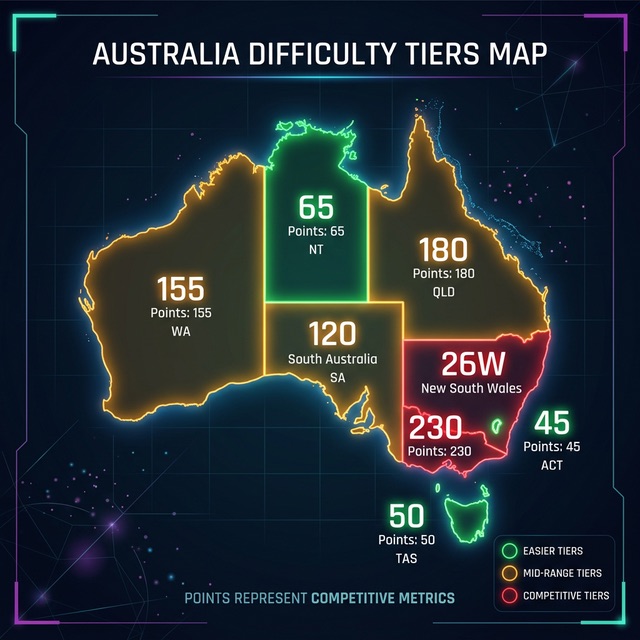
Your State Nomination Points Strategy: Where to Apply Based on Your Score in 2026
Disclaimer: This information is general in nature and does not constitute formal migration advice. Immigration laws and policies change frequently. Always consult a MARA-registered migration agent for advice specific to your circumstances. First Migration Service Centre (MARA 1569835) provides this content for informational purposes only.
MARA Registered Agent
Registration No. 1569835
Certified by the Migration Agents Registration Authority. Your trusted partner for Australian visa applications.

South Australia DAMA Expires 30 September 2026: What the Deadline Means and Whether You Should Lodge Before It
What the 67-Day 189 Blackout Actually Means (And What It Does Not)
South Australia Skilled Migration Reopens 26 August 2026: What 190/491 Applicants Should Check Before Lodging

Onshore vs Offshore in 2026: How Location Sets Your Queue Position

Adding a Dependent Child Over 18 to Your Australian Visa (2026)
Office Hours
Mon-Fri: 9AM-5PM Sat: 10AM-2PM