
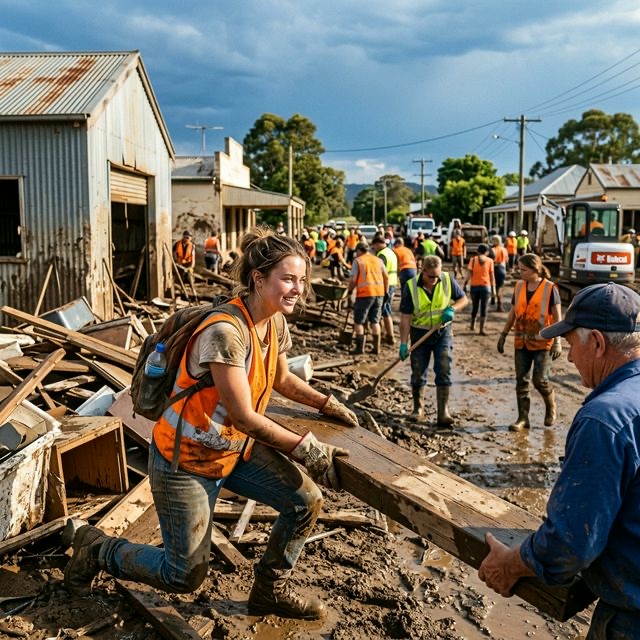
Australia's April 2025 postcode expansion is the biggest update to disaster recovery specified work in years. Dozens of new local government areas - including suburbs near Geelong, the Gold Coast, Wollongong, and Cairns - are now eligible. If you hold a Working Holiday visa (subclass 417 or 462), disaster recovery work could count towards your 88 days for a second or third year visa - and you don't need to go to the outback to do it.
This guide covers only disaster recovery as a specified work category. For the full breakdown of all seven specified work types (farming, mining, construction, and more), see our complete 88 Days Specified Work guide.
What Changed in April 2025?
The Migration Legislation Amendment (Specified Work and Areas for Subclass 417 and 462 Visas) Instrument 2025 came into effect on 5 April 2025. It dramatically expanded the list of local government areas (LGAs) recognised for disaster recovery specified work.
| Detail | Before April 2025 | After April 2025 |
|---|---|---|
| Eligible LGAs | Limited to directly declared disaster zones | Expanded to dozens of new areas across all states |
| Near-city postcodes | Very few | Wollongong, Geelong, Gold Coast, Cairns and more |
| Tasmania | Selected areas only | All of Tasmania now eligible |
| Application date | Pre-existing rules | Applies to applications lodged on or after 5 April 2025 |
If you lodged your visa application before 5 April 2025 and it hasn't been decided yet, the new expanded postcodes still apply to you. The instrument covers all undecided applications.
What Disaster Recovery Work Qualifies?
Not all disaster-related work counts. The work must relate to recovery from an officially declared natural disaster, and there are date thresholds that determine eligibility.
Date Thresholds
| Disaster Type | Work Must Be Done After | Notes |
|---|---|---|
| Bushfire recovery | 31 July 2019 | Covers 2019-20 Black Summer bushfires and subsequent events |
| Flood, cyclone & severe weather recovery | 31 December 2021 | Covers 2022 East Coast floods, Cyclone Jasper, and later events |
Paid OR Voluntary - Both Count
Disaster recovery is the only specified work category where unpaid, voluntary work counts towards your 88 days. Every other category (farming, mining, construction) requires paid employment.
This is a genuine game-changer. You can volunteer with a recognised disaster recovery organisation and have that work count, provided you get proper documentation.
Types of Eligible Work
| ✅ What Counts | ❌ What Doesn't Count |
|---|---|
| Clean-up: mopping, hosing, removing damaged furniture, transporting rubbish | Hospitality/cleaning in businesses not directly damaged by a disaster |
| Construction and repair: residential, commercial, roads, bridges, fencing, irrigation, drainage | General renovation work in areas not declared disaster-affected |
| Demolition of damaged structures | Administrative work for a business that happens to be in an affected area |
| Land restoration: clearing debris, earthmoving, trench digging | Retail or customer service roles, even in disaster zones |
| Wildlife and animal care: rescuing, transporting, caring for affected animals | Farm work on unaffected land within the same LGA |
| Farming recovery: restoring land, livestock, and crops | |
| Administrative and coordination support for recovery services | |
| Delivery of essential items to affected communities | |
| Community support through volunteer organisations |
The work itself must be disaster-related. Working as a barista in a cafe in Wollongong does NOT count, even though Wollongong is now an eligible area. The postcode tells the Department where you worked - but the actual tasks must be recovery work.
Which Areas Are Now Eligible? (April 2025 Expansion)
The expansion added major LGAs across every state and territory. Here's a snapshot of the key additions - many of which are near or within major population centres.
New South Wales
| New LGA | Notable Town/City | Why It Matters |
|---|---|---|
| Lithgow City Council | Lithgow | 2 hours from Sydney - Blue Mountains gateway |
| Wollongong City Council | Wollongong | 80 km south of Sydney - major city |
| Blue Mountains City Council | Katoomba, Leura | Popular backpacker destination |
| Byron Shire Council | Byron Bay | Already popular for WHV holders |
| Bathurst Regional Council | Bathurst | Regional uni city, inland NSW |
| Wagga Wagga City Council | Wagga Wagga | Largest inland city in NSW |
Victoria
| New LGA | Notable Town/City | Why It Matters |
|---|---|---|
| Greater Geelong City Council | Geelong | Victoria's 2nd largest city - 75 km from Melbourne |
| Ballarat City Council | Ballarat | Major regional centre |
| Casey City Council | Cranbourne, Berwick | Outer Melbourne suburbs |
| Frankston City Council | Frankston | Bayside Melbourne |
| Ararat Rural City Council | Ararat | Western Victoria |
| Horsham Rural City Council | Horsham | Wimmera region |
| Yarra Ranges Shire Council | Healesville, Warburton | Eastern ranges |
| Mildura Rural City Council | Mildura | Far northwest VIC |
| East Gippsland Shire Council | Bairnsdale, Lakes Entrance | Fire-affected region |
Queensland
| New LGA | Notable Town/City | Why It Matters |
|---|---|---|
| Townsville City Council | Townsville | North QLD capital |
| Bundaberg Regional Council | Bundaberg | Major agricultural hub |
| Ipswich City Council | Ipswich | 40 km west of Brisbane |
| Gold Coast City Council | Gold Coast | Australia's 6th largest city |
| Cairns Regional Council | Cairns | Tropical gateway - popular WHV hub |
Western Australia
| New LGA | Notable Town/City | Why It Matters |
|---|---|---|
| Greater Bunbury | Bunbury | 2 hours south of Perth |
| Carnarvon | Carnarvon | Gascoyne region - cyclone corridor |
| Kalgoorlie-Boulder | Kalgoorlie | Goldfields city |
| Karratha | Karratha | Pilbara resources hub |
| Wyndham-East Kimberley | Kununurra | Far north WA |
Tasmania
All of Tasmania is now eligible for disaster recovery specified work. Every postcode qualifies.
This is a major change. Previously, only selected Tasmanian areas were recognised. Now the entire state is open.
Northern Territory
| New LGA | Notable Town/City | Why It Matters |
|---|---|---|
| West Arnhem Regional Council | Jabiru, Maningrida | Top End, remote region |
This is not a complete list. The legislative instrument contains hundreds of eligible LGAs. The areas above are highlights most relevant to WHV holders. Check the full Department of Home Affairs list for your specific postcode.
Why This Expansion Matters for Backpackers
The most significant change is that many eligible areas are now near or within cities. You no longer need to travel to remote Australia to complete disaster recovery specified work.
| Eligible Area | Distance to Nearest Capital |
|---|---|
| Wollongong | 80 km from Sydney |
| Geelong | 75 km from Melbourne |
| Gold Coast | 80 km from Brisbane |
| Ipswich | 40 km from Brisbane |
| Frankston | 40 km from Melbourne CBD |
| Cairns | Regional hub (flights available) |
| All of Tasmania | Hobart is a capital city |
This makes disaster recovery work a realistic and accessible option - especially compared to travelling to remote farm locations. If you're deciding where to base yourself, check out our guide to the best cities for Working Holiday life in Australia.
How to Record It on ImmiAccount
When applying for your second or third Working Holiday visa through ImmiAccount, you need to select the correct Employment type:
| Work Type | ImmiAccount Selection |
|---|---|
| Paid disaster recovery work | "flood recovery - paid" |
| Voluntary disaster recovery work | "flood recovery - volunteer" |
The ImmiAccount drop-down uses "flood recovery" as the category label even for bushfire, cyclone, or other disaster types. Select this option regardless of the specific disaster type.
Evidence You'll Need
The Department uses ATO data-matching and document verification to assess disaster recovery claims. Depending on whether your work was paid or voluntary, you'll need different evidence. Make sure you also understand your visa conditions - particularly condition 8547 (employer limitation) and any work restrictions attached to your WHV.
Paid Work
| Document | Purpose |
|---|---|
| Form 1263 | Signed by employer - confirms dates, tasks, location, and ABN |
| Payslips | Proof of payment, hours, and employer details |
| Bank statements | Wage deposit records matching payslips |
| Tax records | ATO income statement confirming declared income |
Voluntary Work
| Document | Purpose |
|---|---|
| Form 1263 | Signed by the volunteer coordinator or organisation coordinator |
| Letter from organisation | Confirming dates, tasks performed, and location |
| Photos (optional but helpful) | Evidence of your participation |
For volunteer work, obtain the Form 1263 signature from your volunteer coordinator - not a general supervisor. The form must confirm the work was related to disaster recovery in a declared area.
Common Mistakes to Avoid
| ❌ Mistake | Why It's a Problem |
|---|---|
| Assuming any work in an eligible postcode counts | The tasks must be disaster recovery - not just the location |
| Not checking whether the area is on the updated list | Old postcode lists don't apply - verify against the April 2025 instrument |
| Cash-in-hand work with no records | Unverifiable - application refused |
| Volunteering without a signed Form 1263 | No official evidence = no credit |
| Bushfire recovery work done before 31 July 2019 | Falls outside the eligible period |
| Flood recovery work done before 31 December 2021 | Falls outside the eligible period |
| Selecting wrong Employment type in ImmiAccount | Must select "flood recovery - paid" or "flood recovery - volunteer" |
How to Find Disaster Recovery Work
| Source | What It Offers |
|---|---|
| Volunteering Australia (volunteeringaustralia.org) | National volunteer matching for disaster recovery |
| BlazeAid (blazeaid.com.au) | Fence rebuilding and land restoration after fires and floods |
| State Emergency Services (SES) | Flood and storm clean-up volunteer opportunities |
| Habitat for Humanity Australia | Rebuilding homes in disaster-affected communities |
| Workforce Australia | Paid disaster recovery job listings |
| Local council websites | Many affected LGAs post recovery work opportunities directly |
How First Migration Can Help
Not sure if your disaster recovery work qualifies? The rules around eligible postcodes, date thresholds, and task types are complex. At First Migration Service Centre, our registered migration agents specialise in Working Holiday visa extensions and can:
- Verify your work location against the current legislative instrument
- Review your payslips and Form 1263 to check they meet Department standards
- Confirm your tasks qualify as eligible disaster recovery work
- Prepare your visa application with all evidence attached for faster processing
Send us your payslips and we'll verify for free. Ready to check your eligibility? Submit a free visa assessment and let us review your disaster recovery work before you apply.
RMA R. Weng
MARA 1569835Registered Migration Agent | Master of Laws (ANU) | Bachelor of Laws (Deakin)
Certified by the Migration Agents Registration Authority (MARA). Specializing in skilled migration, employer-sponsored visas, and partner visas. Admitted to practice law in Victoria.
Related Articles

CCS 3-Day Guarantee + 1 July 2026 Reset: What PR-Pathway Families Actually Get
HECS-HELP 2.8% Indexation on 1 June 2026: Why PR Doesn't Unlock the Loan

Paid Parental Leave 26 Weeks + 12% Super: 1 July 2026 Visa Guide
Disclaimer: This information is general in nature and does not constitute formal migration advice. Immigration laws and policies change frequently. Always consult a MARA-registered migration agent for advice specific to your circumstances. First Migration Service Centre (MARA 1569835) provides this content for informational purposes only.
MARA Registered Agent
Registration No. 1569835
Certified by the Migration Agents Registration Authority. Your trusted partner for Australian visa applications.
CCS 3-Day Guarantee + 1 July 2026 Reset: What PR-Pathway Families Actually Get
HECS-HELP 2.8% Indexation on 1 June 2026: Why PR Doesn't Unlock the Loan
Paid Parental Leave 26 Weeks + 12% Super: 1 July 2026 Visa Guide

Onshore vs Offshore Partner Visa in 2026-27: Why the 820 Queue Now Moves Faster Than 309

Home Affairs Processing Times May 2026: 186 Now 20 Months at 90%
Office Hours
Mon-Fri: 9AM-5PM Sat: 10AM-2PM