
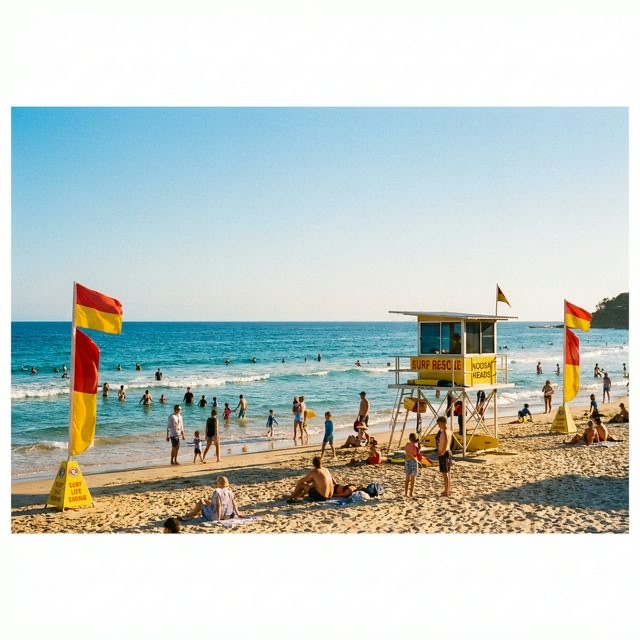
Australia's coastline is stunning - but it can be deadly if you don't know the rules. Every year, roughly one-third of all drowning victims in Australia were born overseas, according to Royal Life Saving Australia's 2025 National Drowning Report. Rip currents alone kill an average of 21 people per year - more than sharks, snakes, and crocodiles combined. Whether you're here on a skilled visa, a student visa, or a working holiday, this guide could save your life or the life of someone you love.
What Are Rip Currents - and Why Are They So Dangerous?
A rip current is a powerful, narrow channel of water that flows rapidly away from the shore. They are invisible to the untrained eye and are the number one coastal hazard in Australia.
| Hazard | Average Deaths Per Year (Australia) |
|---|---|
| Rip currents | ~21 |
| Shark attacks | ~1-3 |
| Snake bites | ~1-2 |
| Crocodile attacks | ~1-2 |
Rip currents kill more people than sharks, snakes, and crocodiles combined. If you feel yourself being pulled out to sea, do not fight it. Float, stay calm, raise your arm, and swim parallel to the shore until you are out of the current.
How to Spot a Rip
- A darker, calmer-looking patch of water between breaking waves
- Discoloured or sandy water flowing seaward
- Foam or debris moving steadily out to sea
- A gap in the line of breaking waves
What to Do If Caught in a Rip
- Don't panic - rips won't pull you under, only away from shore
- Float and conserve energy
- Raise your arm to signal for help
- Swim parallel to the beach until you escape the current
- Then swim back to shore at an angle
"Swim Between the Flags" - Australia's Golden Rule
If you take away one thing from this guide, let it be this: always swim between the red and yellow flags.
These flags mark the safest section of the beach, chosen daily by trained surf lifesavers who assess wave conditions, water depth, and underwater hazards. When you swim between the flags, you are under direct observation by lifeguards who can rescue you within minutes.
| Flag Colour | Meaning |
|---|---|
| 🔴🟡 Red & Yellow | Patrolled swimming zone - swim here |
| 🔴 Red | Beach closed - do not enter the water |
| 🟡 Yellow | Caution - potential hazards present |
| ⚫ Black & White Quartered | Surfcraft and board area - no swimming |
No flags = no lifeguards. The vast majority of coastal drowning deaths occur at unpatrolled locations or outside patrol hours. If there are no flags, do not swim - especially if you are unfamiliar with the beach.
Free resource: Download the BeachSafe app from Surf Life Saving Australia to check patrol times, conditions, and hazards at over 11,000 Australian beaches.
Pool Fencing Laws: Mandatory in Every State and Territory
If you buy or rent a property with a swimming pool or spa in Australia, you must comply with strict pool fencing laws. These laws exist because toddler drowning in backyard pools remains a leading cause of preventable child death. Every state and territory requires a compliant safety barrier - there are no exemptions. This is especially important for families who have recently migrated on a partner visa or employer-sponsored pathway and are purchasing their first Australian home.
National Standard (AS 1926.1)
All pool barriers must meet the Australian Standard AS 1926.1. Key requirements include:
| Requirement | Standard |
|---|---|
| Minimum fence height | 1.2 metres |
| Maximum gap from ground | 100 mm |
| Maximum gap between vertical bars | 100 mm |
| Gate operation | Self-closing, self-latching, opens away from pool |
| Latch height | At least 1.5 metres from ground or shielded |
| Non-climbable zone | 900 mm on the outside of the fence |
State-by-State Highlights
| State/Territory | Key Requirement | Registration/Inspection |
|---|---|---|
| NSW | Different standards based on pool construction date; boundary fences must be 1.8 m high | Mandatory registration; may need council certification |
| VIC | All pools and spas must be registered; boundary fence 1.8 m if forming part of barrier | Inspection required every 4 years |
| QLD | Must be on pool safety register; CPR sign mandatory; no direct building access to outdoor pool | Registration mandatory |
| WA | All pools/spas holding 300+ mm water need barrier | Regular statewide inspections |
| SA | Fence must be installed before pool is filled with water; CPR sign required | Barrier required for all pools |
| TAS | Pools holding 300+ mm require barrier; licensed builder must install | Must comply with NCC 2022 |
| ACT | All pools/spas deeper than 30 cm must comply by 1 May 2028 | Inspection every 5 years; certificate of compliance required |
| NT | Pools built after 1 Jan 2003 must meet Modified Australian Standard | Compliance certificate required |
Non-compliance carries heavy fines and can affect property sales. If you are buying a home with a pool, always request a current pool compliance certificate before settlement. Inflatable pools and portable spas holding more than 300 mm (30 cm) of water are also covered by these laws.
Marine Stingers: Box Jellyfish & Irukandji
If you plan to swim along Australia's northern coastline - from Bundaberg in Queensland across the Northern Territory to Broome in Western Australia - you need to know about stinger season.
Stinger Season
November to May (sometimes October to June in the Northern Territory) is stinger season. During these months, dangerous jellyfish - including the Box Jellyfish and the tiny but potentially lethal Irukandji - are present in coastal waters.
| Species | Size | Effect | Risk Area |
|---|---|---|---|
| Box Jellyfish | Up to 30 cm | Extreme pain, cardiac arrest in severe cases | Coastal waters, north of Bundaberg |
| Irukandji | 1-2 cm (nearly invisible) | Delayed severe pain, nausea, sweating, high blood pressure | Inshore and reef waters, tropical coast |
How to Stay Safe
- Wear a stinger suit - full-body lycra suits are effective protection and widely available
- Swim within stinger nets at patrolled beaches - these are deployed during stinger season
- Check local warning signs and follow lifeguard advice
- Enter the water slowly - this allows nearby jellyfish to move away
First Aid for Jellyfish Stings
- Exit the water immediately
- Pour vinegar over the affected area for at least 30 seconds (vinegar stations are available at many northern beaches)
- Do not rub the sting area - this activates unfired stinging cells
- Call 000 (Australia's emergency number) if symptoms worsen
- Monitor for Irukandji syndrome - severe pain, nausea, and chest tightness may develop 5-40 minutes after the initial sting
Crocodile Safety: "Be Crocwise"
Saltwater crocodiles are found across northern Australia - from Gladstone in Queensland through the Northern Territory to the Kimberley in Western Australia. They inhabit rivers, estuaries, swamps, and coastal waters, and can appear far from the coast in freshwater creeks and billabongs.
Both the Queensland and Northern Territory governments run "Be Crocwise" public safety campaigns. The essential rules:
| Rule | Detail |
|---|---|
| Never swim in croc habitat | Any waterway in the tropics may contain crocodiles |
| Stay 5+ metres from the water's edge | Crocs can launch themselves out of the water with incredible speed |
| Obey warning signs | They are there for a reason - fatalities have occurred where signs were ignored |
| Extra caution at dusk and dawn | Crocodiles are most active at these times |
| Don't clean fish at the water's edge | Scraps attract crocodiles |
| Camp 50+ metres from waterways | Pitch tents well above the high-water mark |
| Keep pets on a lead near waterways | Dogs are common crocodile targets |
Absence of a warning sign does not mean absence of crocodiles. In northern Australia, always assume that any body of water - fresh or salt - could contain a crocodile.
Quick Reference: Water Safety Checklist for Newcomers
| ✅ Action | Detail |
|---|---|
| Swim between the red & yellow flags | Patrolled zone = safest zone |
| Learn to spot rip currents | Dark, calm water flowing outward |
| Never swim alone | Always swim with others |
| Check pool fencing compliance | Mandatory in all states - fines apply |
| Wear a stinger suit (tropical north) | November to May = stinger season |
| Obey crocodile warning signs | Never swim in uncleared waterways in tropical regions |
| Download the BeachSafe app | Check patrol times and conditions |
| Learn CPR | Free courses available through Royal Life Saving Australia |
| Call 000 in emergencies | Australia's triple-zero emergency line |
How First Migration Can Help
Water safety isn't a visa issue - but settling safely into Australian life is part of what we do. At First Migration Service Centre, we help newcomers with every aspect of their migration journey, from visa applications to understanding everyday life in Australia.
If you need help with your visa, settlement planning, or understanding your rights in Australia, our registered migration agents are here to guide you.
Ready to take the next step? We invite you to submit a free visa assessment so we can understand your situation and provide tailored advice.
RMA R. Weng
MARA 1569835Registered Migration Agent | Master of Laws (ANU) | Bachelor of Laws (Deakin)
Certified by the Migration Agents Registration Authority (MARA). Specializing in skilled migration, employer-sponsored visas, and partner visas. Admitted to practice law in Victoria.
Related Articles
Disclaimer: This information is general in nature and does not constitute formal migration advice. Immigration laws and policies change frequently. Always consult a MARA-registered migration agent for advice specific to your circumstances. First Migration Service Centre (MARA 1569835) provides this content for informational purposes only.
MARA Registered Agent
Registration No. 1569835
Certified by the Migration Agents Registration Authority. Your trusted partner for Australian visa applications.

Points Test Reform Consultation Is Open: What It Means for You

Australia's Age Pension Explained: Rates, Tests & Residency (2026)

Australian Visa Fees Jump 25% on 1 July 2026: New Cost of Every Visa

Dietitians: Migration & Skills Assessment Guide to Australia 2026

Truck Drivers: The Real Migration Pathway to Australia 2026 (DAMA)
Office Hours
Mon-Fri: 9AM-5PM Sat: 10AM-2PM