
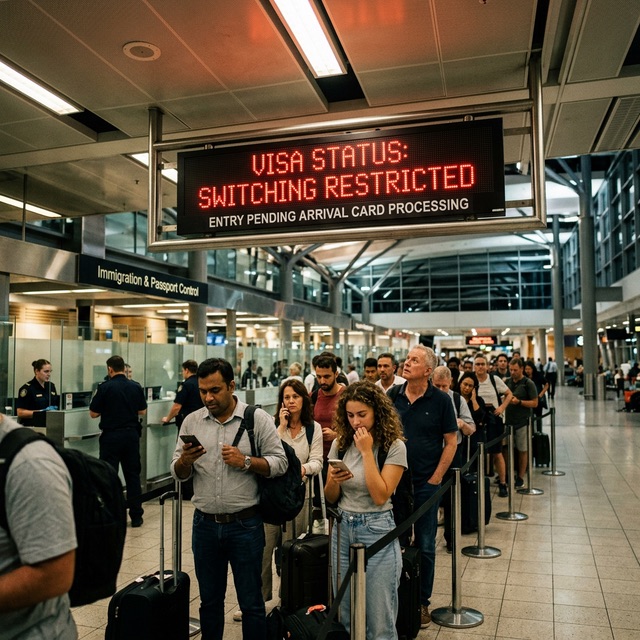
If you're in Australia on a temporary visa and planning to "hop" onto another one before your current visa expires - that strategy just got a lot harder. From 2 February 2026, the Australian Government has officially closed many of the pathways that allowed temporary visa holders to switch between visitor, student, and temporary work visas without leaving the country.
These changes are already in effect, and the consequences of getting caught out are severe: a 3-year re-entry ban for overstaying more than 28 days, and the risk of becoming an unlawful non-citizen overnight.
Here's what's changed, who's affected, and what you should do now.
What Changed on 2 February 2026?
The Government introduced a suite of regulatory changes targeting what it calls "visa hopping" - the practice of repeatedly switching between temporary visas to extend your stay in Australia indefinitely. The key restrictions include:
| Change | Details | Effective Date |
|---|---|---|
| Visitor → Student visa onshore ban | Subclass 600, 601, 602, and 651 holders can no longer apply for a Student Visa (Subclass 500) from inside Australia | 2 Feb 2026 |
| 485 → Student visa onshore ban | Temporary Graduate (485) holders can no longer switch to a Student Visa onshore | 2 Feb 2026 |
| Education agent commission ban | Providers banned from paying commissions for onshore student transfers between courses | 31 Mar 2026 |
| Stricter Genuine Student requirement | The old GTE test replaced with the more rigorous Genuine Student (GS) assessment | Already in effect |
| Tighter English thresholds | Student Visa: IELTS 6.0 (up from 5.5); Graduate Visa: IELTS 6.5 (up from 6.0) | Already in effect |
If your current visa expires and you have not lodged a valid application for another visa, you become an unlawful non-citizen. Overstaying by more than 28 days triggers an automatic 3-year re-entry ban, even if you leave voluntarily.
Who Is Affected?
These changes hit several groups of temporary visa holders particularly hard:
Visitor Visa (Subclass 600) Holders
If you entered Australia on a tourist visa with the intention of later applying for a student visa onshore, this pathway is now closed. You must leave Australia and apply for your Student Visa from offshore. If your visitor visa has condition 8503 (No Further Stay) attached, you were already unable to switch - but now the restriction applies to all visitor visa holders.
Temporary Graduate Visa (Subclass 485) Holders
Previously, some 485 holders whose post-study work rights were expiring would apply for a student visa to stay in Australia. This is no longer possible onshore. Additionally, the age limit for 485 visas has been reduced to 35 years, and the minimum English requirement has risen to IELTS 6.5 overall (with a minimum of 5.5 in each component).
Student Visa (Subclass 500) Holders
While current students can still extend or change their enrolment, the bar is higher. The Genuine Student (GS) requirement means the Department will scrutinise whether your course change makes logical sense with your background and career goals. "Course hopping" - enrolling in unrelated, cheaper courses just to maintain your visa - is now a red flag that can lead to refusal or cancellation.
Employer-Sponsored Visa (Subclass 482) Holders
If you were planning to switch from an employer-sponsored visa to a student visa onshore, this pathway is also significantly restricted. The Government is signalling that the employer sponsorship pathway should be treated as a genuine work pathway, not a stepping stone to other visa categories.
The Government estimates these changes will reduce temporary visa numbers by 85,000 within the next 12 months. Up to 180,000 temporary visa holders may need to leave Australia by July 2026.
Tighter English Requirements: The Numbers
| Visa Type | Old Minimum IELTS | New Minimum IELTS |
|---|---|---|
| Student Visa (500) - general | 5.5 | 6.0 |
| Student Visa (500) - ELICOS pathway | 4.5 | 5.0 |
| Student Visa (500) - foundation programme | 5.0 | 5.5 |
| Temporary Graduate (485) | 6.0 | 6.5 overall, 5.5 each component |
These higher thresholds apply to all new applications. If you are already in Australia with a valid visa, these changes do not affect your current visa - but they will apply if you try to lodge a new application. If you're a prospective student, use our Student Visa Funds Calculator to check the full financial requirements before applying.
Condition 8503: No Further Stay - Still a Major Barrier
Many temporary visas, especially visitor visas, come with condition 8503 (No Further Stay) attached. This condition prevents you from applying for most other visas while in Australia. For a detailed breakdown of how this condition works and when waivers are possible, see our complete guide to condition 8503. A waiver is only possible in compelling and compassionate circumstances that arose after your visa was granted, such as:
- A serious medical condition making you unfit to travel
- The death or serious illness of a close family member in Australia
- Natural disaster or civil unrest in your home country
Getting married to an Australian citizen or permanent resident, failing a course, or pregnancy (without medical complications preventing travel) are not considered sufficient grounds for a condition 8503 waiver.
What You Should Do Now
1. Check your visa conditions immediately Use the Department's free VEVO service or our Visa Condition Lookup tool to confirm exactly which conditions are attached to your current visa.
2. Understand your timeline Know exactly when your current visa expires. The consequences of overstaying are serious - read our guide on what happens if you overstay your visa in Australia. If you are on a bridging visa, understand that a Bridging Visa A does not allow you to travel - you would need a Bridging Visa B to leave and re-enter.
3. Plan your next visa pathway before your current visa expires If you were planning to switch visas onshore, you may need to rethink your strategy entirely. Our full visa switching guide explains which pathways remain available. Consider whether the skilled migration pathway or employer sponsorship better suits your situation.
4. Don't wait until the last minute Processing times are increasing across the board. Lodge your application before your current visa expires to ensure you receive a bridging visa (if eligible). Waiting too long risks becoming unlawful.
5. Get professional advice These changes interact with each other in complex ways. Your individual circumstances - including your visa history, occupation, and English level - determine which options remain open to you.
How First Migration Can Help
The visa hopping crackdown means the old "extend and switch" strategy no longer works for most temporary visa holders. But that doesn't mean you're out of options - it means you need a proper strategy.
At First Migration Service Centre, our registered migration agents can:
- Assess which visa pathways remain available to you right now
- Check whether your occupation qualifies for skilled migration or employer sponsorship
- Help you understand your visa conditions and deadlines
- Develop a compliant pathway plan that avoids the 3-year re-entry ban
Ready to take the next step? We invite you to submit a free visa assessment so we can understand your situation and provide tailored advice - before your options narrow further.
RMA R. Weng
MARA 1569835Registered Migration Agent | Master of Laws (ANU) | Bachelor of Laws (Deakin)
Certified by the Migration Agents Registration Authority (MARA). Specializing in skilled migration, employer-sponsored visas, and partner visas. Admitted to practice law in Victoria.
Related Articles

CCS 3-Day Guarantee + 1 July 2026 Reset: What PR-Pathway Families Actually Get
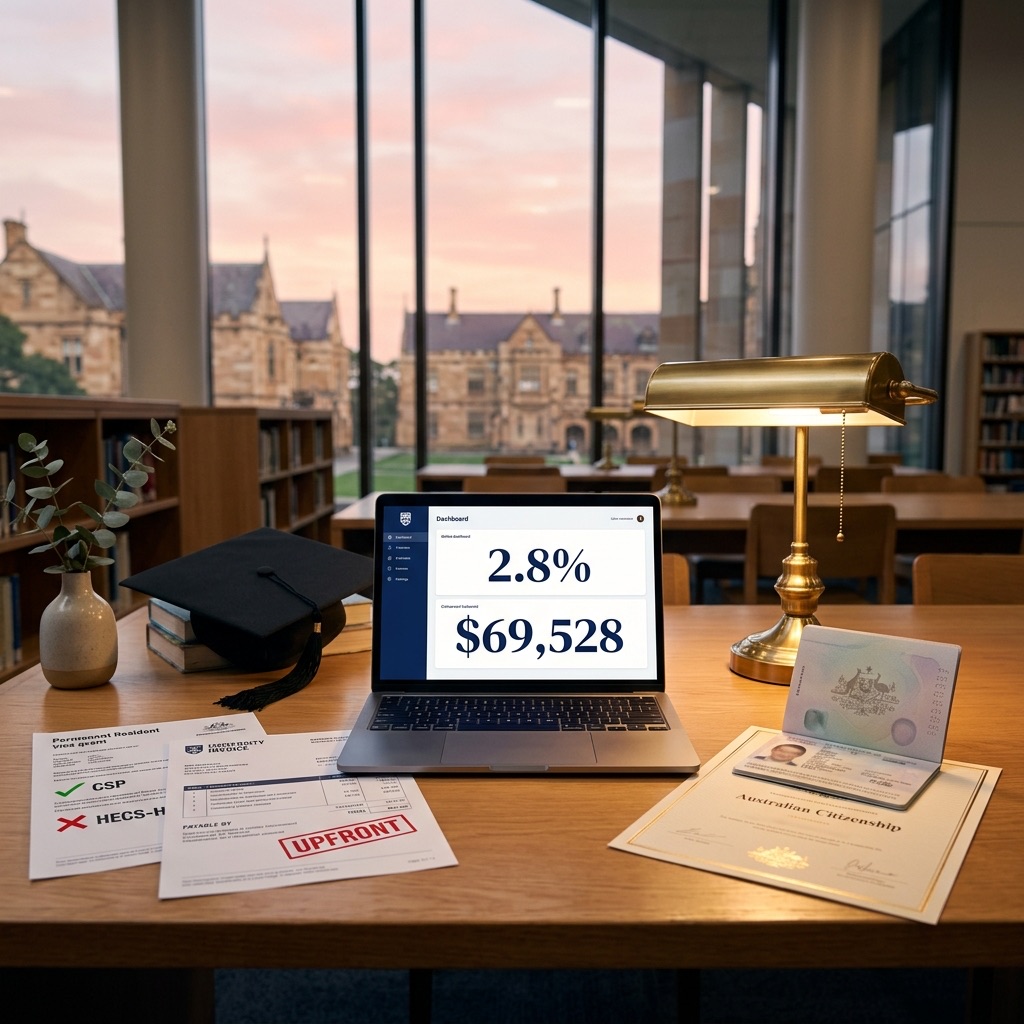
HECS-HELP 2.8% Indexation on 1 June 2026: Why PR Doesn't Unlock the Loan

Paid Parental Leave 26 Weeks + 12% Super: 1 July 2026 Visa Guide
Disclaimer: This information is general in nature and does not constitute formal migration advice. Immigration laws and policies change frequently. Always consult a MARA-registered migration agent for advice specific to your circumstances. First Migration Service Centre (MARA 1569835) provides this content for informational purposes only.
MARA Registered Agent
Registration No. 1569835
Certified by the Migration Agents Registration Authority. Your trusted partner for Australian visa applications.
CCS 3-Day Guarantee + 1 July 2026 Reset: What PR-Pathway Families Actually Get
HECS-HELP 2.8% Indexation on 1 June 2026: Why PR Doesn't Unlock the Loan
Paid Parental Leave 26 Weeks + 12% Super: 1 July 2026 Visa Guide

Onshore vs Offshore Partner Visa in 2026-27: Why the 820 Queue Now Moves Faster Than 309
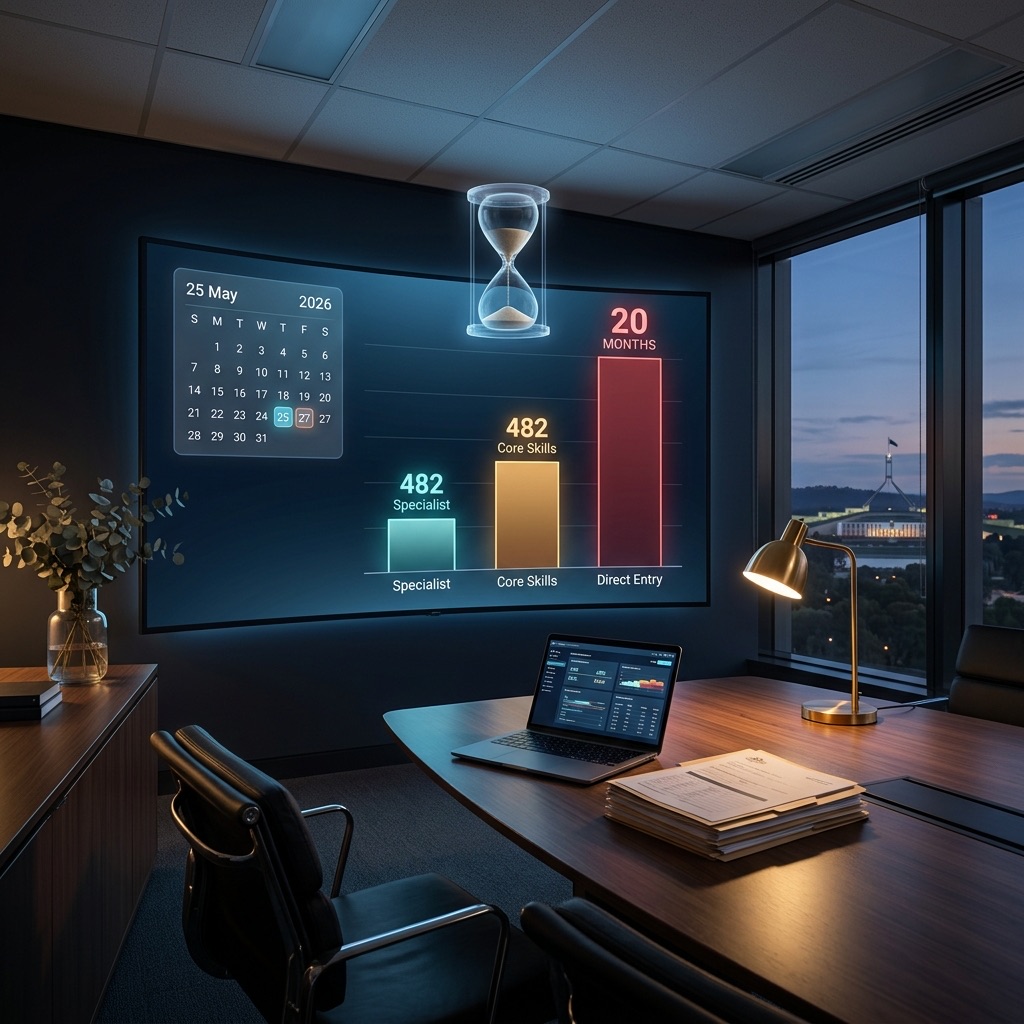
Home Affairs Processing Times May 2026: 186 Now 20 Months at 90%
Office Hours
Mon-Fri: 9AM-5PM Sat: 10AM-2PM