
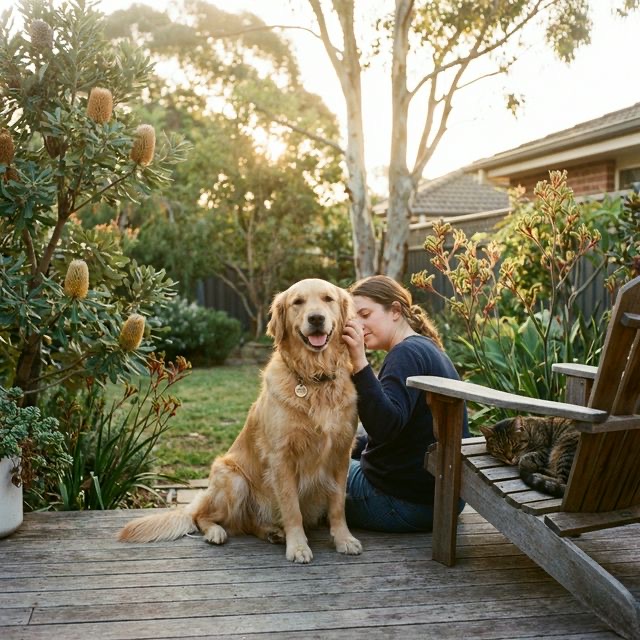
Australia is one of the most pet-loving nations on earth - approximately 73% of Australian households own a pet, with over 31 million companion animals across the country. But if you're new to Australia, there's more to pet ownership than cuddles and walks. Every state and territory has mandatory registration, microchipping, and desexing laws, and failing to comply can result in fines of up to $5,000. Whether you already have a furry companion or you're planning to adopt, this guide covers everything newcomers need to know about pet ownership rules in Australia.
Registration: It's the Law, Not Optional
Every dog and cat in Australia must be registered with your local council. This isn't a suggestion - it's a legal requirement enforced by state legislation, and fines for unregistered pets can be significant.
State-by-State Registration Overview
| State / Territory | Registration Type | Key Requirement | Fine for Non-Compliance |
|---|---|---|---|
| VIC | Annual, with local council | Dogs & cats over 3 months | $40-$120+/year (state levy $9 from July 2026; reduced for desexed pets) |
| NSW | Lifetime registration via NSW Pet Registry | Dogs & cats by 6 months or before sale | Fines up to $5,500 |
| QLD | Annual, with local council | Dogs by 3 months; cats vary by council | Varies by council |
| SA | Annual, via Dogs and Cats Online (DACO) | Dogs & cats over 3 months | Up to $5,000 (dangerous dogs) |
| WA | Annual, with local council (PetsWA centralised system launching) | Dogs over 3 months; cats over 6 months | Varies by council |
| TAS | Annual, with local council | Dogs over 6 months | Varies by council |
Registration fees are significantly reduced for desexed pets in most councils. For example, in many Victorian councils, a desexed dog costs around $40/year compared to $120+ for an entire (undesexed) dog. Always desex first, then register.
What You Need to Register
- Proof of microchipping (mandatory in all states)
- Proof of desexing (for discounted fees)
- Your address and contact details
- Payment (fees vary from $0 to $200+ depending on state, council, and desexing status)
Microchipping & Desexing: Mandatory in Most States
Microchipping
Microchipping is legally required across all Australian states and territories. Your pet must be microchipped:
- By 12 weeks of age (NSW, QLD)
- By 3 months of age (VIC, SA)
- Before sale or transfer to a new owner
The cost of microchipping is typically $50-$80 at a vet, though some councils and rescue organisations offer free or subsidised microchipping events.
Desexing
Most states now require or strongly encourage desexing:
| State | Desexing Requirement |
|---|---|
| SA | Mandatory for all dogs and cats born after 1 July 2018 |
| NSW | Annual permit fee if cat is not desexed by 4 months; additional fee if dog not desexed by 6 months |
| VIC | Not mandatory but heavily incentivised through reduced registration fees |
| QLD | Not mandatory state-wide (some councils require it) |
Desexing costs vary by animal and size:
- Cats: $150-$300
- Small dogs: $200-$350
- Large dogs: $300-$500+
Many councils and charities (like the RSPCA and local animal shelters) offer subsidised desexing programs for concession card holders. Check your local council website for current offers.
Vet Costs: What to Expect
Veterinary care in Australia is excellent but can be expensive, particularly for newcomers who may not be used to out-of-pocket animal healthcare costs.
Typical Vet Costs
| Service | Estimated Cost |
|---|---|
| Routine consultation (15-30 min) | $80-$150 |
| After-hours / emergency consultation | $180-$350+ |
| Vaccinations (annual) | $80-$200 |
| Dental scale & clean | $300-$900 |
| Minor surgery (e.g. lump removal) | $500-$1,000 |
| Major surgery (e.g. cruciate repair, tumour removal) | $1,500-$6,000+ |
| Emergency surgery (e.g. foreign object) | $3,000-$10,000+ |
Australia does not have a public healthcare system for pets. Unlike Medicare for humans, all veterinary costs are paid out-of-pocket or through private pet insurance. There is no government subsidy for vet bills.
Saving Money on Vet Care
- Pet insurance (see below) - can cover 60-80% of accident and illness costs
- RSPCA and charity clinics - offer lower-cost consultations and desexing
- University vet clinics - teaching hospitals (e.g. University of Melbourne, University of Sydney) sometimes offer reduced-rate services
- Compare quotes - vet fees are not regulated, so prices vary significantly between clinics
- Preventative care - regular check-ups, vaccinations, and parasite prevention save money long-term
Pet Insurance: Is It Worth It?
Pet insurance is not mandatory in Australia but is highly recommended, especially given the high cost of emergency veterinary care.
Average Annual Premiums (2025)
| Pet Type | Average Annual Premium |
|---|---|
| Dogs (comprehensive) | ~$1,359/year |
| Cats (comprehensive) | ~$776/year |
| Accident-only (dogs) | ~$720-$744/year |
| Accident-only (cats) | ~$384/year |
Premiums vary significantly by breed, age, and level of cover. For example, French Bulldogs can cost nearly $2,950/year to insure due to breed-specific health risks, while a Domestic Shorthair cat may cost only $726/year.
Take out pet insurance as early as possible - most policies have waiting periods, and pre-existing conditions are excluded. Compare policies at iselect.com.au or canstar.com.au.
Renting with Pets: Know Your Rights
One of the biggest challenges for newcomers is finding pet-friendly rental housing. The good news is that rental laws across Australia are changing in favour of tenants with pets.
State-by-State Rental Pet Laws
| State | Current Law |
|---|---|
| VIC | Landlords cannot unreasonably refuse a pet request. If they don't respond within 14 days, consent is automatically granted. No pet bond allowed. |
| NSW | From May 2025, tenants can request pets in writing. Landlords have 21 days to respond and can only refuse on reasonable grounds. |
| QLD | Pet clauses negotiated in lease; no specific pet protection law yet |
| TAS | New law (effective early 2026) allows renters to keep pets unless landlord has a "reasonable" reason approved by tribunal |
| SA | No specific pet right; negotiated in lease |
| WA | No specific pet right; negotiated in lease |
Tips for Renting with Pets
- Apply proactively - mention your pet in the application, include references from previous landlords and a "pet CV"
- Offer a pet bond (where allowed) - shows responsibility
- Keep records - evidence of registration, vaccination, and training certificates helps
- Know your rights - in VIC, landlords must apply to VCAT within 14 days to refuse; otherwise, you can keep your pet
Restricted Breeds: What You Need to Know
Australia has breed-specific legislation that prohibits certain dog breeds from being imported and, in most states, restricts ownership of existing dogs of these breeds.
Prohibited Breeds in Australia
| Breed | Status |
|---|---|
| American Pit Bull Terrier | Banned (import & restricted ownership) |
| Dogo Argentino | Banned |
| Fila Brasileiro | Banned |
| Japanese Tosa | Banned |
| Perro de Presa Canario | Banned |
If you own a restricted breed (registered before ban dates), strict conditions apply:
- Mandatory desexing, microchipping, and registration
- Must be muzzled and leashed in public at all times
- Secure fencing requirements for your property
- Warning signs must be displayed
- Failure to comply can result in seizure of the animal
If you're relocating to Australia with a pet, check restricted breed lists before planning your move. Restricted breeds cannot be imported into Australia under any circumstances. See our related guide: Moving Pets to Australia: Quarantine, Requirements & Costs.
Adoption vs. Breeders: Choosing Your Pet in Australia
Adoption (Recommended)
Adopting from an RSPCA shelter, Animal Welfare League, or breed-specific rescue organisation is affordable and ethical:
- Adoption fees: $150-$450 (usually includes desexing, microchipping, vaccination, and initial vet check)
- Thousands of animals need homes - over 130,000 dogs and cats enter Australian shelters each year
- Many pets are already house-trained and socialised
Buying from a Breeder
If buying from a breeder:
- Ensure they have a Breeder Identification Number (BIN) - mandatory in NSW, VIC, and SA
- Ask for health screening certificates and meet the parents
- Expect to pay $1,500-$5,000+ depending on breed
- Avoid pet shops (WA now requires pet shops to operate as adoption centres from May 2025)
Quick Checklist: First-Time Pet Owner in Australia
| Step | Details |
|---|---|
| ✅ Microchip your pet | Required by law in all states; typically $50-$80 |
| ✅ Register with council | Annual or lifetime depending on state; $0-$200 |
| ✅ Desex your pet | Mandatory in SA; incentivised elsewhere; $150-$500 |
| ✅ Vaccinate | Core vaccines required; $80-$200/year |
| ✅ Get pet insurance | Optional but recommended; $776-$1,359/year |
| ✅ Check rental lease | Know your state's pet-in-rental laws |
| ✅ Check breed restrictions | 5 breeds banned; any dog can be declared dangerous |
| ✅ Register microchip details | Keep your contact details updated |
How First Migration Can Help
Settling into life in Australia means navigating not just visa rules but everyday practicalities - from opening a bank account to finding rental housing and understanding local council laws. At First Migration Service Centre, our registered migration agents help you plan your entire settlement journey.
If your pet is still overseas and you need help understanding how to bring them to Australia, or if you need advice on long-term visa options like employer-sponsored visas or skilled migration, we're here to help.
Ready to take the next step? We invite you to submit a free visa assessment so we can understand your situation and provide tailored advice.
RMA R. Weng
MARA 1569835Registered Migration Agent | Master of Laws (ANU) | Bachelor of Laws (Deakin)
Certified by the Migration Agents Registration Authority (MARA). Specializing in skilled migration, employer-sponsored visas, and partner visas. Admitted to practice law in Victoria.
Related Articles

CCS 3-Day Guarantee + 1 July 2026 Reset: What PR-Pathway Families Actually Get
HECS-HELP 2.8% Indexation on 1 June 2026: Why PR Doesn't Unlock the Loan
Paid Parental Leave 26 Weeks + 12% Super: 1 July 2026 Visa Guide
Disclaimer: This information is general in nature and does not constitute formal migration advice. Immigration laws and policies change frequently. Always consult a MARA-registered migration agent for advice specific to your circumstances. First Migration Service Centre (MARA 1569835) provides this content for informational purposes only.
MARA Registered Agent
Registration No. 1569835
Certified by the Migration Agents Registration Authority. Your trusted partner for Australian visa applications.
CCS 3-Day Guarantee + 1 July 2026 Reset: What PR-Pathway Families Actually Get
HECS-HELP 2.8% Indexation on 1 June 2026: Why PR Doesn't Unlock the Loan
Paid Parental Leave 26 Weeks + 12% Super: 1 July 2026 Visa Guide

Onshore vs Offshore Partner Visa in 2026-27: Why the 820 Queue Now Moves Faster Than 309
Home Affairs Processing Times May 2026: 186 Now 20 Months at 90%
Office Hours
Mon-Fri: 9AM-5PM Sat: 10AM-2PM