
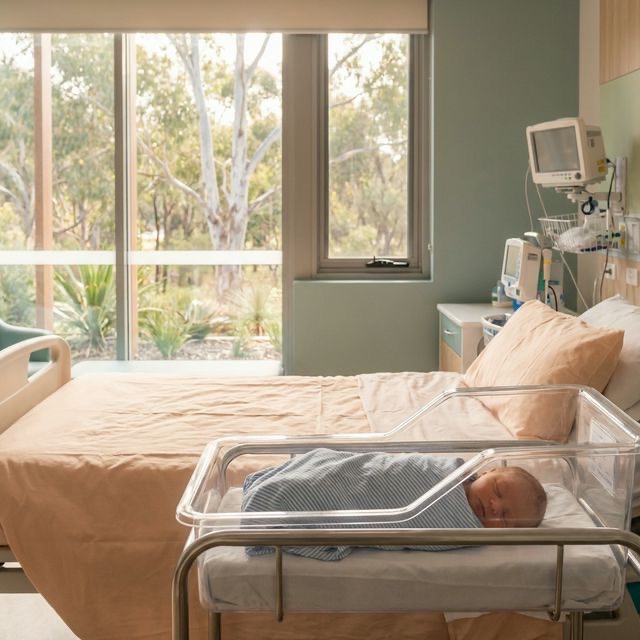
If you're expecting a baby - or planning for one - in Australia, you're about to navigate one of the most important (and most confusing) healthcare decisions of your migration journey. The Australian maternity system works very differently from most countries: public hospital birth is completely free under Medicare, yet roughly 30% of Australian women choose private care - and pay thousands of dollars out of pocket for it. Understanding why, and which option is right for your family, could save you $5,000-$15,000 or more.
This guide breaks down every aspect of having a baby in Australia - from your first GP appointment to bringing your newborn home - with specific advice for migrants and visa holders who may not have full Medicare access.
Public vs Private: The Core Difference
The single most important decision in Australian maternity care comes down to one question: who delivers your baby?
| Factor | Public Hospital (Medicare) | Private Hospital |
|---|---|---|
| Cost | Free for Medicare-eligible patients | $3,000-$15,000+ out of pocket (even with insurance) |
| Lead carer | Midwife-led team (you may see different midwives) | Your chosen private obstetrician |
| Room | Shared ward (2-4 beds typical) | Private room with ensuite |
| Partner overnight | Usually not permitted in shared wards | Private room allows partner to stay |
| Pain relief | All options available, free | Anaesthetist gap fee ($1,500-$3,000) |
| Postnatal stay | 1-2 nights (vaginal), 3-4 nights (C-section) | 3-5 nights typical, sometimes longer |
| C-section rate | ~33% for first-time mothers | ~48% for first-time mothers |
| Continuity of care | Only through MGP (limited spots) | Consistent - same obstetrician throughout |
The big surprise for newcomers: Australian public hospitals are world-class. Unlike many countries where "public" implies lower quality, Australia's public maternity wards are staffed by experienced midwives and obstetricians, with the same emergency equipment as private hospitals. The main trade-off is continuity of care and room comfort - not clinical quality.
What Does a Public Birth Actually Cost?
For Australian citizens and permanent residents enrolled in Medicare, the answer is: nothing - or very close to it. Medicare covers all antenatal appointments, ultrasounds at public hospital clinics, delivery, and postnatal stay.
Out-of-pocket costs you might encounter:
- External ultrasounds (if referred to a private imaging clinic): $50-$200 per scan after Medicare rebate
- Non-invasive prenatal testing (NIPT): $400-$600 (not covered by Medicare)
- Antenatal classes: $100-$300 (some hospitals offer free classes)
- Parking and incidentals: variable
Total typical out-of-pocket for a public birth: $0-$1,500
Visa holders without Medicare: If you hold a temporary visa (e.g., Subclass 482, student visa, or WHV) and are NOT from an RHCA country, you are not eligible for free public maternity care. You'll be treated as a private patient in a public hospital and charged approximately $3,000-$10,000+ for the birth alone. Check your visa conditions and OVHC policy carefully - most OVHC policies have a 12-month waiting period for pregnancy cover.
What Does a Private Birth Cost?
Even with private health insurance (hospital cover including obstetrics), you'll pay significant gap fees:
| Cost component | Typical range |
|---|---|
| Obstetrician management fee | $2,500-$5,000 |
| Anaesthetist (epidural/C-section) | $1,500-$3,000 |
| Paediatrician attendance fee | $300-$800 |
| Hospital excess (insurance) | $250-$750 |
| Additional scans and pathology | $200-$500 |
| Total out-of-pocket (with insurance) | $3,000-$8,000+ |
Without private health insurance: $9,000-$20,000+ for a private hospital birth.
The 12-month trap: Private health insurance requires a 12-month waiting period for obstetrics cover. If you're planning a baby, you must take out hospital cover with pregnancy benefits at least 12 months before your due date. Upgrading your policy mid-pregnancy does not reset this waiting period.
The Midwife Group Practice Secret
Midwife Group Practice (MGP) - also called caseload midwifery - is Australia's best-kept maternity secret. It offers the continuity of care that people pay thousands for in private, but it's completely free through public hospitals.
How MGP works:
- You're assigned one primary midwife (backed by a small team of 2-3)
- The same midwife follows you through pregnancy, labour, birth, and 6 weeks postpartum
- 24/7 on-call support from your known midwife
- Lower C-section rates and higher satisfaction scores
- Some MGP programmes offer publicly funded home birth for low-risk pregnancies
The catch: MGP spots are extremely limited and waitlists are long. Apply as soon as you confirm your pregnancy (ideally by 6-8 weeks). Ask your GP to specifically request MGP on your hospital referral.
Birth Centre vs Labour Ward
Many public hospitals offer a birth centre - a dedicated low-intervention birthing unit with a home-like environment (birthing pools, dim lighting, comfortable furniture). Birth centres are typically staffed by midwives and are designed for low-risk pregnancies.
| Feature | Birth Centre | Labour Ward |
|---|---|---|
| Epidural available | ❌ No (transferred to labour ward if needed) | ✅ Yes |
| Water birth | ✅ Available | Usually not |
| Environment | Home-like, calm | Clinical, medical |
| Intervention rates | Very low | Standard |
| Eligibility | Low-risk pregnancy only | All pregnancies |
| Cost (public) | Free | Free |
Your Prenatal Care Timeline
Whether you choose public or private, the prenatal care timeline in Australia follows a similar pattern:
-
Weeks 4-8: Confirm pregnancy with your GP. GP refers you to your chosen hospital or private obstetrician. If you want MGP, ask your GP to request it now.
-
Weeks 10-13: First trimester combined screening (nuchal translucency ultrasound + blood test). NIPT test optional ($400-$600, not covered by Medicare).
-
Weeks 18-20: Morphology scan (anatomy ultrasound) - the detailed scan that checks your baby's development. Free at public hospital clinics.
-
Weeks 24-28: Glucose tolerance test (gestational diabetes screening). Regular antenatal visits every 4 weeks.
-
Weeks 28-36: Visits increase to every 2 weeks. Anti-D injection if Rh-negative. Whooping cough vaccination recommended.
-
Weeks 36-40: Weekly visits. Birth plan discussion with your midwife or obstetrician. Hospital bag preparation.
After the Birth: Government Support for Families
Australia provides substantial financial support for new parents - but eligibility depends on your visa status.
Paid Parental Leave (PPL)
From 1 July 2026, eligible families can access up to 26 weeks of government-funded Paid Parental Leave at the national minimum wage ($948.10 per week before tax, as of July 2025 rates). Four weeks are reserved for each parent on a "use it or lose it" basis.
Eligibility requirements:
- Worked at least 330 hours in 10 of the 13 months before birth
- Individual income below $180,007
- Must be an Australian citizen, PR holder, or hold a Special Category Visa
- 104-week waiting period applies if your permanent visa was granted after 1 January 2019
491 and 494 visa holders are NOT eligible for Paid Parental Leave. If you hold a regional provisional visa, you will not receive PPL until you transition to permanent residency via the Subclass 191 pathway.
Newborn Supplement & Upfront Payment
If you don't receive PPL (or receive it for only one child in a multiple birth), you may be eligible for:
- Newborn Upfront Payment: $683 lump sum per child
- Newborn Supplement: Up to $2,052 over 13 weeks (first child) or $685 (subsequent children)
- Must be eligible for Family Tax Benefit Part A
Other Support
- Family Tax Benefit Part A & B: Ongoing payments for families with children
- Child Care Subsidy: Up to 90% of childcare fees subsidised when you return to work
- Medicare card for your baby (apply immediately after birth registration)
Registering Your Newborn
You must register your baby's birth within 60 days in the state or territory where the birth occurred. The hospital will typically provide the paperwork before discharge. After registration, you'll need to:
- Apply for a birth certificate ($30-$70 depending on state)
- Enrol your baby in Medicare (if eligible - takes 2-4 weeks)
- Add your baby to your Centrelink account for FTB and PPL
- Apply for a passport if you plan to travel (4-6 weeks processing)
- Notify your health insurer to add baby to your policy (within 2 months of birth to avoid waiting periods)
Postnatal Support You Might Not Know About
Australia offers excellent free postnatal support that many newcomers don't discover:
- Maternal and Child Health (MCH) nurse visits: Free scheduled visits at 2 weeks, 4 weeks, 8 weeks, 4 months, 8 months, 12 months, 18 months, 2 years, and 3.5 years. Available in every council area.
- PANDA (Perinatal Anxiety & Depression Australia): Free helpline for postnatal depression and anxiety - 1300 726 306
- Australian Breastfeeding Association: Free helpline 1800 686 268 and local support groups
- Parentline: Free parenting advice by phone - 13 22 89
How First Migration Can Help
Your visa status directly affects your Medicare eligibility, your access to free public maternity care, PPL entitlements, and your baby's citizenship status. At First Migration Service Centre, our registered migration agents can help you understand your specific entitlements and plan the right visa pathway for your growing family.
Ready to take the next step? We invite you to submit a free visa assessment so we can understand your situation and provide tailored advice.
RMA R. Weng
MARA 1569835Registered Migration Agent | Master of Laws (ANU) | Bachelor of Laws (Deakin)
Certified by the Migration Agents Registration Authority (MARA). Specializing in skilled migration, employer-sponsored visas, and partner visas. Admitted to practice law in Victoria.
Related Articles
Disclaimer: This information is general in nature and does not constitute formal migration advice. Immigration laws and policies change frequently. Always consult a MARA-registered migration agent for advice specific to your circumstances. First Migration Service Centre (MARA 1569835) provides this content for informational purposes only.
MARA Registered Agent
Registration No. 1569835
Certified by the Migration Agents Registration Authority. Your trusted partner for Australian visa applications.
Australian Visa Fees Jump 25% on 1 July 2026: New Cost of Every Visa

Dietitians: Migration & Skills Assessment Guide to Australia 2026

Truck Drivers: The Real Migration Pathway to Australia 2026 (DAMA)
Physiotherapists: Migration & Registration Guide to Australia 2026

Pharmacists: Migration & Registration Guide to Australia 2026
Office Hours
Mon-Fri: 9AM-5PM Sat: 10AM-2PM