
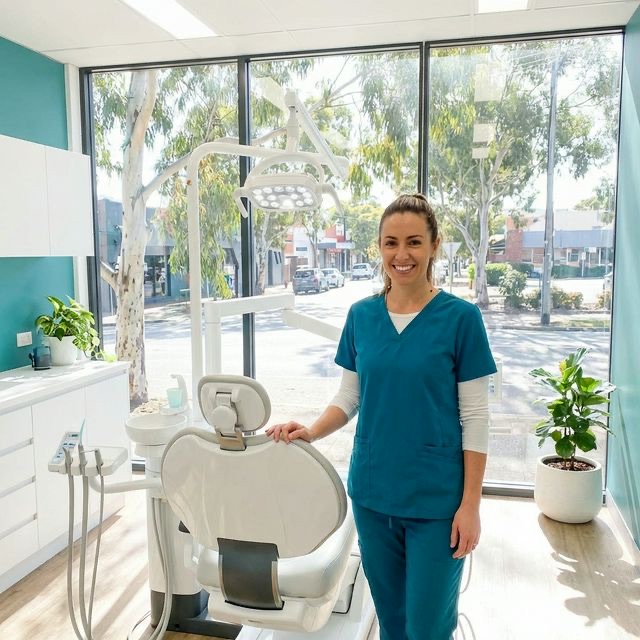
If you've just arrived in Australia, here's a surprise that hits harder than jet lag: dental care is not covered by Medicare for adults. A routine check-up and clean costs $200-$350, a single filling runs $180-$500, and a root canal can set you back $2,000-$3,500. For newcomers from countries with public dental systems - the UK, New Zealand, Taiwan, and parts of Europe - this is genuinely one of the biggest unexpected expenses of settling in Australia. This guide breaks down exactly what dental care costs, what's free, what's subsidised, and how to keep your teeth healthy without emptying your wallet.
Why Dental Isn't Covered by Medicare
When Australia's universal healthcare system (now Medicare) launched in 1975, dental was excluded due to budget constraints - and it's stayed that way ever since. Medicare covers GP visits, hospital treatment, and specialist referrals, but adult dental is almost entirely excluded.
The only exceptions are:
- Emergency dental surgery performed in a public hospital (e.g. jaw fractures, severe infections)
- Dental procedures that are part of a broader medical treatment (very rare)
For everything else - check-ups, fillings, crowns, wisdom teeth removal - you're paying out of pocket or through private health insurance. If you haven't yet applied for Medicare, check our complete Medicare guide first - it's your foundation for accessing the limited dental support that does exist.
If you're from the UK (NHS dental), New Zealand (public dental up to age 18), or Taiwan (NHI dental coverage), don't assume Australia works the same way. Budget for dental from day one.
What Does Dental Treatment Actually Cost?
Here's a realistic breakdown of dental costs in Australia (as of early 2026). These are typical private practice prices - actual costs vary by location, dentist, and complexity.
| Procedure | Typical Cost Range | Notes |
|---|---|---|
| Check-up & clean | $200-$350 | Basic exam, scale, clean, fluoride |
| Comprehensive new patient exam | $350-$500 | Includes full X-rays and assessment |
| Dental X-ray (per film) | $35-$65 | OPG panoramic X-ray: $100-$180 |
| Composite filling (white) | $200-$500 | Depends on size and surfaces |
| Root canal (front tooth) | $800-$1,500 | Molars: $1,500-$3,500 |
| Tooth extraction (simple) | $200-$400 | Surgical/wisdom teeth: $350-$600 per tooth |
| Crown (porcelain) | $1,200-$2,000 | Lab fees included |
| Dentures (full set) | $2,000-$4,000 | Partial dentures: $800-$2,000 |
| Teeth whitening (in-chair) | $500-$1,000 | Take-home kits: $300-$500 |
There are no standardised dental fees in Australia. Dentists set their own prices, so the same filling can cost $200 in a suburban clinic and $450 in the CBD. Always ask for a treatment plan and quote before agreeing to any work.
Free & Subsidised Dental Care: Your Options
1. Public Dental Clinics (Adults)
Every state and territory runs public dental clinics that offer free or very low-cost treatment. The catch? You need to be eligible - and the waitlists are long.
Who qualifies:
- Holders of a Health Care Card or Pensioner Concession Card (issued by Centrelink)
- Dependants listed on those cards
- In some states: Commonwealth Seniors Health Card holders, refugees, and asylum seekers
Typical wait times:
| State | Average Wait (General Dental) |
|---|---|
| Victoria | 13-17 months |
| New South Wales | Varies by area - typically 6-12 months |
| Queensland | 6-18 months |
| South Australia | 12+ months |
Emergency dental at public clinics doesn't usually require a waitlist. If you have severe pain, swelling, or infection, call your nearest community dental clinic and ask for an emergency appointment - priority patients are typically seen at the next available slot.
2. Child Dental Benefits Schedule (CDBS)
The CDBS is a Medicare-funded programme that provides up to $1,158 per eligible child over a two-consecutive-calendar-year period (indexed annually on 1 January).
Eligibility:
- Child aged 0-17 for at least one day in the calendar year
- Child is eligible for Medicare
- Family receives Family Tax Benefit Part A, Parenting Payment, ABSTUDY, Carer Payment, or another qualifying Centrelink payment (see our guide to Centrelink and government benefits for eligibility details)
What's covered:
- Check-ups, X-rays, cleaning, fissure sealing, fillings, root canals, extractions, and partial dentures
What's NOT covered:
- Orthodontics (braces), cosmetic dental work, or hospital dental procedures
How it works:
- Services Australia assesses eligibility at the start of each calendar year
- You'll receive a notification via post or MyGov
- Take your child to any dentist who bulk-bills under the CDBS - the dentist bills Medicare directly, so there's no out-of-pocket cost
- If the dentist doesn't bulk-bill CDBS, you pay upfront and claim back from Medicare (up to the schedule fee)
Not all dentists bulk-bill CDBS. Call ahead and specifically ask: "Do you bulk-bill under the Child Dental Benefits Schedule?" Many family-friendly practices do.
3. University Dental School Clinics
Australia's dental schools run teaching clinics where final-year dental students treat patients under the supervision of qualified dentists. The trade-off is longer appointment times, but the savings are significant.
| City | Clinic | Notes |
|---|---|---|
| Melbourne | Melbourne Dental Clinic (University of Melbourne) | General dental; fees below ADA average rates |
| Melbourne | Royal Dental Hospital of Melbourne | Teaching clinic; exam then waitlist for treatment |
| Sydney | Sydney University Dental Student Clinic | May require concession card + Medicare card |
| Brisbane | UQ Herston Dental Clinic (University of Queensland) | Affordable general dental; limited emergency slots |
| Gold Coast | Griffith University Student Dental Clinic | Discounted rates; possibly free with health care card |
Private Health Insurance: Is Dental Extras Cover Worth It?
Private health insurance (PHI) with extras cover is how most working Australians manage dental costs. Here's what you need to know:
Waiting Periods
| Type | Typical Wait |
|---|---|
| General dental (check-ups, fillings, cleans) | 2 months |
| Major dental (crowns, root canals, dentures) | 12 months |
| Orthodontics (braces) | 12-24 months |
What to Look For
- Annual limits: Most basic extras policies cap dental at $400-$800 per year. Mid-range policies: $1,000-$1,500
- Percentage back: Typically 50-80% of the fee, up to your annual cap
- Preferred provider networks: Some funds (Bupa, Medibank, HCF) have "Members First" or "Choice" networks where you pay no gap for preventive check-ups
- Pre-existing conditions: If your dental issue existed in the 6 months before joining, the 12-month major dental wait applies regardless
Is It Worth the Maths?
For a single person paying ~$15-$25/week for basic extras:
- You pay ~$780-$1,300/year in premiums
- If the policy covers two check-ups and cleans ($400-$700 value) plus one filling ($200-$500), you roughly break even
- Major dental is where insurance really pays off - a single crown ($1,500+) or root canal ($2,000+) can exceed your entire annual premium
If you're generally healthy but want coverage for emergencies, consider a policy with a higher annual limit for major dental rather than the highest percentage back on check-ups.
5 Practical Tips to Save Money on Dental
- Don't skip your check-ups. A $200 check-up that catches a small cavity saves you a $2,000 root canal. Prevention is the cheapest dental care
- Shop around. Call 2-3 dentists for quotes. Suburban and regional dentists are often 20-40% cheaper than CBD practices
- Ask about payment plans. Many clinics offer interest-free payment plans (e.g. Afterpay, Zip, or in-house plans) for treatments over $500
- Use your health fund's preferred provider. If you have PHI, staying in-network can mean $0 out-of-pocket for preventive care
- Consider dental schools. You'll wait longer per appointment, but the quality is supervised by experienced clinicians and the fees are substantially lower
How First Migration Can Help
Navigating Australia's healthcare system - especially the gaps between Medicare, dental, and private health insurance - can be overwhelming when you're also dealing with visa applications, settlement logistics, and building a new life. Understanding your visa entitlements and healthcare access starts with getting the right visa advice.
At First Migration Service Centre, our registered migration agents help clients understand their healthcare entitlements based on their specific visa type, and can advise on timing your private health insurance to avoid penalties like the Lifetime Health Cover loading. For families with children, our CCS Calculator can also help you estimate childcare subsidies - another major cost for newcomers.
Ready to take the next step? We invite you to submit a free visa assessment so we can understand your situation and provide tailored advice on your visa and settlement journey.
RMA R. Weng
MARA 1569835Registered Migration Agent | Master of Laws (ANU) | Bachelor of Laws (Deakin)
Certified by the Migration Agents Registration Authority (MARA). Specializing in skilled migration, employer-sponsored visas, and partner visas. Admitted to practice law in Victoria.
Related Articles

CCS 3-Day Guarantee + 1 July 2026 Reset: What PR-Pathway Families Actually Get
HECS-HELP 2.8% Indexation on 1 June 2026: Why PR Doesn't Unlock the Loan

Paid Parental Leave 26 Weeks + 12% Super: 1 July 2026 Visa Guide
Disclaimer: This information is general in nature and does not constitute formal migration advice. Immigration laws and policies change frequently. Always consult a MARA-registered migration agent for advice specific to your circumstances. First Migration Service Centre (MARA 1569835) provides this content for informational purposes only.
MARA Registered Agent
Registration No. 1569835
Certified by the Migration Agents Registration Authority. Your trusted partner for Australian visa applications.
CCS 3-Day Guarantee + 1 July 2026 Reset: What PR-Pathway Families Actually Get
HECS-HELP 2.8% Indexation on 1 June 2026: Why PR Doesn't Unlock the Loan
Paid Parental Leave 26 Weeks + 12% Super: 1 July 2026 Visa Guide

Onshore vs Offshore Partner Visa in 2026-27: Why the 820 Queue Now Moves Faster Than 309
Home Affairs Processing Times May 2026: 186 Now 20 Months at 90%
Office Hours
Mon-Fri: 9AM-5PM Sat: 10AM-2PM