
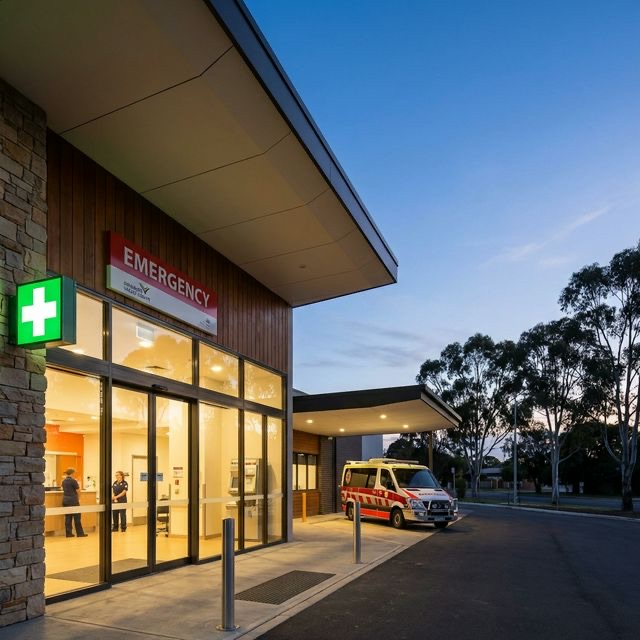
Walking into an Australian emergency department for the first time can be confusing - especially when you're used to a completely different hospital system. In Australia, you won't be seen in the order you arrive. Instead, a triage nurse assesses every patient and assigns an urgency category that determines your wait. For non-life-threatening conditions, that wait can stretch to 4-12+ hours. Understanding how the system works - and when you actually need the ED versus a GP or urgent care clinic - could save you hours of waiting and hundreds of dollars in ambulance fees.
GP vs Urgent Care Clinic vs Emergency Department: Where Should You Go?
One of the biggest mistakes newcomers make is going straight to the emergency department for issues that a GP or urgent care clinic could handle faster and more effectively.
| Situation | Where to Go | Typical Wait | Cost |
|---|---|---|---|
| Colds, flu, minor infections, prescription refills | GP (General Practitioner) | Same-day to next-day appointment | Bulk-billed (free) or $40-$90 gap |
| Minor fractures, sprains, cuts needing stitches, UTIs, ear/eye infections | Urgent Care Clinic (UCC) | 30 min - 2 hours | Free (bulk-billed at Medicare UCCs) |
| Chest pain, stroke symptoms, severe bleeding, breathing difficulties, unconsciousness | Emergency Department (ED) | Immediate to 12+ hours (by triage) | Free as public patient (Medicare-eligible) |
| Immediate life threat - cardiac arrest, severe trauma, anaphylaxis | Call 000 for ambulance | Immediate dispatch | Free in QLD & TAS; $400-$1,400+ in other states |
Not sure where to go? Call Healthdirect on 1800 022 222 (24/7, free) to speak with a registered nurse who can advise whether you need ED, urgent care, or a GP. They also have an online symptom checker.
Medicare Urgent Care Clinics: The Free Alternative to ED
Australia is rapidly expanding its network of Medicare Urgent Care Clinics (UCCs) - free, bulk-billed walk-in clinics for urgent but non-life-threatening conditions. By mid-2026, there will be 137 clinics nationwide, with approximately four in five Australians living within a 20-minute drive of one.
What UCCs treat: minor fractures, sprains, cuts needing stitches, burns, infections, UTIs, STIs, respiratory illness, gastroenteritis, insect bites, and rashes.
What you need: Your Medicare card. No appointment or referral required.
Medicare UCCs do not treat complex chronic conditions or provide routine check-ups. They bridge the gap between your GP and the emergency department.
How Emergency Department Triage Works
When you arrive at an Australian ED, a triage nurse assesses you immediately and assigns a category on the Australasian Triage Scale (ATS). This determines your priority - not when you walked in.
| Triage Category | Urgency Level | Maximum Wait Time | Examples |
|---|---|---|---|
| 1 - Resuscitation | Immediately life-threatening | Immediate (seconds) | Cardiac arrest, severe trauma, not breathing |
| 2 - Emergency | Imminently life-threatening | Within 10 minutes | Severe chest pain, major burns, stroke symptoms |
| 3 - Urgent | Potentially life-threatening | Within 30 minutes | Moderate-severe pain, heavy bleeding, major fractures |
| 4 - Semi-urgent | Potentially serious | Within 60 minutes | Vomiting without dehydration, eye inflammation, minor fractures |
| 5 - Non-urgent | Less urgent | Within 120 minutes | Minor rashes, mild aches, minor illnesses |
According to the Australian Institute of Health and Welfare (AIHW), in 2024-25, 67% of all ED patients were seen within the recommended time for their triage category. The median wait across all categories was 18 minutes, but 10% of patients waited longer than 1 hour and 58 minutes.
Your wait time can change. If your condition worsens while waiting, tell the triage nurse immediately - they will reassess your category. Arriving by ambulance does not guarantee faster treatment; urgency is the only factor.
What to Bring to the Emergency Department
Prepare these items before you go to the ED:
- Medicare card (or your visa details if you don't have Medicare yet)
- Photo ID (passport or driver's licence)
- Current medication list (or bring the medication bottles)
- Health insurance card (if you have private cover)
- Interpreter needs - tell reception if you need a free interpreter; all public hospitals provide this service
Public vs Private Hospitals: What's the Difference?
| Feature | Public Hospital (Public Patient) | Private Hospital / Private Patient |
|---|---|---|
| Cost | Free for Medicare-eligible patients | 75% of MBS fee covered by Medicare; gap costs apply |
| Doctor choice | No - hospital assigns your doctor | Yes - you choose your specialist |
| Waiting lists | May have long waits for elective surgery | Typically shorter waiting times |
| Room type | Shared ward | Often private or semi-private room |
| Who pays the rest? | Nobody - fully covered | Private health insurance covers most; you pay the gap |
Emergency treatment is always free at any public hospital for Medicare-eligible patients, regardless of whether you have private health insurance. You are automatically treated as a public patient in an emergency.
Who Is Eligible for Free Public Hospital Treatment?
- Australian citizens and permanent residents - eligible for Medicare
- Some visa holders from countries with Reciprocal Health Care Agreements (RHCA) - including the UK, Ireland, New Zealand, Sweden, the Netherlands, Finland, Italy, Belgium, Norway, Slovenia, and Malta
- Some bridging visa holders - depending on their substantive visa application
Not all visa holders are eligible for Medicare. Student visa (subclass 500) holders from non-RHCA countries, visitor visa holders, and some temporary visa holders are not covered. If you're unsure about your Medicare eligibility, check with Services Australia or contact our team for guidance.
Ambulance Costs by State and Territory
Ambulance services are not covered by Medicare anywhere in Australia. Costs vary dramatically by state and can be a nasty shock if you're unprepared.
| State/Territory | Emergency Ambulance Cost | Free for Residents? | Key Details |
|---|---|---|---|
| Queensland | $1,509 (non-residents) | ✅ Free for QLD residents | Funded by state government |
| Tasmania | Varies (visitors charged) | ✅ Free for TAS residents (most cases) | Motor vehicle and workplace accidents may incur charges |
| Victoria | $1,437 (metro), $2,121 (regional) | ❌ Not free | Membership available (~$50/year single) |
| New South Wales | $464 call-out + $4.18/km (residents) | ❌ Not free (49% subsidy for residents) | Free for concession card holders |
| Western Australia | $1,253 (metro, Priority 1) | ❌ Not free | Free for pensioners over 65 |
| South Australia | $1,207 + $6.90/km | ❌ Not free | No free cover even for age pensioners |
| ACT | $1,143 + $15/km outside ACT | ❌ Not free | Free for most concession card holders |
| Northern Territory | $1,133 + $6.50/km (Code 1) | ❌ Not free | NT concession card holders may get free cover |
Fees current as of 2025-26 financial year. Fees are subject to change, typically from 1 July each year.
How to Protect Yourself from Ambulance Bills
- Private health insurance with ambulance cover - most hospital policies include this. Check your extras or hospital cover.
- Ambulance membership - available in VIC (Ambulance Victoria), SA (SAAS), WA (St John WA), and NT (St John NT). Annual fees range from ~$50 to $160 for families.
- Concession cards - Health Care Card, Pensioner Concession Card, and Commonwealth Seniors Health Care Card holders get free ambulance in most states (except SA for some categories).
- If you live in QLD or TAS - you're covered as a resident, even when travelling interstate (QLD only).
Hospital Admission: What to Expect
If the ED team decides you need to stay in hospital, here's the typical process:
- Assessment - ED doctor examines you and orders tests (blood, X-ray, CT scan)
- Decision - doctor decides if you need admission, observation, or can go home
- Ward transfer - you're moved from ED to a hospital ward
- Treatment plan - your treating team (doctors, nurses, allied health) creates a care plan
- Discharge - when ready, you'll receive a discharge summary and any prescriptions
As a public patient in a public hospital, all of this is free - including specialist consultations, surgery, pathology, imaging, medication during your stay, and meals.
Key Emergency Numbers
| Service | Number | When to Call |
|---|---|---|
| Emergency (ambulance, fire, police) | 000 | Life-threatening emergencies |
| Healthdirect | 1800 022 222 | Health advice - should I go to ED? (24/7, free) |
| Poisons Information Centre | 13 11 26 | Suspected poisoning or overdose (24/7) |
| Lifeline | 13 11 14 | Mental health crisis support (24/7) |
| Translating and Interpreting Service | 131 450 | Free interpreting for non-English speakers |
How First Migration Can Help
Understanding Australia's healthcare system is just one part of settling into your new life. Whether you're navigating Medicare eligibility, understanding your visa conditions and entitlements, or planning your migration pathway, our registered migration agents provide expert guidance tailored to your situation.
Ready to take the next step? We invite you to submit a free visa assessment so we can understand your situation and provide tailored advice.
RMA R. Weng
MARA 1569835Registered Migration Agent | Master of Laws (ANU) | Bachelor of Laws (Deakin)
Certified by the Migration Agents Registration Authority (MARA). Specializing in skilled migration, employer-sponsored visas, and partner visas. Admitted to practice law in Victoria.
Related Articles

CCS 3-Day Guarantee + 1 July 2026 Reset: What PR-Pathway Families Actually Get

HECS-HELP 2.8% Indexation on 1 June 2026: Why PR Doesn't Unlock the Loan

Paid Parental Leave 26 Weeks + 12% Super: 1 July 2026 Visa Guide
Disclaimer: This information is general in nature and does not constitute formal migration advice. Immigration laws and policies change frequently. Always consult a MARA-registered migration agent for advice specific to your circumstances. First Migration Service Centre (MARA 1569835) provides this content for informational purposes only.
MARA Registered Agent
Registration No. 1569835
Certified by the Migration Agents Registration Authority. Your trusted partner for Australian visa applications.
CCS 3-Day Guarantee + 1 July 2026 Reset: What PR-Pathway Families Actually Get
HECS-HELP 2.8% Indexation on 1 June 2026: Why PR Doesn't Unlock the Loan
Paid Parental Leave 26 Weeks + 12% Super: 1 July 2026 Visa Guide

Onshore vs Offshore Partner Visa in 2026-27: Why the 820 Queue Now Moves Faster Than 309
Home Affairs Processing Times May 2026: 186 Now 20 Months at 90%
Office Hours
Mon-Fri: 9AM-5PM Sat: 10AM-2PM