
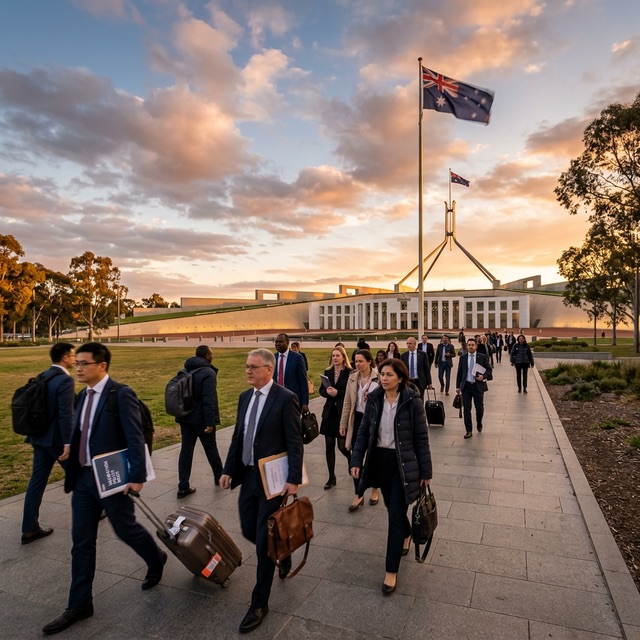
On 3 May 2025, Anthony Albanese's Labor Party won a historic second term with 94 seats - the largest majority in Australian history. Migration was a defining battleground, with the Coalition, Greens and minor parties each proposing dramatically different visions. Now that the dust has settled, what actually changes for visa holders, students and prospective migrants? This guide breaks down every party's policy and what you should expect in 2025-2026.
What Labor Promised (And Is Now Implementing)
Labor's migration platform centres on steady, managed growth with structural reforms already underway:
| Policy Area | Labor's Position (Current Government) |
|---|---|
| Permanent migration intake | 185,000 places for 2025-26 (unchanged from 2024-25), with 132,200 in the Skill Stream |
| Skills in Demand (SID) visa | Launched 7 December 2024, replacing the 482 TSS visa with 3 streams: Specialist Skills (≥$141,210 SSIT), Core Skills (≥$76,515 CSIT), and Essential Skills (expected mid-2026) |
| Student visa fees | Increased to $2,000 from 1 July 2025 |
| Student work hours | Restored to 48 hours per fortnight during study (post-pandemic normalisation) |
| Graduate visa (485) reforms | Age limit reduced from 50 to 35 years; shorter post-study work periods |
| Genuine Student (GS) test | Replaced the old GTE requirement from 23 March 2024 - stricter integrity checks |
| Humanitarian intake | 20,000 places annually |
| Significant Investor Visa | Not reinstated - remains abolished |
Labor won a decisive majority in both the House of Representatives and the Senate (28 seats - the largest Senate bloc since 1984). This means most of these policies will proceed without cross-bench negotiations.
What This Means for You
If you're a skilled worker, the Skills in Demand visa is now the primary employer-sponsored pathway. For a detailed comparison with the old 482 and 186 visas, read our 482 vs 186 vs Skills in Demand comparison guide. The Core Skills Occupation List (CSOL) is dynamic and updated by Jobs and Skills Australia, so check whether your occupation is eligible using our ANZSCO Occupation Search.
If you're a student, expect higher costs ($2,000 application fee) and stricter scrutiny under the Genuine Student test. Learn how to pass the Genuine Student test and use our Student Visa Funds Calculator to estimate your financial requirements.
If you're pursuing permanent residency through the points test, the 185,000-place program and 65-point minimum remain unchanged - but competitive scores for Subclass 189 invitations continue to sit at 80-90+ points. See our guide on how to maximise your points score for strategies.
What the Coalition Proposed (And Lost On)
Under new leader Angus Taylor (who replaced Peter Dutton after Dutton lost his own seat of Dickson), the Coalition campaigned on the most restrictive migration platform in recent history. While these proposals were rejected by voters, they signal the direction of future opposition policy:
| Policy Area | Coalition's Proposal |
|---|---|
| Permanent migration intake | Cut to 140,000 for the first 2 years, rising to 150,000 (year 3) and 160,000 (year 4) |
| Net overseas migration | Reduce by an additional 100,000 compared to Labor |
| Student visa work hours | Increase from 48 to 60 hours per fortnight (from 1 July 2026) |
| Student visa grants | Cap at 240,000 per year (~15% reduction) |
| Foreign student commencements | Reduce by at least 30,000 per year in higher education |
| Humanitarian intake | Cut from 20,000 to 13,750 places |
| "Australian values" test | Greater role for intelligence agencies in assessing prospective residents |
| Temporary Graduate Visas | Review settings to curb misuse as a de facto PR pathway |
The student work hours proposal (48→60/fortnight) was one of the Coalition's most debated policies. While it would have benefited students financially, critics argued it could undermine educational outcomes and depress wages for local workers.
What This Means for You
These proposals did not become law - but they remain in the Coalition's policy toolkit. If migration numbers rise again or housing pressures intensify, expect these ideas to resurface. For now, the current settings (48 hours/fortnight work cap, 185,000 permanent places) continue.
What the Greens Proposed
The Australian Greens, who lost three of their four House seats in the 2025 election (including leader Adam Bandt's), campaigned on a significantly more liberal migration platform:
| Policy Area | Greens' Proposal |
|---|---|
| Humanitarian intake | Expand to 50,000 places annually (from 20,000) |
| Offshore detention | End it entirely - bring all detainees to community accommodation |
| Immigration detention | Cap holding periods at 7 days |
| Family reunion visas | Clear backlog within 3 years; cap wait times at 12 months |
| Balance of family test | Abolish entirely |
| Temporary Protection Visas | Grant permanent residency to all TPV/SHEV holders |
| Department of Home Affairs | Dismantle and return functions to previous departments |
| Section 501 (character test) | Repeal discriminatory provisions |
What This Means for You
The Greens' proposals are unlikely to be implemented given their reduced parliamentary presence. However, if you're affected by the balance of family test for parent visas, note that advocacy to reform this test continues - and it may influence future policy. Check our Parent Visa Guide for current requirements.
What One Nation Proposed
Pauline Hanson's One Nation maintained its longstanding position of dramatically reducing migration:
| Policy Area | One Nation's Proposal |
|---|---|
| Migration target | Zero net migration (cap at 130,000 arrivals) |
| Citizenship waiting period | Extend to 8 years (from current requirements) |
| Welfare eligibility | 8-year waiting period for new migrants |
| Refugee Convention | Withdraw from the UN Refugee Convention |
| Student visas | End student visa pathway to permanent residency |
| Deportation | Deport all 75,000+ visa overstayers |
What This Means for You
One Nation's proposals remain well outside the political mainstream. No major party supports zero net migration or withdrawal from the UN Refugee Convention. Current migration settings are unaffected.
Side-by-Side Comparison: The Policies That Matter Most
| Policy | Labor (Current Gov't) | Coalition | Greens | One Nation |
|---|---|---|---|---|
| Permanent migration cap | 185,000 | 140,000→160,000 | Not specified | ~130,000 |
| Humanitarian intake | 20,000 | 13,750 | 50,000 | Withdraw from UNHCR |
| Student work hours | 48 hrs/fortnight | 60 hrs/fortnight | Not specified | End student visa pathway |
| Student visa fee | $2,000 | Not specified | Reduce costs | Not specified |
| Employer sponsored visa | SID visa (3 streams) | Review settings | Not specified | Reduce intake |
| Offshore detention | Continue current | Strengthen | End entirely | Expand |
| Path to PR for students | 500→485→189/190/491 | Restrict 485 misuse | Easier pathways | End |
What You Should Do Now
Regardless of which party you supported, the practical reality for 2025-2026 is clear:
- Skilled workers: Check if your occupation is on the CSOL via our ANZSCO Search and calculate your eligibility with the Points Calculator
- Employer-sponsored applicants: The Skills in Demand visa is live - ensure your employer meets the CSIT ($76,515) or SSIT ($141,210) threshold
- Students: Budget for the $2,000 application fee and plan your finances with the Student Visa Funds Calculator
- Partner visa applicants: Processing continues as normal - assess your evidence strength with our Partner Visa Assessment tool
- Parent visa applicants: The balance of family test and long processing times continue - consider both the Subclass 143 Contributory Parent and Subclass 870 Sponsored Parent options
Election uncertainty is over. With Labor's landslide win and Senate majority, migration policy is now the most predictable it has been in years. This is actually a good time to apply - there's no risk of sudden mid-term policy shifts disrupting your application.
How First Migration Can Help
The 2025 election result settled the migration policy debate - but choosing the right visa pathway is still complex. At First Migration Service Centre, our registered migration agents track every policy change and help you navigate the system with confidence.
Ready to take the next step? We invite you to submit a free visa assessment so we can understand your situation and provide tailored advice.
RMA R. Weng
MARA 1569835Registered Migration Agent | Master of Laws (ANU) | Bachelor of Laws (Deakin)
Certified by the Migration Agents Registration Authority (MARA). Specializing in skilled migration, employer-sponsored visas, and partner visas. Admitted to practice law in Victoria.
Related Articles

CCS 3-Day Guarantee + 1 July 2026 Reset: What PR-Pathway Families Actually Get
HECS-HELP 2.8% Indexation on 1 June 2026: Why PR Doesn't Unlock the Loan

Paid Parental Leave 26 Weeks + 12% Super: 1 July 2026 Visa Guide
Disclaimer: This information is general in nature and does not constitute formal migration advice. Immigration laws and policies change frequently. Always consult a MARA-registered migration agent for advice specific to your circumstances. First Migration Service Centre (MARA 1569835) provides this content for informational purposes only.
MARA Registered Agent
Registration No. 1569835
Certified by the Migration Agents Registration Authority. Your trusted partner for Australian visa applications.
CCS 3-Day Guarantee + 1 July 2026 Reset: What PR-Pathway Families Actually Get
HECS-HELP 2.8% Indexation on 1 June 2026: Why PR Doesn't Unlock the Loan
Paid Parental Leave 26 Weeks + 12% Super: 1 July 2026 Visa Guide

Onshore vs Offshore Partner Visa in 2026-27: Why the 820 Queue Now Moves Faster Than 309
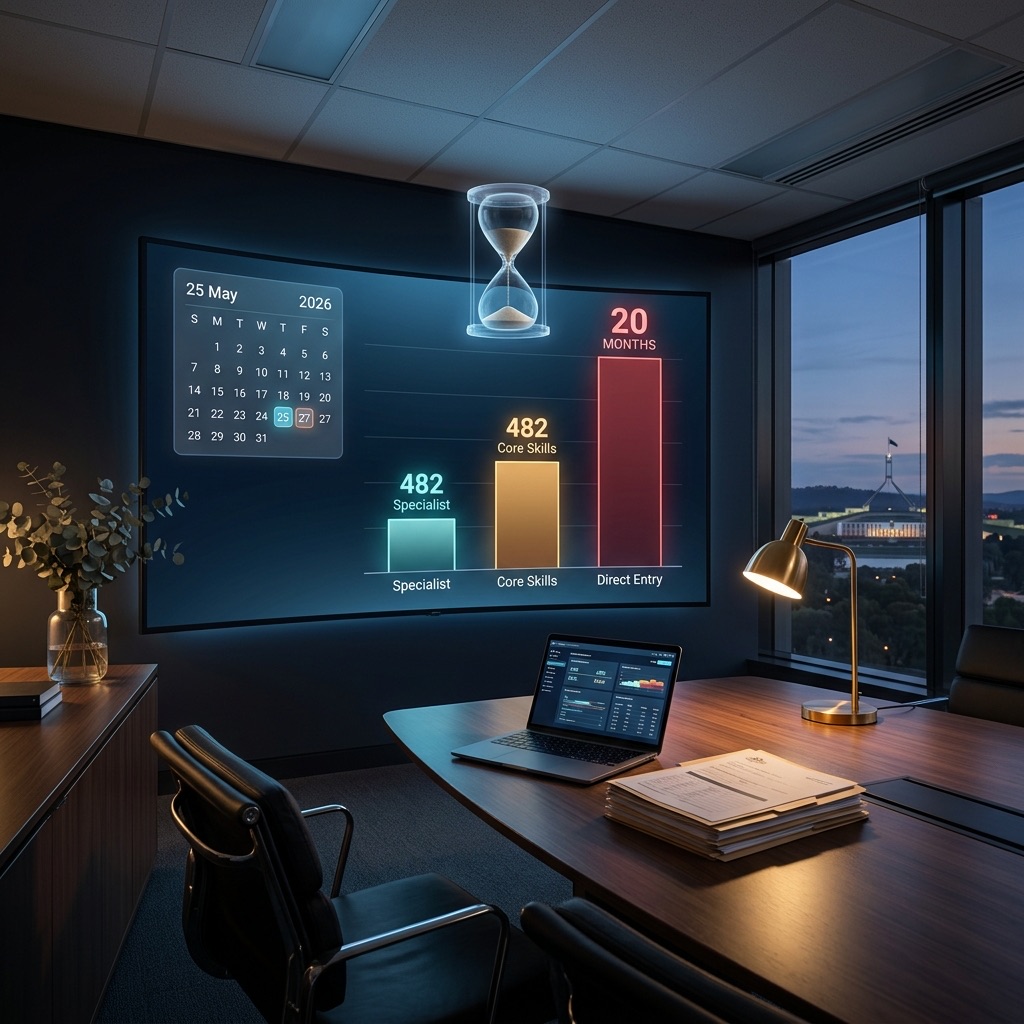
Home Affairs Processing Times May 2026: 186 Now 20 Months at 90%
Office Hours
Mon-Fri: 9AM-5PM Sat: 10AM-2PM