
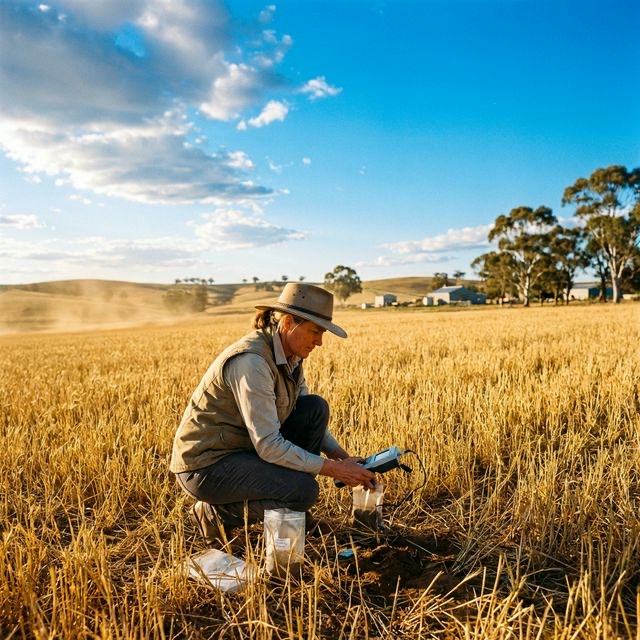
Australia's agricultural sector is crying out for qualified scientists and agronomists - and the migration system has taken notice. With food security now a national priority and climate adaptation reshaping farming practices, Agricultural Scientists (ANZSCO 234112) and Agricultural Consultants (ANZSCO 234111) sit firmly on the Medium and Long-Term Strategic Skills List (MLTSSL), opening doors to permanent residency through the Skilled Independent (189), State Nominated (190), and Regional (491) visa pathways. If you work in drought management, precision agriculture, soil health, or crop science, regional Australia needs you - and the visa settings are designed to bring you here.
Who Can Apply? ANZSCO Codes & Roles
Two closely related occupations are eligible for skilled migration:
| ANZSCO Code | Occupation | What You Do |
|---|---|---|
| 234112 | Agricultural Scientist | Research and apply scientific principles to farming, soil management, crop production, and livestock systems |
| 234111 | Agricultural Consultant | Advise farmers, agribusinesses, and government on production methods, sustainability, and distribution |
Related specialisations - including Agronomist, Soil Scientist, Agricultural Adviser, Landcare Officer, and Agricultural Extension Officer - all fall under these two ANZSCO codes.
Not sure whether your specific role qualifies? Use our ANZSCO Occupation Search tool to check which skill list your occupation appears on and which visas you're eligible for.
Skills Assessment: VETASSESS Group A
Both occupations are assessed by VETASSESS as Group A professions. This means you'll need:
| Requirement | Details |
|---|---|
| Qualification | Bachelor degree or higher in a highly relevant field (Agricultural Science, Crop Science, Soil Science, Agronomy, Animal Science, Viticulture, or Plant & Animal Production) |
| Work Experience | At least 1 year of highly relevant, post-qualification employment in the last 5 years |
| Assessment Fee | $1,096 AUD (as of October 2025; fees are subject to change) |
| Processing Time | Typically 8-12 weeks (standard); priority processing available for $825 AUD |
Your qualification must be assessed as comparable to the Australian Qualifications Framework (AQF) Bachelor level or above. If your degree title doesn't obviously match "agricultural science," you may still qualify - VETASSESS assesses the content of your studies, not just the title.
Visa Pathways: Four Routes to PR
Agricultural scientists enjoy some of the broadest skilled visa options of any occupation:
1. Subclass 189 - Skilled Independent
- No sponsor or nomination required - purely points-tested
- Minimum 65 points needed (competitive scores are typically higher)
- Application fee: $4,910 AUD per primary applicant (as of July 2025; fees are subject to change)
- Use our Points Calculator to estimate your score before lodging an Expression of Interest (EOI)
2. Subclass 190 - State Nominated
- Requires nomination from a participating state or territory
- Adds 5 bonus points to your total
- States with strong agricultural demand include South Australia, Western Australia, Queensland, Tasmania, and the Northern Territory
3. Subclass 491 - Skilled Work Regional
- Requires state/territory nomination or sponsorship by an eligible relative in a designated regional area
- Adds 15 bonus points - a significant boost for borderline scores
- Live and work in a regional area for 3 years → transition to Subclass 191 PR
- Regional Australia is the natural home for agricultural professionals - think Mildura, Griffith, Toowoomba, Geraldton, and the Riverina
4. Employer Sponsorship & DAMA
If you already have a job offer from an Australian agricultural employer, employer-sponsored visa pathways may be even faster:
- Subclass 482 (Skills in Demand) or Subclass 494 (Regional Employer Sponsored) for temporary work → PR transition
- DAMA regions - South Australia, Western Australia, and the Northern Territory offer Designated Area Migration Agreements with concessions on age limits (up to 55), English language requirements, and income thresholds
- The SA DAMA has been extended until June 2026; the NT DAMA III runs until June 2030 with 325 occupations and 1,500 nomination places per year
State nomination requirements and occupation lists are subject to change. Always confirm current availability before applying.
Salary Expectations
Agricultural scientists earn competitive salaries, particularly in senior or research-heavy roles:
| Experience Level | Typical Salary Range (AUD/year) |
|---|---|
| Graduate / Entry-Level | $65,000 - $80,000 |
| Mid-Career (3-7 years) | $90,000 - $110,000 |
| Senior / Research Lead | $110,000 - $135,000+ |
| Government Research (CSIRO, DAWE) | $90,000 - $130,000 |
The Australian Government's Your Career portal reports an average weekly salary of approximately $1,934 for agricultural scientists, equating to roughly $100,500 per year. Agronomists can expect $75,000-$95,000 depending on location and specialisation.
The Points Test: How Agricultural Scientists Score
Most agricultural scientists score well on the points test. Here's a realistic example:
| Factor | Points |
|---|---|
| Age (25-32) | 30 |
| English - Proficient (IELTS 7 each) | 10 |
| Overseas work experience (3-4 years) | 5 |
| Bachelor degree | 15 |
| Total (189) | 60 |
| + State nomination (190) | 65 |
| + Regional nomination (491) | 75 |
With a Master's degree (+5 for specialist education qualification), NAATI community language (+5), or Australian study (+5), the 65-point threshold is well within reach.
Why Regional Australia? The Natural Fit
Unlike many occupations where "regional" feels like a compromise, agricultural science is inherently regional. Your workplace is the land itself:
- Murray-Darling Basin - Australia's food bowl, with demand for irrigation scientists, drought researchers, and soil analysts
- Western Australia's Wheatbelt - broadacre farming research and precision agriculture
- North Queensland & NT - tropical agriculture, cattle science, biosecurity
- Tasmania - premium cropping, viticulture, and cool-climate agricultural research
- South Australia - dryland farming, viticulture, and CSIRO research stations
This alignment means the 491 visa pathway is not a detour - it's a direct route to where the jobs are.
Your Step-by-Step Migration Roadmap
- Confirm your ANZSCO code - check your occupation's visa eligibility using the tool above
- Prepare English test results - IELTS, PTE, or OET (check score requirements for your chosen visa)
- Lodge your VETASSESS application - gather qualification documents, transcripts, and employment references
- Calculate your points - use the points calculator linked above to see where you stand
- Submit your EOI through SkillSelect - and/or apply for state nomination or employer sponsorship
- Receive an invitation to apply - lodge your visa application within 60 days
- Complete health and character checks - medicals and police clearances
How First Migration Can Help
Whether you're a soil scientist in South Africa, an agronomist in India, or a crop researcher in Brazil, we understand that migration pathways can feel as complex as the ecosystems you study. At First Migration Service Centre, our registered migration agents specialise in skilled visa applications and can guide you through skills assessment, points optimisation, and state nomination strategy.
Ready to take the next step? We invite you to submit a free visa assessment so we can understand your situation and provide tailored advice.
RMA R. Weng
MARA 1569835Registered Migration Agent | Master of Laws (ANU) | Bachelor of Laws (Deakin)
Certified by the Migration Agents Registration Authority (MARA). Specializing in skilled migration, employer-sponsored visas, and partner visas. Admitted to practice law in Victoria.
Related Articles
Disclaimer: This information is general in nature and does not constitute formal migration advice. Immigration laws and policies change frequently. Always consult a MARA-registered migration agent for advice specific to your circumstances. First Migration Service Centre (MARA 1569835) provides this content for informational purposes only.
MARA Registered Agent
Registration No. 1569835
Certified by the Migration Agents Registration Authority. Your trusted partner for Australian visa applications.

Australian Visa Fees Jump 25% on 1 July 2026: New Cost of Every Visa

Dietitians: Migration & Skills Assessment Guide to Australia 2026

Truck Drivers: The Real Migration Pathway to Australia 2026 (DAMA)
Physiotherapists: Migration & Registration Guide to Australia 2026

Pharmacists: Migration & Registration Guide to Australia 2026
Office Hours
Mon-Fri: 9AM-5PM Sat: 10AM-2PM