
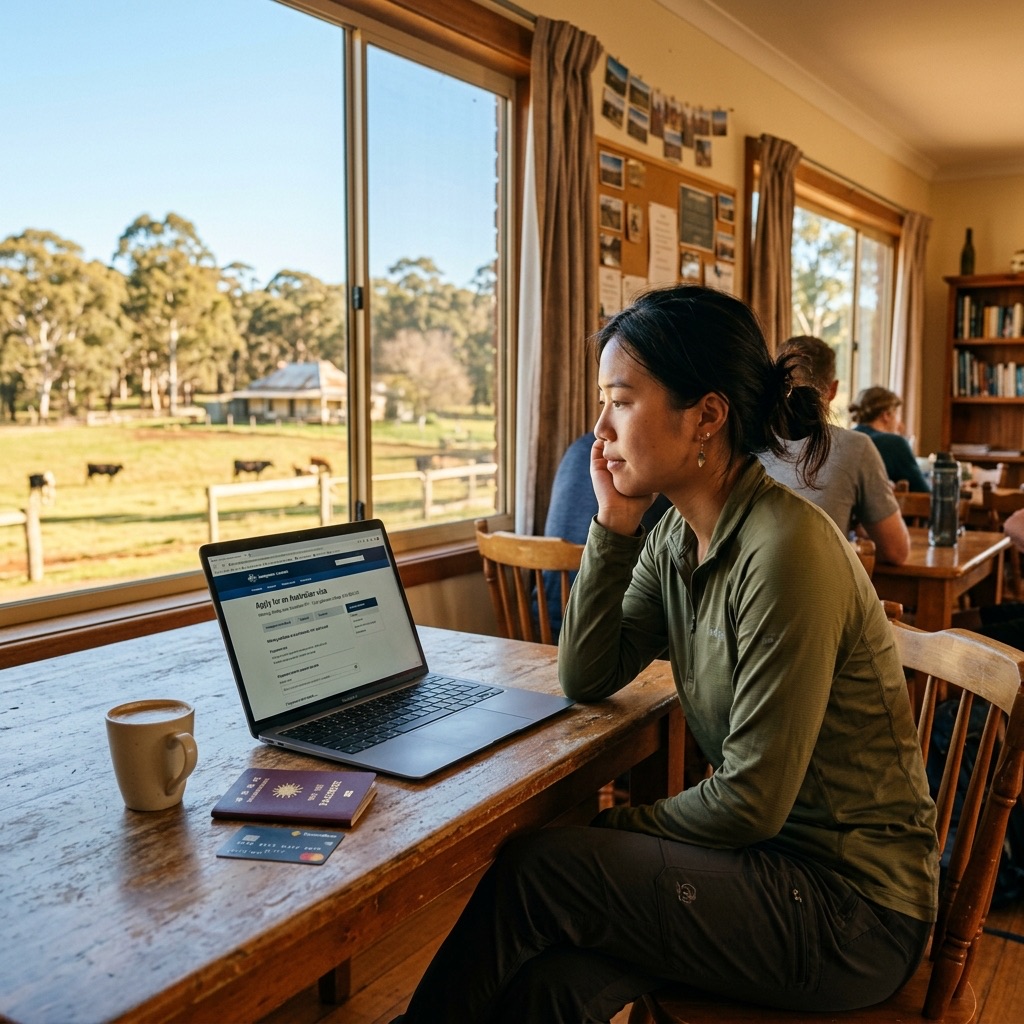
If you are planning a working holiday in Australia, the cost of the subclass 417 visa changed on 1 July 2026 - and the sting is not where most people expect. The first Working Holiday visa rose from $670 to $840, a 25% increase in line with most Australian visas. But the second-year Working Holiday visa jumped from $670 to $1,000 - a 49% rise, nearly double the ~25% increase applied to most Australian visas, and the steepest rise of any Working Holiday charge this year. For the first time, extending your stay now costs more than the visa that got you here.
For Taiwan passport holders - who apply for the Working Holiday visa (subclass 417) - this reshapes the budget for a multi-year working holiday. Below we break down exactly what changed, what it costs across a full three-year journey, and the practical steps to take now that the increase is already in force.
What Changed on 1 July 2026
The 2026-27 visa fee increases took effect on 1 July 2026 under a single regulation, the Home Affairs Legislation Amendment (2026 Measures No. 1) Regulations 2026. Most visa application charges rose about 25%, and the Working Holiday visa first-instalment charge moved from $670 to $840 in line with that. The charge for a second or third Working Holiday visa, however, rose further - to $1,000. These charges apply by lodgement date: any application lodged on or after 1 July 2026 pays the new fee, even if you began planning your trip earlier.
| Working Holiday visa (417) | Before (to 30 Jun 2026) | From 1 July 2026 | Increase |
|---|---|---|---|
| First Working Holiday visa | $670 | $840 | +25% |
| Second-year Working Holiday visa | $670 | $1,000 | +49% |
| Third-year Working Holiday visa | $670 | $1,000 | +49% |
The counter-intuitive part is that the second-year visa ($1,000) now costs $160 more than the first ($840). Historically all three Working Holiday applications carried the same charge; from 1 July 2026 the extension is deliberately the most expensive step. That signals a policy choice rather than routine indexation - making repeat working-holiday stays cost more, at a time when the Government is actively managing backpacker numbers.
You may see claims online that the second-year Working Holiday visa "used to be free" and is now $1,000. That is incorrect. The second and third Working Holiday visas have always carried the standard application charge - it was $670 and is now $1,000. Budget for the real figure, not the myth.
What It Costs Across a Full Three-Year Working Holiday
For a backpacker who completes the full three-year cycle - first visa, then a second year after the required regional work, then a third - the visa fees alone now add up to $2,840 ($840 + $1,000 + $1,000), compared with $2,010 under the old flat $670 charge. That is an extra $830 across the journey, before any of the other costs of qualifying for each extension.
| Working Holiday journey | Old fees (to 30 Jun 2026) | New fees (from 1 Jul 2026) |
|---|---|---|
| First visa only | $670 | $840 |
| First + second year | $1,340 | $1,840 |
| Full three years | $2,010 | $2,840 |
Those extensions are not automatic. To qualify for a second Working Holiday visa you must complete three months (88 days) of specified work in a specified regional area or eligible industry during your first year. The third year requires six months of specified work during your second year. The $1,000 charge now sits on top of the time, travel and often lower-paid regional work that qualifying already demands - so the extension decision carries heavier financial weight than before. Our guide to the 88 days of specified work explains exactly what counts and the mistakes that disqualify people.
The six-month-per-employer limit (condition 8547) also still applies, with limited exceptions. If you are unsure what a condition on your visa means, our Visa Condition Lookup gives a plain-language explanation of 8547 and other Working Holiday conditions.
What You Should Do Now
Because the increase is already in force - it commenced 1 July 2026 and applies by lodgement date - there is no "lodge before the deadline" saving left for the fee itself; that window closed on 30 June. What matters now is budgeting accurately and timing your specified work so an extension is actually available when you want it. A practical sequence:
-
Budget the real numbers. Plan for $840 for your first visa and $1,000 for each extension - $2,840 across three years - plus overseas health insurance (OVHC), flights and set-up costs. Do not rely on the "free second year" myth when you plan your savings.
-
Lock in your specified work early. Because a second visa needs 88 days of specified work completed during your first year, schedule the regional work in the first half of your stay, not the final few weeks. Miss the 88 days and there is no second visa at all - and the $1,000 question becomes moot.
-
Weigh the long-term pathway. If you are thinking beyond three years, a working holiday is often a stepping stone rather than a destination. Many 417 holders move to employer sponsorship or skilled migration. Our skilled visa service page and employer-sponsored visa overview explain the options - you can check whether your occupation is on the skilled list with our ANZSCO Occupation Search and your indicative score with our GSM Points Calculator.
If permanent residency is your goal, do the maths early. Three years of working-holiday visas now cost $2,840 in fees alone, before living and regional-work costs. If a skilled or employer-sponsored pathway is realistic for your occupation, the sooner you plan it, the less you spend cycling through extensions.
The Bigger Picture
The Working Holiday increase is part of a wider 1 July 2026 change that lifted most Australian visa charges by about 25%. What makes the Working Holiday numbers stand out is that the second and third-year charges rose almost twice as fast (+49%), pointing to a deliberate lever rather than simple inflation indexation: repeat backpacker stays are being made more expensive on purpose. For the full picture across every visa subclass, see our overview of the 1 July 2026 visa fee increase. Visa application charges are re-indexed by the Government, typically each 1 July, so these figures apply to the 2026-27 year and can change again in future years.
For Taiwan travellers specifically, the Working Holiday visa (subclass 417) remains one of the most accessible ways to live and work in Australia - the fee rise changes the budgeting, not the fundamental value of the programme. But with a full three-year cycle now costing more, it is worth being deliberate about whether you are treating the working holiday as an experience, a stepping stone to a longer-term skilled visa, or both.
How First Migration Can Help
Working out whether to cycle through working-holiday extensions or pivot towards a longer-term visa is exactly the kind of decision worth getting right early - because the fees, the specified-work timing and your occupation all interact. At First Migration Service Centre, our registered migration agents help working-holiday makers map the most cost-effective path, whether that is maximising the 417 or moving towards permanent residency.
Ready to take the next step? We invite you to submit a free visa assessment so we can review your situation and recommend the right pathway and timing for you.
RMA R. Weng
MARA 1569835Registered Migration Agent | Master of Laws (ANU) | Bachelor of Laws (Deakin)
Certified by the Migration Agents Registration Authority (MARA). Specializing in skilled migration, employer-sponsored visas, and partner visas. Admitted to practice law in Victoria.
Related Articles
Disclaimer: This information is general in nature and does not constitute formal migration advice. Immigration laws and policies change frequently. Always consult a MARA-registered migration agent for advice specific to your circumstances. First Migration Service Centre (MARA 1569835) provides this content for informational purposes only.
MARA Registered Agent
Registration No. 1569835
Certified by the Migration Agents Registration Authority. Your trusted partner for Australian visa applications.
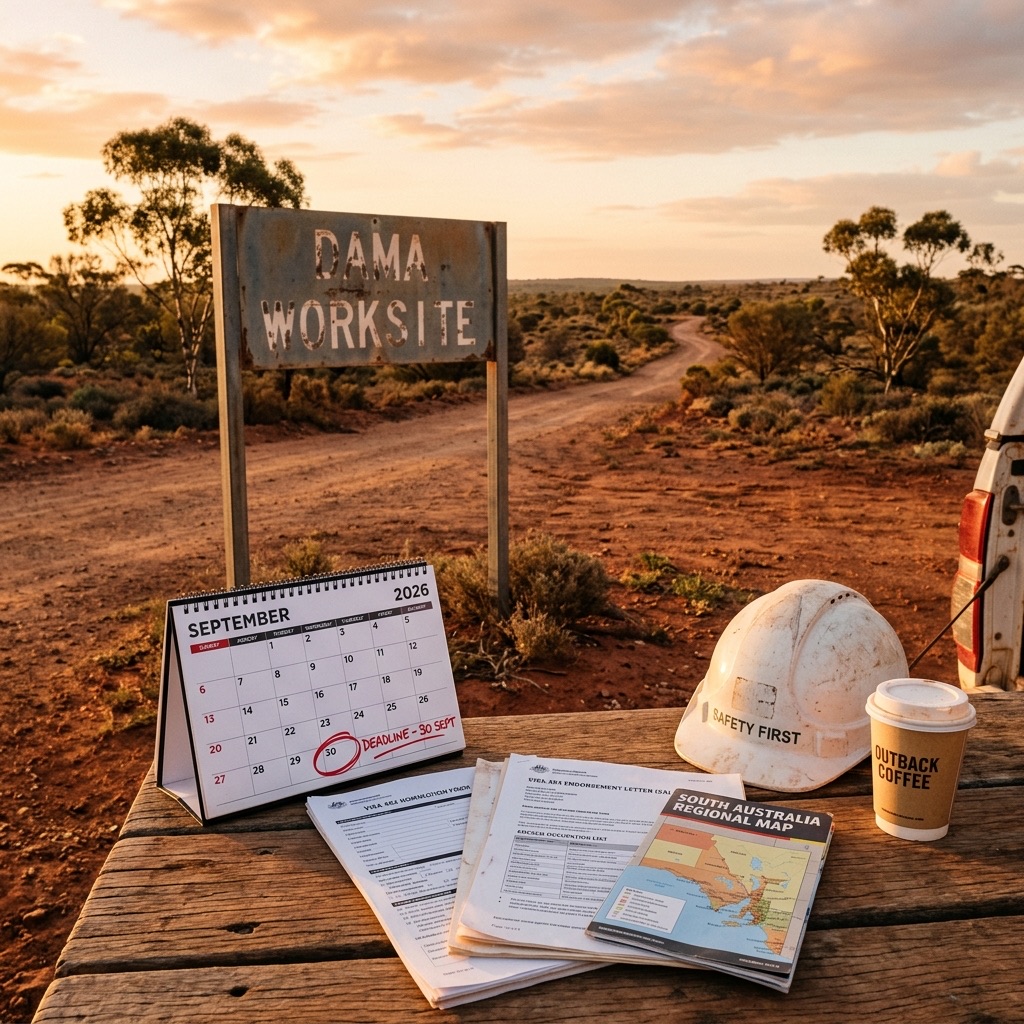
South Australia DAMA Expires 30 September 2026: What the Deadline Means and Whether You Should Lodge Before It
What the 67-Day 189 Blackout Actually Means (And What It Does Not)
South Australia Skilled Migration Reopens 26 August 2026: What 190/491 Applicants Should Check Before Lodging
Onshore vs Offshore in 2026: How Location Sets Your Queue Position

Adding a Dependent Child Over 18 to Your Australian Visa (2026)
Office Hours
Mon-Fri: 9AM-5PM Sat: 10AM-2PM