
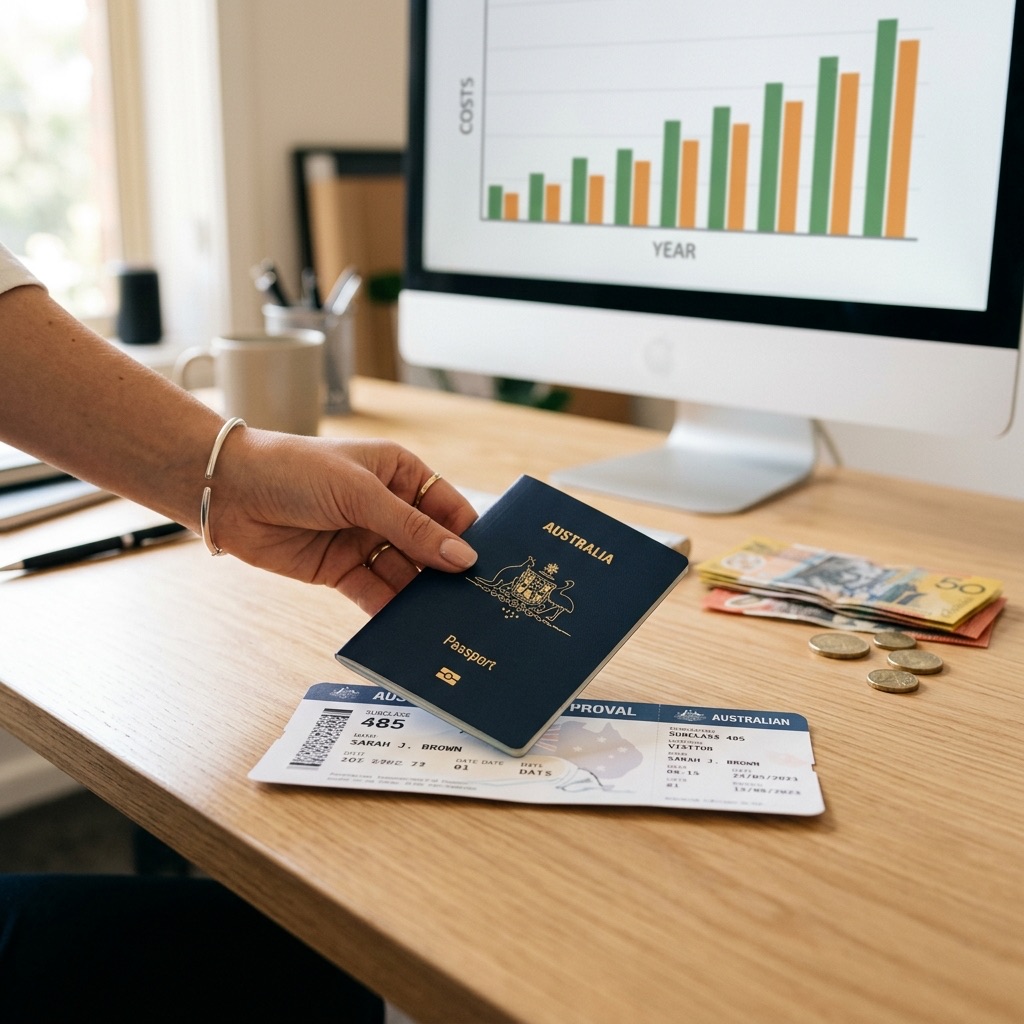
Overnight on 1 July 2026, the price of almost every Australian visa went up - and this was no ordinary indexation. The Department of Home Affairs raised most visa application charges by roughly 25% in a single step, about eight times the usual ~3% July rise, with a handful of visas climbing close to 200%. If you are planning to apply for a partner, student, skilled or visitor visa, your budget just changed materially. Here is the new cost of every popular visa, who is hit hardest, and how to keep the damage down.
What Actually Changed on 1 July 2026
Each year on 1 July, Australia adjusts its visa application charges (VACs) in line with the Consumer Price Index - historically a modest 2-5% bump. The 2026-27 increase broke that pattern. From the moment the Department's pricing table updated in the early hours of 1 July 2026, most charges jumped by about 25% at once. This follows the direction set in the 2026-27 Federal Budget handed down on 12 May 2026, and it continues a trend that began earlier in the year when the Temporary Graduate (485) visa fee was doubled in March 2026.
The increase is broad, but it is not uniform. The bulk of mainstream visas - skilled, student, partner, employer-sponsored, visitor and working holiday - rose by close to 25%. A separate group of visas associated with repeat applications and re-entry - so-called "churn" - rose far more steeply: the Bridging Visa B, Resident Return Visa (155) and New Zealand Citizen Family Relationship visa (461) all climbed by roughly 200%. In other words, the more your plan relies on renewing or repeating a visa, the harder this hits.
The fee that applies to you is the fee in force on the date you lodge, not the date a decision is made. Applications lodged on or before 30 June 2026 keep the old (lower) charge even if they are decided later; anything lodged from 1 July 2026 pays the new charge. Visa application charges are non-refundable, so the window to "lock in" the old price has now closed.
Here is the at-a-glance picture for the most common visas (primary applicant, base first instalment, AUD):
| Visa | 2025-26 fee | From 1 July 2026 | Increase |
|---|---|---|---|
| Visitor (600, Tourist offshore) | ~$200 | $250 | ~25% |
| Student (500, standard) | $2,000 | $2,500 | +25% |
| Temporary Graduate (485) | $4,600 | $5,750 | +25% |
| Skilled Independent (189) | $4,910 | $6,135 | +25% |
| Skilled Nominated / Regional (190/491) | $4,910 | $6,140 | +25% |
| Skills in Demand (482, Core Skills) | $3,210 | $4,015 | +25% |
| Employer Nomination (186/494) | $4,910 | $6,140 | +25% |
| Partner (820/801 & 309/100) | $9,365 | $11,710 | +25% |
| Working Holiday (417/462, first) | $670 | $840 | +25% |
The New Fee for Every Popular Visa
Below is the detailed breakdown by visa family. All figures are the base application charge for the primary applicant and exclude the card-payment surcharge, secondary-applicant charges, and any second-instalment (VAC2) payable where an adult applicant does not have functional English.
Skilled & Employer-Sponsored Visas
The General Skilled Migration and employer-sponsored pathways now cost over $6,000 for most permanent options. If you are running the numbers on a points-tested pathway, check where you stand before you commit - our GSM Points Calculator shows your score across all factors in real time, and our ANZSCO Occupation Search confirms your occupation is on the right list first.
| Visa | 2025-26 | From 1 July 2026 |
|---|---|---|
| Skilled Independent (189) | $4,910 | $6,135 |
| Skilled Nominated (190) | $4,910 | $6,140 |
| Skilled Work Regional (491) | $4,910 | $6,140 |
| Employer Nomination Scheme (186) | $4,910 | $6,140 |
| Skilled Employer Sponsored Regional (494) | $4,910 | $6,140 |
| Skills in Demand (482, Core Skills stream) | $3,210 | $4,015 |
| Permanent Residence (Skilled Regional, 191) | $505 | $630 |
For employer-sponsored applicants, the fee rise lands on the same day the income thresholds also went up - the Core Skills Income Threshold rose from $76,515 to $79,499, and the Specialist Skills Income Threshold from $141,210 to $146,717. Employers and workers are therefore facing a higher application charge and a higher minimum salary at the same time. Learn more about the threshold side of this change in our guide to the 1 July CSIT/SSIT increase, and explore your options on our skilled and employer-sponsored visa services pages.
Student & Graduate Visas
International students and recent graduates are squarely in the firing line, having already absorbed a fee increase earlier in the year.
| Visa | 2025-26 | From 1 July 2026 |
|---|---|---|
| Student (500, standard) | $2,000 | $2,500 |
| Student (500, ASEAN / ELICOS / non-award) | $2,000 | $2,050 |
| Temporary Graduate (485) | $4,600 | $5,750 |
The subclass 500 fee is now $2,500 for standard applicants - already among the most expensive student visas in the world - while the Temporary Graduate 485 has climbed from $4,600 to $5,750 after doubling only months earlier. Remember that the application charge sits on top of the financial-capacity ("show money") evidence you must provide: our Student Visa Funds Calculator works out exactly how much you need to demonstrate. For the full study-to-graduate picture, see our student visa services.
Partner & Family Visas
Partner visas were already the most expensive mainstream product, and they remain so.
| Visa | 2025-26 | From 1 July 2026 |
|---|---|---|
| Partner Onshore (820/801) | $9,365 | $11,710 |
| Partner Offshore (309/100) | $9,365 | $11,710 |
| Prospective Marriage (300) | $9,365 | $11,710 |
| Parent (103, first instalment) | ~$5,280 | $6,600 |
| Sponsored Parent Temporary (870) | ~$1,210 | $1,515 |
A single partner application now costs $11,710 before you add a cent for children or the card surcharge. Because this charge is non-refundable, evidence quality matters more than ever - a refusal means paying it again. Before you lodge, pressure-test your relationship evidence with our Partner Visa Readiness Assessment, and read our partner visa fee guide for how the timing rules work. You can also review the pathway on our partner visa services page.
Contributory Parent visas (143/173) carry a separate, much larger second instalment (tens of thousands of dollars per applicant) on top of the first-instalment figures above. Always confirm the total two-stage cost before committing to a contributory parent pathway.
Visitor & Working Holiday Visas
Even the cheapest visas rose. The Visitor (600) Tourist stream lodged offshore went from around $200 to $250, with the onshore charge at $630 and the Frequent Traveller stream at $1,845. First-year Working Holiday (417) and Work and Holiday (462) visas rose from $670 to $840.
| Visa | 2025-26 | From 1 July 2026 |
|---|---|---|
| Visitor (600, Tourist offshore) | ~$200 | $250 |
| Visitor (600, onshore) | ~$500 | $630 |
| Working Holiday / Work and Holiday (first) | $670 | $840 |
| Working Holiday / Work and Holiday (second/third) | $670 | $1,000 |
The Biggest Movers: Resident Return, 461 & Bridging Visa B
This is where the increase stops looking like indexation and starts looking like policy. A cluster of visas tied to re-entry and repeat stays rose by roughly 200%:
| Visa | 2025-26 | From 1 July 2026 | Increase |
|---|---|---|---|
| Resident Return (155) | ~$490 | $1,475 | ~+201% |
| NZ Citizen Family Relationship (461) | ~$445 | $1,330 | ~+199% |
| Bridging Visa B (subclass 020) | ~$190 | $575 | ~+203% |
| Repeat Working Holiday (2nd/3rd year) | $670 | $1,000 | ~+49% |
If you are a permanent resident who travels and relies on renewing a Resident Return Visa, or a backpacker planning a second or third Working Holiday year, budget carefully - these are the categories that rose most steeply of all.
Who Feels This Increase the Most
A flat percentage lands very differently depending on your situation. Three groups feel it most.
Families applying together. Visa charges are per-applicant, so a 25% rise multiplies across the household. A partner visa for a couple with two children is not one $11,710 fee - it is the primary charge plus additional-applicant charges for each dependant, all now 25% higher. A skilled family of four can easily see their total application cost rise by well over $1,500 compared with a June lodgement. If an adult applicant does not have functional English, add the separate second instalment on top.
International students and onshore "pathway" migrants. If your plan is Student (500) → Graduate (485) → skilled or employer-sponsored PR, you now pay the increased charge at every step: $2,500, then $5,750, then $6,135+. Each hop through the onshore system was already expensive; the 25% rise compounds across the whole journey. This is exactly the "churn" the steeper increases are designed to discourage - so the fewer applications your pathway requires, the less you pay overall.
Employer-sponsored workers and their sponsors. A Skills in Demand (482) nomination and visa, followed later by an Employer Nomination (186) for permanent residence, now sits at $4,015 then $6,140 in charges alone - before nomination fees, the Skilling Australians Fund levy, and the higher income thresholds that also took effect on 1 July. For a small business sponsoring a single worker to PR, the total cost of the exercise has risen noticeably in one financial year.
Because the charge is non-refundable, a refused application is money lost - and you then pay the new, higher fee again to re-apply. In a 25%-more-expensive environment, lodging a thin or "hopeful" application is a costly gamble. Decision-ready lodgement is now a financial strategy, not just good practice.
What You Should Do Now
The fee rise has already commenced, so the goal now is to apply efficiently and avoid paying twice.
- Rebuild your budget around the new figures - including the extras. The headline charge is only part of the cost. Add the credit-card surcharge, additional-applicant charges for your partner and children, and any second instalment for applicants without functional English. Get the total figure for your exact visa and stream before you plan your finances.
- Lodge decision-ready, not just on time. With a non-refundable charge that is now 25% higher, a refusal is far more painful. Make sure your evidence, health, character and skills-assessment documents are complete and correct before you pay. For points-tested and partner applications especially, verify your position first using our free migration tools.
- Design a pathway with fewer applications. Every extra visa in your journey is now an extra several-thousand-dollar charge. If two routes reach permanent residence but one uses fewer intermediate visas, the cost difference can be significant. This is where tailored advice pays for itself.
- Confirm the exact charge before lodging. Fees vary by subclass, stream, applicant age and location, and the Department directs applicants to its Visa Pricing Estimator for the precise amount. Never assume - verify the current charge for your specific circumstances.
If you are unsure how the new fees change your plan, a free visa assessment is the fastest way to get a clear, costed pathway.
Why Fees Jumped - and Whether They'll Keep Rising
The 2026-27 increase is best understood as a revenue measure rather than cost recovery. Australia has increasingly treated visa charges as a significant source of Government income: when the Temporary Graduate visa fee was doubled in March 2026, that single change was projected to raise on the order of $1.2 billion over five years. Applying a broad ~25% uplift across the whole schedule extends that logic to every applicant, while the near-200% increases on Resident Return, 461 and Bridging B visas are widely seen as targeting repeat and onshore "churn".
It is worth remembering that visa application charges are not the only cost that rose on 1 July 2026. The same day, the Core Skills and Specialist Skills income thresholds indexed upward, and the Administrative Review Tribunal's application fees increased (the migration-decision review fee rose to around $3,727). Taken together, the entire cost of engaging with Australia's migration system - applying, sponsoring, and appealing - stepped up at once. For the wider set of 1 July changes beyond fees, see our overview of the July 2026 migration changes.
As for what comes next: charges are adjusted every 1 July, so the next scheduled movement is 1 July 2027. Whether it returns to modest CPI indexation or delivers another large step change will depend on the Budget position closer to the time. What is clear is that, after 1 July 2026, Australia sits among the most expensive countries in the world for several visa categories - and that planning your application efficiently is now worth real money.
Fees are current as of July 2026 and are subject to change. Always confirm the exact application charge for your visa subclass and stream with the Department of Home Affairs before lodging. This article is general information only and is not legal advice.
How First Migration Can Help
A 25% fee rise makes every mistake more expensive - and getting your application right the first time more valuable than ever. At First Migration Service Centre, our registered migration agents help you choose the most cost-efficient pathway, lodge a decision-ready application, and avoid the refusals and repeat lodgements that now cost thousands.
Ready to take the next step? We invite you to submit a free visa assessment so we can map out your options, cost them accurately under the new 2026-27 fees, and give you tailored advice.
RMA R. Weng
MARA 1569835Registered Migration Agent | Master of Laws (ANU) | Bachelor of Laws (Deakin)
Certified by the Migration Agents Registration Authority (MARA). Specializing in skilled migration, employer-sponsored visas, and partner visas. Admitted to practice law in Victoria.
Related Articles
Disclaimer: This information is general in nature and does not constitute formal migration advice. Immigration laws and policies change frequently. Always consult a MARA-registered migration agent for advice specific to your circumstances. First Migration Service Centre (MARA 1569835) provides this content for informational purposes only.
MARA Registered Agent
Registration No. 1569835
Certified by the Migration Agents Registration Authority. Your trusted partner for Australian visa applications.

Dietitians: Migration & Skills Assessment Guide to Australia 2026

Truck Drivers: The Real Migration Pathway to Australia 2026 (DAMA)
Physiotherapists: Migration & Registration Guide to Australia 2026

Pharmacists: Migration & Registration Guide to Australia 2026

Occupational Therapists: Your Regional Migration Pathway to Australia 2026
Office Hours
Mon-Fri: 9AM-5PM Sat: 10AM-2PM