
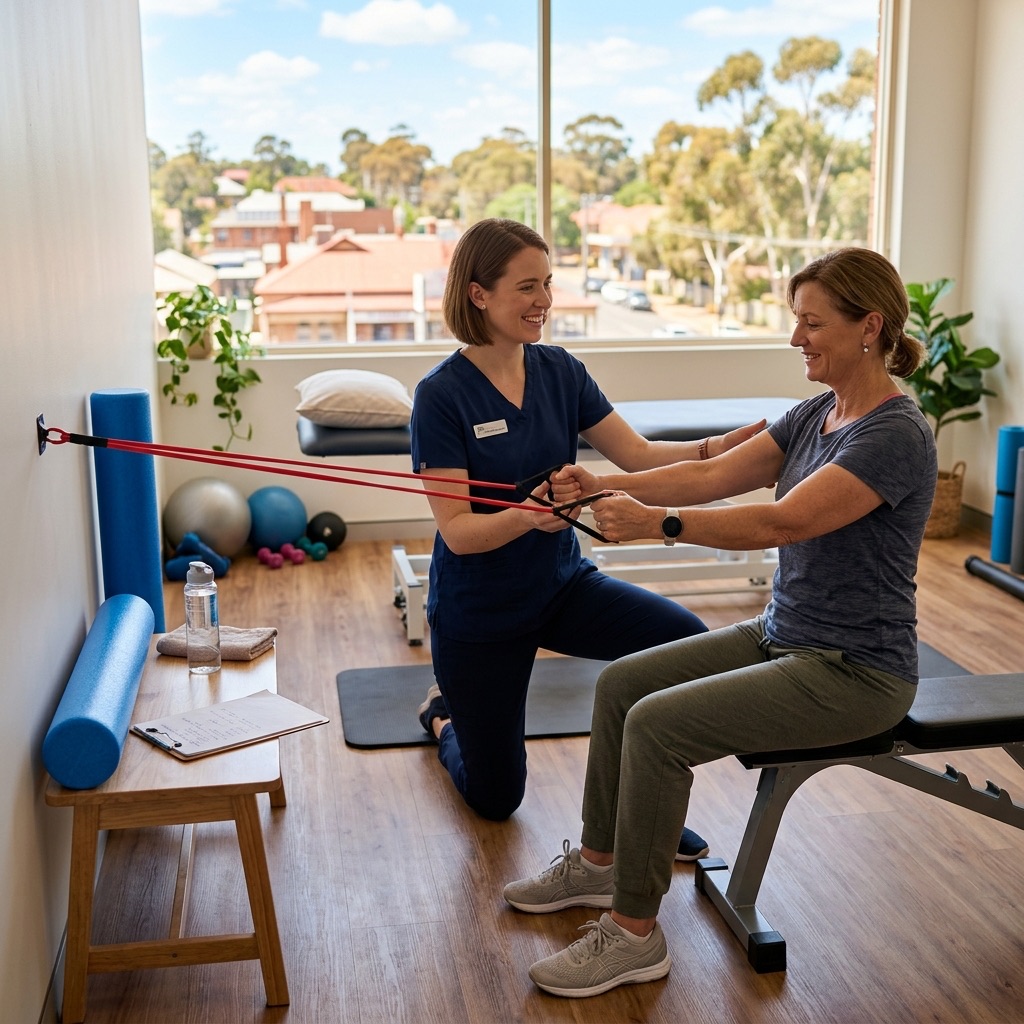
Physiotherapy is one of the most searched migration pathways into Australia - but the demand story is more nuanced than the headlines suggest. Australia does not have a blanket shortage of physiotherapists; with a workforce of roughly 47,900 heading towards 60,000, the cities are competitive. What it has is a distribution problem - persistent gaps in regional and rural areas where qualified physiotherapists are genuinely hard to find. For an overseas physiotherapist, that distinction is the whole strategy: the regional pathways (subclass 491, 494 and regional state nomination) are where the realistic migration opportunity sits. This guide covers the Australian Physiotherapy Council skills assessment, AHPRA registration, English, and how the regional visa options work.
Is There Really a Physiotherapist Shortage? (Distribution, Not Blanket)
Physiotherapy sits at ANZSCO code 252511 (Skill Level 1, bachelor degree or higher) and appears on the Medium and Long-term Strategic Skills List (MLTSSL) - the broadest occupation list, which keeps the independent 189, state-nominated 190 and 491, and employer-sponsored pathways all open. You can confirm the current list status for your occupation with our ANZSCO Occupation Search before building a plan around it.
The honest demand picture matters, because a lot of online content overstates it. The physiotherapy workforce is large and growing - already around 47,900 practitioners and projected to climb towards 60,000 - so metropolitan markets are strong but competitive, not desperate. The real and persistent gaps are in regional and rural areas, where documented workforce shortages make employer sponsorship more common and state nomination more accessible. The expansion of disability services under the NDIS and the ageing-population pressure on aged care have both lifted allied-health demand, and those services are needed everywhere - but it is outside the capitals that the shortage is sharp enough to drive migration outcomes.
For a migrating physiotherapist, that reframes the plan. Competing for an independent 189 or a metropolitan 190 against a deep pool of local graduates is hard; positioning yourself for a regional role or nomination, where the workforce gap is real, is usually the faster route. The trade-off is a genuine commitment to live and work regionally - but it comes with secure demand and a clear permanent-residency pathway. Physiotherapy shares this regional-opportunity profile with other allied-health roles; see our companion occupational therapist regional migration guide for how the same logic applies next door.
| Factor | Detail for a migrating physiotherapist |
|---|---|
| ANZSCO code | 252511 - Skill Level 1 |
| List | MLTSSL + state/territory nomination lists (confirm current status) |
| Skills assessment | Australian Physiotherapy Council (APC) |
| Registration | AHPRA via the Physiotherapy Board of Australia |
| Demand | Distribution shortage - regional/rural gaps, competitive metro |
Step 1: The APC Skills Assessment for Migration
Before a skilled visa, an overseas physiotherapist needs a positive skills assessment from the Australian Physiotherapy Council (APC) - the assessing authority for ANZSCO 252511. Importantly, the APC runs its Assessment for Skilled Migration on behalf of the Department of Home Affairs, and it is a document-based assessment of your qualifications and skills against Australian standards. It is required for most permanent and provisional skilled visas (including the points-tested and regional subclasses).
This migration assessment is generally faster and simpler than the separate registration assessment (below): processing typically takes around 8-12 weeks from a complete application, and you must hold an eligible overseas physiotherapy qualification (confirm the minimum level required with the APC). It does not, by itself, let you practise - it is the document your visa application needs.
Keep two things separate in your mind: the APC skills assessment is for your visa, while AHPRA registration is what lets you legally practise as a physiotherapist. They are different processes with different requirements, and sequencing them well is where good advice earns its keep.
Step 2: AHPRA Registration to Practise
To work as a physiotherapist in Australia you must hold registration with the Australian Health Practitioner Regulation Agency (AHPRA) through the Physiotherapy Board of Australia. The Council assesses overseas-trained physiotherapists against the Australian physiotherapy competency standards, and once it issues your Final Certificate confirming you meet them, you apply to AHPRA for general registration.
The Council's registration-assessment pathway for international physiotherapists has been updated recently - including the Australian Physiotherapy Entry Pathway (APEP) - so confirm the current steps, stages and any examinations directly with the APC before planning your timeline; the process can be more involved than the document-based migration assessment. English is part of this picture too: while the Council's assessments are conducted in English, you must meet AHPRA's English Language Skills Registration Standard to register - typically IELTS Academic 7.0 in listening, reading and speaking, with 6.5 in writing (the writing band was reduced from 7.0 for tests taken on or after 23 April 2026), or the equivalent OET grade (with other tests accepted subject to current rules), and the Department of Home Affairs applies its own English requirement for the visa. Sit your test early and confirm the current required scores, because an English shortfall is one of the most common avoidable delays.
Your Regional Visa Options
With a positive skills assessment, the skilled visa options open up - and for physiotherapy, the regional ones are usually the most realistic given the distribution of demand.
| Visa | How it works for a physiotherapist | Key feature |
|---|---|---|
| Subclass 491 (Skilled Work Regional) | Regional state/territory nomination; points-tested | +15 points; converts to subclass 191 PR after 3 years regional |
| Subclass 494 (Employer Sponsored Regional) | A regional clinic, hospital or NDIS provider sponsors you | Employer-driven; common where regional gaps are documented |
| Subclass 190 (State Nominated) | State/territory nominates you; +5 points | Permanent; competitive in metro, easier regionally |
| Subclass 189 (Skilled Independent) | Points-tested, no sponsor | Permanent but the most competitive on points |
The 491 is usually the centrepiece for an independent physiotherapist. The 15 points a regional nomination adds is the biggest boost you can gain from nomination alone, and it often turns a borderline score into an invitation. Because the 491 converts to the subclass 191 permanent visa after three years of meeting the regional requirements, it is a genuine PR pathway rather than a dead end. Model your score, including regional points, in our GSM Points Calculator to see which states are realistic. For physiotherapists with a regional employer already interested - a rural hospital, a community clinic, an NDIS or aged-care provider - the 494 can be faster, because it does not depend on winning a points-based round.
One 2026-27 caveat: the regional channel (491/494/191) was reduced in the latest Migration Program, so regional nomination is more competitive than in prior years. For an occupation with genuine regional gaps like physiotherapy that is usually navigable - but it is a reason to lodge a strong, complete application. Our skilled visa service team helps physiotherapists line up the assessment, registration and visa in the right order, and to read which states need allied-health workers most - a question we map in our allied-health state-by-state guide.
State nomination requirements and occupation lists change between programme years, and planning levels are national intake targets, not guarantees. Always confirm current availability and criteria on the official state portal before applying. Migration law can change without notice.
Your Action Plan as a Migrating Physiotherapist
The physiotherapists who move fastest run their workstreams in parallel. Work through these steps:
- Confirm your occupation and list status. Check ANZSCO 252511 and the lists it sits on, and confirm your qualification meets the APC's minimum requirement.
- Start your APC Assessment for Skilled Migration. Gather your transcripts and registration history early; the document-based migration assessment usually takes around 8-12 weeks.
- Map your registration pathway. Confirm the current APC registration-assessment steps (including the APEP) and the AHPRA English standard, so you do not discover an examination or score requirement late.
- Sit your English test early. Target IELTS Academic 7.0 in listening, reading and speaking and at least 6.5 in writing (or the OET equivalent), and confirm the current required scores for both AHPRA and the visa.
- Choose a regional strategy - and get advice. Given the distribution of demand, decide between an independent 491, a 494 with a regional employer, or a 190, and identify the regions where physiotherapy gaps and your profile align. A skilled visa strategy that keeps two regional options open beats a single bet.
This article reflects Australian migration law and policy as at 30 June 2026 and is general information, not legal advice; migration law can change without notice.
How First Migration Can Help
Migrating as a physiotherapist means coordinating an APC skills assessment, AHPRA registration and a regional visa strategy - in a market where the opportunity is real but regional, not blanket. At First Migration Service Centre, our registered migration agents map your APC and AHPRA steps, model your points across regional skilled visa pathways, and identify the states and regions where your profile is most competitive.
Ready to take the next step? We invite you to submit a free visa assessment so we can map your physiotherapy migration pathway and provide tailored advice.
RMA R. Weng
MARA 1569835Registered Migration Agent | Master of Laws (ANU) | Bachelor of Laws (Deakin)
Certified by the Migration Agents Registration Authority (MARA). Specializing in skilled migration, employer-sponsored visas, and partner visas. Admitted to practice law in Victoria.
Related Articles
Disclaimer: This information is general in nature and does not constitute formal migration advice. Immigration laws and policies change frequently. Always consult a MARA-registered migration agent for advice specific to your circumstances. First Migration Service Centre (MARA 1569835) provides this content for informational purposes only.
MARA Registered Agent
Registration No. 1569835
Certified by the Migration Agents Registration Authority. Your trusted partner for Australian visa applications.

Dietitians: Migration & Skills Assessment Guide to Australia 2026

Truck Drivers: The Real Migration Pathway to Australia 2026 (DAMA)

Pharmacists: Migration & Registration Guide to Australia 2026

Occupational Therapists: Your Regional Migration Pathway to Australia 2026

State Nomination 2026-27: Be Ready When Your State Reopens
Office Hours
Mon-Fri: 9AM-5PM Sat: 10AM-2PM