
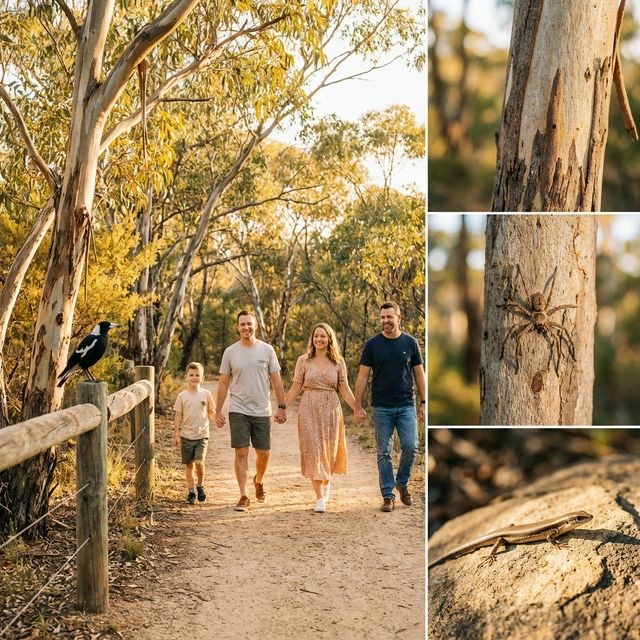
Let's get this out of the way - yes, Australia has some of the world's most venomous creatures. But here's the part that rarely makes the memes: no one has died from a spider bite in Australia since 1979, and snake bite deaths average fewer than two per year nationwide. The real danger isn't the wildlife itself - it's not knowing what to do when you encounter it. This guide gives you the practical knowledge every newcomer needs to feel confident living alongside Australia's remarkable (and mostly harmless) fauna.
The Spiders: A Realistic Assessment
You will see spiders in Australia. Most of them are completely harmless, and several are actually beneficial - they eat mosquitoes, flies, and other pests. Here's what you actually need to know:
Spiders You Can Relax About
| Spider | Size | Danger Level | What to Do |
|---|---|---|---|
| Huntsman | Up to 15 cm leg span | Very low - not medically significant | Leave it alone; it eats cockroaches. Relocate with a container and card if needed |
| Daddy Long Legs | Small, delicate | Harmless to humans | Ignore - they eat redbacks |
| Garden Orb Weaver | Medium, builds large webs | Non-aggressive, mild bite | Walk around the web; it'll be gone by morning |
| Black House Spider | 1-1.5 cm | Mild bite, localised pain | Relocate or leave alone |
Spiders to Be Aware Of
| Spider | Where Found | Identification | First Aid |
|---|---|---|---|
| Redback Spider | All of Australia - garden sheds, mailboxes, under outdoor furniture, rubbish bins | Black body, distinctive red stripe on upper abdomen (~1 cm) | Apply ice pack for pain. Seek medical attention. Antivenom available (no deaths since antivenom introduced in 1956) |
| Funnel-web Spider | Primarily within 100 km of Sydney (some species elsewhere on east coast) | Shiny black/dark brown, robust body (1-5 cm), large fangs pointing downward | Apply pressure immobilisation bandage (same as snake bite). Call 000 immediately. Antivenom available (no deaths since antivenom introduced in 1981) |
| White-tail Spider | Urban areas across Australia | Dark reddish-grey, white tip on tail (~1.5 cm) | Clean wound, apply ice. Medical evidence shows most bites cause only localised pain |
Found a spider in your house? Don't panic. Place a large glass or container over it, slide a piece of cardboard underneath, and release it outside. Most house spiders are harmless and were there before you moved in.
Spider Prevention at Home
- Shake out shoes, gloves, and towels before use - especially if left outside
- Wear gloves when gardening or moving stored items
- Keep outdoor areas tidy - rubbish, woodpiles, and cluttered sheds attract spiders
- Install insect screens on windows and doors
- Check under outdoor furniture, barbecues, and play equipment before use
Snake Safety: The Pressure Immobilisation Technique
Australia is home to some of the world's most venomous snakes, but encounters are manageable if you understand the basics. Snakes do not chase humans - they strike defensively when surprised or cornered.
If You See a Snake
- Stop moving and allow the snake to move away - most will retreat if given space
- Back away slowly - never try to pick up, corner, or kill a snake
- Keep children and pets at a safe distance
- If a snake is inside your home, close the door to that room and call a licensed snake catcher
If Someone Is Bitten: Pressure Immobilisation Bandage (PIB)
This technique is unique to Australia and is the recommended first aid for all Australian venomous snake bites. It slows venom spread through the lymphatic system.
| Step | Action |
|---|---|
| 1 | Call 000 (Triple Zero) immediately |
| 2 | Keep the person still and calm - movement spreads venom faster |
| 3 | Apply a broad pressure bandage directly over the bite site (do not remove clothing) |
| 4 | Wrap a second bandage starting from the fingers/toes, up the entire limb to the armpit/groin - firm as a sprained ankle bandage |
| 5 | Splint the limb to prevent any movement (use a stick, rolled newspaper, or anything rigid) |
| 6 | Mark the bite site on the bandage with a pen - do NOT wash the bite (venom residue helps hospitals identify the snake) |
| 7 | Keep the person lying down and monitor breathing until paramedics arrive |
What NOT to do for a snake bite:
- ❌ Do NOT cut the wound or try to suck out venom
- ❌ Do NOT wash the bite area
- ❌ Do NOT apply a tourniquet (arterial tourniquets are dangerous)
- ❌ Do NOT apply ice
- ❌ Do NOT try to catch or kill the snake
- ❌ Do NOT give the person alcohol or medication
Snake Prevention
- Wear closed-toe shoes and long trousers when walking through bush or long grass
- Stay on formed tracks and paths
- Use a torch when walking outside at night (snakes are more active in warm months, October-March)
- Keep your yard tidy - mow grass regularly and remove wood/rock piles
- If you have a pool, check it regularly - snakes can fall in
Every Australian state has licensed snake catchers who will safely remove and relocate snakes from your property. Most operate 24/7. Search "snake catcher [your suburb]" or call your local wildlife service.
Magpie Swooping Season (August-November)
Australian magpies are intelligent, social birds - and for about 6-8 weeks each spring, some males become fiercely protective of their nesting territory. Only about 10% of magpies actually swoop, but if you're in their zone, it can be startling.
When and Why
- Season: August to November (peak: September-October)
- Why: Male magpies protect their nest, eggs, and chicks
- Target: People walking, jogging, or cycling within ~50-100 metres of the nest
- Duration: 6-8 weeks per season in the same location
How to Stay Safe
| Strategy | Details |
|---|---|
| Know the hot spots | Check MagpieAlert.com for swooping reports in your area |
| Wear protection | Broad-brimmed hat, sunglasses. Cyclists: attach cable ties to your helmet |
| Don't run | Walk calmly and quickly through the area - running triggers more aggressive swooping |
| Face the magpie | Magpies are less likely to swoop if you maintain eye contact |
| Use a barrier | Hold an umbrella or stick above your head |
| Dismount your bike | Magpies target fast-moving cyclists - walk through swooping zones |
| Travel in groups | Magpies are less likely to swoop groups |
| Never provoke | Throwing objects or yelling makes them more aggressive |
Magpies remember faces. If you've antagonised a magpie, it (and potentially its flock) may target you specifically for years. Being friendly to local magpies year-round often means they won't swoop you during breeding season.
Suburban Wildlife You'll Actually Meet
Most wildlife encounters in Australia aren't scary - they're charming. Here's what you'll likely see in your neighbourhood:
| Animal | Where You'll See Them | Danger Level | What to Do |
|---|---|---|---|
| Possums | Roof spaces, trees, fences at night | Harmless - may hiss if startled | Leave them alone; they're protected. If one moves into your roof, call a licensed possum relocator |
| Ibis ("Bin Chickens") | Parks, outdoor dining areas, bins | Annoying, not dangerous | Guard your food outdoors. They're bold scavengers |
| Cockatoos | Everywhere - very loud at dawn | Can damage timber/window frames | Don't feed them - it encourages destructive behaviour |
| Kookaburras | Suburban gardens, parks | Harmless - may steal food from your BBQ | Enjoy the iconic laugh; keep food covered at barbecues |
| Blue-tongue Lizards | Gardens, under rocks, in sheds | Harmless - beneficial pest control | Leave them in your garden - they eat snails and slugs |
| Fruit Bats (Flying Foxes) | Trees in parks and suburbs | Do not touch - potential disease carrier | If you find an injured bat, do NOT handle it. Call wildlife rescue |
Marine Wildlife Safety (Beaches)
If you're visiting Australian beaches, be aware of:
| Creature | Where | Risk Level | What to Do |
|---|---|---|---|
| Bluebottle (Portuguese Man o' War) | East coast beaches | Painful sting, rarely dangerous | Rinse with hot water (not vinegar). Remove tentacles with tweezers |
| Box Jellyfish | Northern Australia (Oct-May) | Potentially fatal | Swim only at patrolled, netted beaches in the tropics. If stung: pour vinegar, call 000 |
| Blue-ringed Octopus | Rock pools, shallow water | Potentially fatal - no antivenom | Never pick up small octopuses. If bitten: apply pressure immobilisation bandage, call 000, be prepared to give CPR |
| Saltwater Crocodiles | Northern Australia (QLD, NT, WA) | Extremely dangerous | Obey all warning signs. Never swim in rivers, estuaries, or waterholes in the tropics unless signed as safe |
Always swim between the red and yellow flags at Australian beaches. Lifeguards patrol these areas. Never swim alone, at night, or at unpatrolled beaches - rip currents cause far more deaths than any wildlife in Australia.
Emergency Numbers Every Newcomer Should Save
| Service | Number | When to Call |
|---|---|---|
| Emergency (Ambulance, Police, Fire) | 000 | Life-threatening emergency - snake bite, severe allergic reaction, croc attack |
| Poisons Information Centre | 13 11 26 | Spider bite, suspected poisoning, marine stings - 24/7, free |
| WIRES (National Wildlife Rescue) | 1300 094 737 | Injured or orphaned native animals |
| Wildlife Victoria | (03) 8400 7300 | Wildlife emergencies in Victoria - 24/7 |
| RSPCA QLD Wildlife | 1300 264 625 | Sick, injured, or orphaned wildlife in Queensland |
| Local Snake Catcher | Search online | Snake in your house or yard - most operate 24/7 |
Save these numbers in your phone now. Add "000" and "13 11 26" to your contacts - you'll feel much more confident knowing they're there if you ever need them.
The Bottom Line: Australia Is Safe
Here's the perspective that matters:
- Zero spider bite deaths since 1979 (over 45 years)
- Fewer than 2 snake bite deaths per year (in a country of 27 million people)
- Rip currents and drowning cause far more harm than any animal
- Magpies are annoying, not life-threatening
- Most wildlife in your suburb is harmless and protected by law
Australia has world-class antivenoms, excellent emergency services, and hospitals well-equipped for envenomation. The biggest risk isn't the wildlife - it's not knowing what to do. Now you know.
How First Migration Can Help
Settling into life in Australia goes beyond your visa application. At First Migration Service Centre, we understand that adapting to a new country means navigating everything from wildlife safety to workplace rights, healthcare access, and community integration. Our settlement support resources and experienced team help you feel at home from day one.
Ready to start your Australian journey? We invite you to submit a free visa assessment so we can understand your situation and provide tailored advice on the visa pathway that suits you best.
RMA R. Weng
MARA 1569835Registered Migration Agent | Master of Laws (ANU) | Bachelor of Laws (Deakin)
Certified by the Migration Agents Registration Authority (MARA). Specializing in skilled migration, employer-sponsored visas, and partner visas. Admitted to practice law in Victoria.
Related Articles
Disclaimer: This information is general in nature and does not constitute formal migration advice. Immigration laws and policies change frequently. Always consult a MARA-registered migration agent for advice specific to your circumstances. First Migration Service Centre (MARA 1569835) provides this content for informational purposes only.
MARA Registered Agent
Registration No. 1569835
Certified by the Migration Agents Registration Authority. Your trusted partner for Australian visa applications.

Dietitians: Migration & Skills Assessment Guide to Australia 2026
Truck Drivers: The Real Migration Pathway to Australia 2026 (DAMA)
Physiotherapists: Migration & Registration Guide to Australia 2026

Pharmacists: Migration & Registration Guide to Australia 2026
Occupational Therapists: Your Regional Migration Pathway to Australia 2026
Office Hours
Mon-Fri: 9AM-5PM Sat: 10AM-2PM