
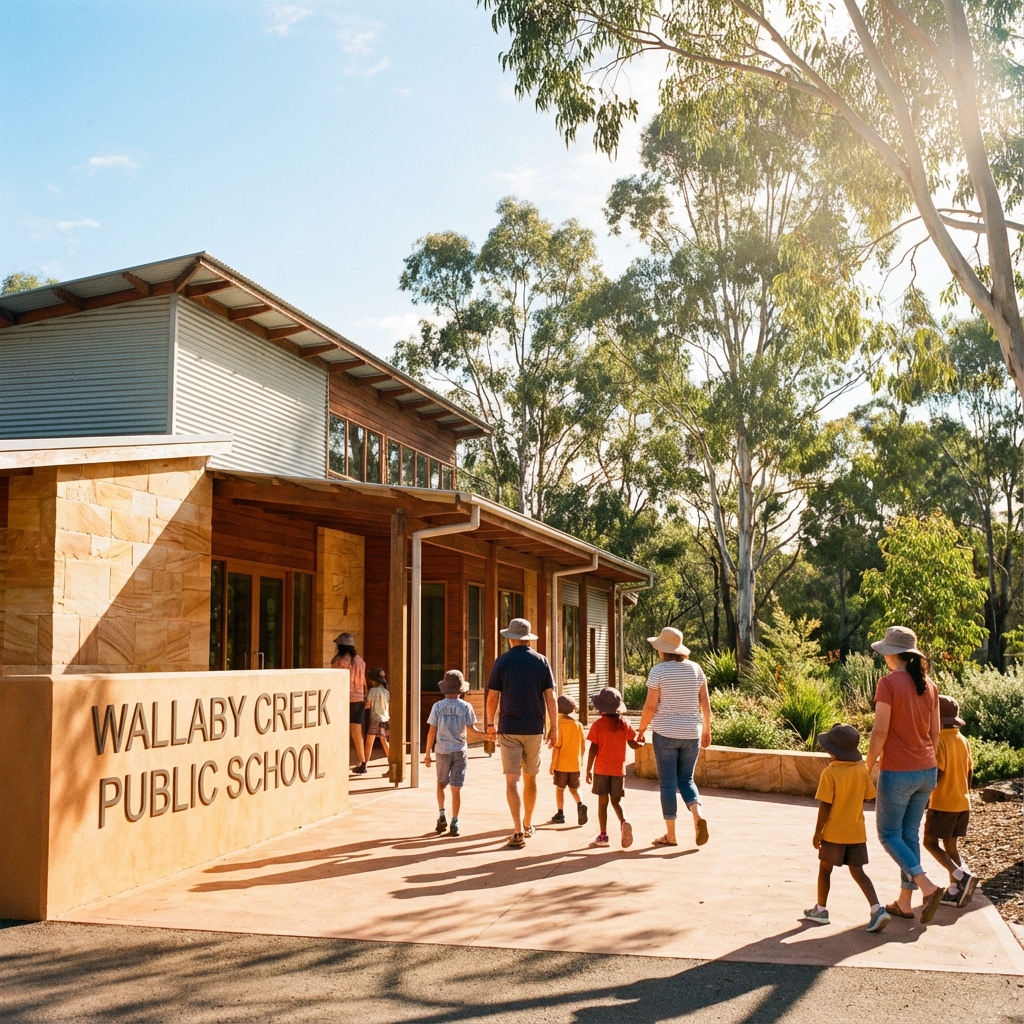
Choosing the right school for your child is one of the most important decisions any parent makes. Whether you're new to Australia or simply relocating interstate, understanding the differences between public and private schools-along with the often confusing enrolment process and hidden fees-is essential. This comprehensive guide breaks down everything you need to know about schooling in Australia for 2026, from catchment zones to tuition costs for temporary visa holders.
Understanding Australia's Tri-Partite Education System
Australia's education system is unique among OECD nations. It operates as a tri-partite model comprising three distinct sectors:
| Type | % of Students | Funding | Fees | Key Features |
|---|---|---|---|---|
| Public (Government) | 63.4% | State-funded | Free for citizens/PR; fees for some visa holders | Secular, local enrolment zones |
| Catholic | 19.9% | Government + Church + fees | $5,600-$8,500/year | Open enrolment, strong pastoral care |
| Independent (Private) | 16.8% | Fees + some government funding | $6,000-$52,000+/year | Selective entry, extensive facilities |
The independent sector has grown by 18.5% over the past five years and continues to expand.
School Year Naming Differences by State
One often-overlooked detail: each state uses different terminology for the first year of school:
| State | First Year Name | Age Cut-off | Senior Certificate |
|---|---|---|---|
| NSW | Kindergarten | 5 by July 31 | HSC |
| VIC | Prep | 5 by April 30 | VCE |
| QLD | Prep | 5 by June 30 | QCE |
| WA | Pre-primary | 5 by June 30 | WACE |
| SA | Reception | 5 by May 1 | SACE |
| TAS | Prep | 5 by January 1 | TCE |
| ACT | Kindergarten | 5 by April 30 | ACT SSC |
| NT | Transition | 5 by June 30 | NTCET |
Interstate movers: Be aware of age cut-off differences when relocating with young children.
Public Schools: The Affordable Choice
Government schools are free for Australian citizens and permanent residents. The curriculum follows the national Australian Curriculum, and students typically attend their local school based on residential address (known as "catchment zones"). Public schools vary widely in quality-some metropolitan schools have excellent academic reputations.
Catholic Schools: The Middle Ground
Catholic schools occupy the "middle market" of Australian education. Administered centrally by each diocese, they achieve economies of scale that keep fees lower than independent schools.
Fee Example (NSW - Parramatta Diocese 2026):
- Tuition (Year 7): ~$2,532
- Building levy: ~$945
- Resource fees: ~$2,208
- Total for local families: ~$5,600-$6,000
For temporary residents: Some dioceses add a temporary resident surcharge (e.g., $2,328), bringing total fees to
$8,500. Still competitive when compared to NSW public school fees for 482 holders ($5,600) when considering smaller class sizes and pastoral care.
Important: Catholic schools welcome students from all faiths. Enrolment is not restricted to baptised Catholics-families simply agree to support the school's ethos.
Private Schools: The Investment
Independent private schools offer smaller class sizes, extensive co-curricular programs, and often impressive facilities. The sector is bifurcated:
Low-Fee Independent Schools ($6,000-$12,000/year):
- Christian colleges, Islamic schools, non-denominational community schools
- Often offer modern facilities and strong community focus
- Example: Northside Christian College (QLD) - Year 7 ~$9,660
Elite Independent Schools ($30,000-$52,000+/year):
- Prestigious grammar schools (Sydney Grammar, Geelong Grammar, Brisbane Grammar)
- Extensive alumni networks, world-class facilities
- Additional costs: boarding fees, joining fees, building fund contributions
13-Year Cost Comparison:
- Sydney (Private): $35,000+/year average (up to $459,000 total)
- Melbourne (Private): $25,000-$52,000/year for Year 12
- Perth (Private): Most affordable (~$215,000 over 13 years)
⚠️ The "International Fee" Trap: Some private schools may incorrectly classify 482/491 visa holders as "International Students" and charge inflated rates ($30,000+). Always clarify: "We are tax residents on a 482 visa. Do you charge local domestic fees or international fees?" In most cases, it should be local fees. If a school insists on international fees, consider other options.
Temporary Visa Holders: The Fee Reality
This is where many newcomers get an unexpected surprise. If you're on a temporary visa (482, 491, student visa, etc.), your children may be required to pay tuition fees at public schools. These fees vary dramatically between states.
2025-2026 Public School Fees by State (482 Visa Holders)
| State/Territory | Fee Structure | Primary (p.a.) | Secondary (p.a.) | Key Exemptions |
|---|---|---|---|---|
| Victoria | ✅ Fee Exempt | $0 | $0 | Standard levies only |
| Northern Territory | ✅ Fee Exempt | $0 | $0 | Treated as local students |
| Tasmania | ✅ No Tuition | $0 | $0 | Levy $300-$750/year applies |
| NSW | Per Student | $5,600 | $5,600-$6,400 | Regional NSW exempt (2025) |
| Queensland | Weekly Rate | ~$12,160 | ~$12,500-$15,300 | Calculated weekly; strict hardship rules |
| Western Australia | Family Cap | $4,000 total | $4,000 total | Income <$75k exempt |
| South Australia | Means Tested | $6,700 max | $7,900 max | Income <$75k exempt; Regional exempt |
| ACT | Per Student | $11,100 | $14,500-$16,200 | MLTSSL/ROL occupations exempt |
Critical Distinction: 482 vs 500 (Student) Visa
In Victoria, 482 visa holders are fee-exempt-but 500 (Student) visa dependents pay international rates:
| Level | Student Visa (500) Fee |
|---|---|
| Primary | ~$13,600/year |
| Junior Secondary | ~$16,660/year |
| Senior Secondary | ~$18,700/year |
NSW: Temporary Residents Program
NSW operates one of the most comprehensive fee regimes:
- Apply online via the Temporary Residents Program (TRP) portal
- Pay fees in advance and receive an "Authority to Enrol"
- Only then can you approach a local school for placement
Regional Exemption (2025): Children of 482 visa holders living outside Greater Sydney and Wollongong have fees waived entirely.
South Australia: Means-Tested Discounts
SA offers the most nuanced fee relief system:
| Family Income | Fee Liability |
|---|---|
| <$75,000 | Full exemption |
| $75,000-$139,000 | Sliding scale reduction |
| 2nd child | 10% discount |
| 4+ children | Only eldest 3 charged |
| Country areas | Full exemption |
Western Australia: Best for Large Families
WA charges a flat $4,000 per family regardless of how many children you have. For a family with 3 children:
- NSW: $16,800+
- WA: $4,000 total
ACT: Occupation List Matters
The ACT has a binary outcome based on your occupation:
- MLTSSL/ROL occupation: No fees
- Short-term list: $11,100-$16,200/year per child
Verify your occupation status before relocating to Canberra.
Understanding Catchment Zones
Catchment zones (also called "intake areas" or "school zones") determine which public school your child can attend. This is where education and the property market intersect.
The 100-Point ID Check
Schools in NSW and Victoria often require 100 points of identification to prove residency:
| Document | Points | Notes |
|---|---|---|
| Council rates notice | 40 | For property owners |
| Residential lease (12+ months) | 40 | Must be from licensed agent |
| Electricity/gas bill | 25 | In applicant's name |
| Driver's licence | 25 | With current address |
| Bank statement | 25 | Showing address |
⚠️ The 12-Month Lease Requirement: Schools generally require a minimum 12-month lease from a licensed real estate agent. Short-term accommodations (Airbnb, serviced apartments, staying with relatives) do not meet criteria for "permanent residence." Secure a long-term rental before attempting enrolment.
The "Rental Trap" for New Arrivals
New migrants face a "chicken and egg" scenario:
- Need a lease to enrol in a school
- Want to confirm school has space before signing a lease
Solution: Use official government school finders (not real estate listings) to verify catchment boundaries before signing any lease.
The Property Premium
Properties within catchments of top-tier public schools command a 2.5%-10% price premium. For many local families, paying an extra $100,000-$200,000 on a mortgage is viewed as more economical than $600,000+ in private school fees for two children over 13 years.
Out-of-Catchment Priority Order
If applying outside your zone, acceptance is discretionary. Priority typically follows:
- Students living within catchment
- Siblings of current students (even if out of zone)
- Medical/compassionate grounds (rare, requires evidence)
- General out-of-area applicants (proximity-based)
Reality check: High-performing schools (Balwyn High in Melbourne, Cherrybrook Tech High in Sydney, Brisbane State High) are effectively "locked" to out-of-area applicants.
Finding Your School Zone
| State | Official Tool |
|---|---|
| Victoria | findmyschool.vic.gov.au |
| NSW | schoolfinder.nsw.edu.au |
| Queensland | EdMap on qld.gov.au |
| WA | Schools Online |
| SA | education.sa.gov.au zone finder |
| ACT | act.gov.au Priority Enrolment Area tool |
| NT | education.nt.gov.au |
| Tasmania | education.tas.gov.au |
The "Hidden Costs" of Australian Schooling
One of the biggest shocks for parents: tuition (or lack thereof) is only the beginning. Analysis suggests that "free" government education costs $1,650-$2,700 annually in additional expenses, while private school extras add 30-50% to advertised tuition.
Hidden Cost Breakdown (Annual Estimates)
| Item | Government School | Private School |
|---|---|---|
| Uniforms | $300-$500 | $800-$1,200 |
| Devices (BYOD) | $500 (amortized) | $800+ (amortized) |
| Camps/Excursions | $300-$600 | $1,000-$2,500 |
| Textbooks/Stationery | $150-$300 | $300-$600 |
| Voluntary Contributions | $200-$800 | N/A (in tuition) |
| Music/Sport Levies | $200-$500 (optional) | $500-$1,500 (often compulsory) |
| Total Extras | ~$1,650-$2,700 | ~$3,400-$6,000+ |
Bring Your Own Device (BYOD) Requirements
Digital literacy is core curriculum, and schools have shifted hardware costs to parents:
- Primary (Year 3/4+): iPad required, $500-$900 (including case and insurance)
- Secondary: Laptop with specific specs (16GB RAM, 256GB SSD typical), $1,300-$2,000
✅ Victoria Exception: Victorian government primary schools now provide devices-saving ~$500 per student. Secondary students and students in other states still bear this cost.
Uniforms: Strict Compliance Expected
- Public schools: Polo shirt, shorts/trousers, jumper, ~$300-$500
- Private schools: Blazers ($250 alone), formal hats, ties, specific socks, sports kits. Initial outfitting can exceed $1,000
Strict adherence is expected. Notes are sent home for non-compliance (wrong colour socks, etc.).
The "Hidden Curriculum": Australian School Culture
For families from overseas, understanding unwritten rules is crucial for integration.
Lunchbox Culture
Unlike US or UK schools, Australian schools rarely provide hot cafeteria lunches.
- Packed lunches required: "Recess" (morning snack) + "Lunch" daily
- "Nude food" policies: Many schools require reusable containers, no wrappers
- Traffic light system: Green (every day), Amber (sometimes), Red (rarely). Teachers may monitor lunchboxes; "Red" foods can result in notes home.
- Canteens: Available a few days per week for lunch orders
Parental Volunteering
Schools rely heavily on parent involvement:
- Reading groups (early primary)
- Canteen duty
- Uniform shop
- School fetes and sports carnivals
For migrants: Volunteering is a strategic tool-the most effective way to build networks and gain informal intelligence about school operations.
Digital Communication
Paper notes are gone. Schools use apps like Compass, Seesaw, or ClassDojo for:
- Absentee notifications
- Excursion permission slips
- Academic updates
Parents are expected to check these platforms daily.
The Enrolment Process Step-by-Step
Required Documents
- Child's birth certificate or passport
- Australian Immunisation Register (AIR) history statement (mandatory)
- Proof of residential address (12-month lease, utility bills, rates notice)
- Parent/carer contact details and emergency contacts
- Visa details (for temporary residents)
- Any court orders or custody arrangements
- Health information and medical conditions
Tip for migrants: Have overseas immunisation records translated and uploaded to AIR via a GP immediately upon arrival.
Typical Timeline
| When | Action |
|---|---|
| 6-12 months before | Research schools, check catchment zones |
| February-April | Contact schools, attend open days |
| May-July | Submit Foundation (Prep) applications |
| July-August | Receive offers |
| October-December | Orientation programs |
| Late January | School year begins |
What You Should Do Now
For Temporary Visa Holders
- Consider state selection strategically-Victoria can save a 2-child family $100,000+ over their education compared to NSW or ACT
- Verify occupation lists if moving to ACT (MLTSSL = no fees)
- Negotiate salary packaging-some employers may include school fees in packages
- Regional relocation unlocks exemptions in NSW and SA
For All Families
- Confirm catchment zone using official government maps before signing any lease
- Secure a 12-month lease from a licensed agent
- Budget an extra $2,000/child/year on top of tuition for hidden costs
- Prepare immunisation records early
- Consider Catholic schools in fee-paying states-the gap with public fees is narrow, with added benefits
How First Migration Can Help
Choosing where to live in Australia isn't just about job opportunities-it's about finding the best environment for your whole family. Understanding school options is a crucial part of your visa planning, especially when significant fee differences exist between states.
At First Migration Service Centre, our registered migration agents can help you:
- Understand how your visa type affects school fee obligations
- Plan your regional relocation strategy for fee exemptions
- Coordinate visa applications with your family settlement timeline
Ready to take the next step? We invite you to submit a free visa assessment so we can understand your situation and provide tailored advice.
MARA Registered Agent
Registration No. 1569835
Certified by the Migration Agents Registration Authority. Your trusted partner for Australian visa applications.
189 Visa Quota Exhausted for 2025-26: Your Best Skilled Migration Options Right Now
Civil Engineers: CDR Writing, Skills Assessment & PR Pathway to Australia (2026)
Mechanical Engineers: CDR Guide, Skills Assessment & Australian PR Pathway (2026)

Working Holiday Health Insurance: Do You Need OVHC, Medicare & What's Actually Covered?
Working Holiday Visa Country Comparison: Which Passport Gets the Best Deal in Australia?
Office Hours
Mon-Fri: 9AM-5PM Sat: 10AM-2PM