
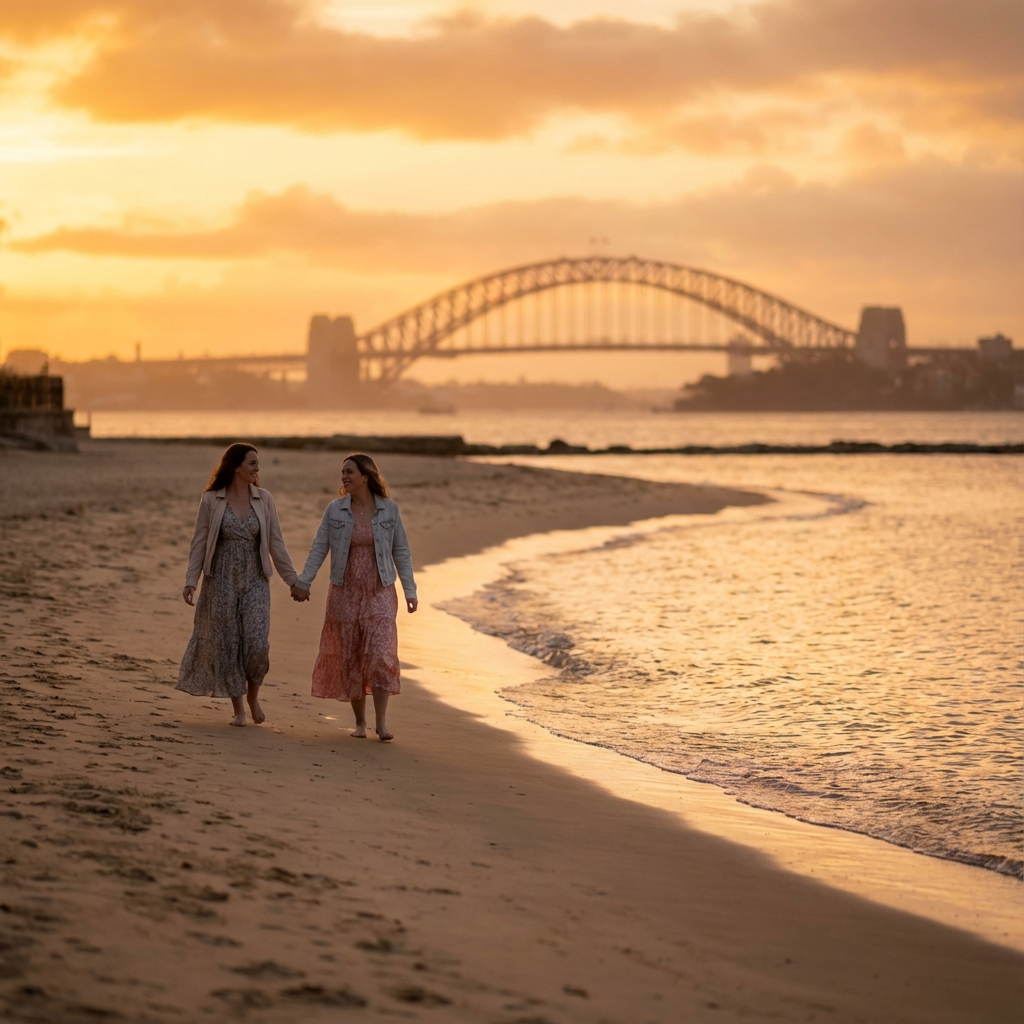
Love doesn't discriminate-and neither does Australian immigration law. Since 2017, Australia has recognized same-sex marriages and de facto relationships equally to heterosexual relationships for all Partner visa applications.
But here's the reality many couples face: how do you prove a relationship you've had to hide?
If you're from a country where being LGBTQ+ is criminalized, stigmatized, or simply not spoken about, gathering "traditional" evidence like joint bank accounts, public photos, or family statements can feel impossible.
This guide is written specifically for you. It explains how to navigate the partner visa process when conventional evidence isn't available, what the Department of Home Affairs (the Department) understands about your situation, and how to build a compelling application even when your relationship has been kept private.
Australia treats all couples equally. There is no separate "LGBTQ+ visa." Same-sex couples apply for the same Partner Visa (Subclass 820/801 onshore or 309/100 offshore) or Prospective Marriage Visa (Subclass 300) as everyone else. The evidence requirements are identical-but the Department acknowledges that gathering evidence may be harder for some couples.
Which Visa Is Right for You?
| Visa | When to Use | Key Requirements |
|---|---|---|
| Subclass 820/801 (Onshore Partner) | If your partner is already in Australia on a valid visa | 12-month de facto relationship OR registered relationship |
| Subclass 309/100 (Offshore Partner) | If applying from outside Australia | Same as above |
| Subclass 300 (Prospective Marriage) | If you plan to marry in Australia before applying for partner visa | Must marry within 9 months of arrival |
Registered Relationship Shortcut: In most Australian states (NSW, VIC, QLD, SA, TAS, ACT), you can register your de facto relationship. This registration waives the 12-month cohabitation requirement. This is particularly valuable for couples who cannot safely live together in their home country.
The Four Pillars of Evidence
The Department assesses all Partner visa applications against four categories of evidence. For LGBTQ+ couples facing documentation challenges, understanding these categories helps you identify where you can compensate for gaps. Not sure how your evidence stacks up? Use our Partner Visa Readiness Assessment to evaluate your documentation strength across all four pillars.
1. Financial Aspects
What the Department Wants: Evidence that you share finances and support each other economically.
Standard Evidence:
- Joint bank accounts
- Joint credit cards or loans
- Shared utility bills
- Joint property ownership or lease
If You Don't Have This: If you've kept finances separate due to privacy concerns or because joint accounts would "out" your relationship, explain this in your personal statement. Instead, provide:
- Evidence of money transfers between you (bank statements showing regular transfers)
- Receipts showing you've paid for each other's expenses (flights, accommodation, gifts)
- Proof of financial support during hardship (e.g., you paid their rent during unemployment)
2. Nature of the Household
What the Department Wants: Proof you live together (or have a valid reason why you don't).
Standard Evidence:
- Joint lease or property title
- Utility bills in both names at the same address
- Shared mail or packages
If You Don't Have This (The "Constructive Cohabitation" Approach):
The Department recognizes that some couples cannot safely live together due to legal restrictions, family pressure, or social stigma in their home country. This is where "constructive cohabitation" applies-you can still demonstrate a genuine relationship without sharing a permanent address.
Direction 102 explicitly lists "same-sex couples residing in countries where such relationships are criminalised" as a compelling and compassionate circumstance that warrants special consideration. If this applies to you, cite Direction 102 in your application.
Evidence for constructive cohabitation:
- Visa stamps and boarding passes showing visits to each other
- Hotel/Airbnb bookings for time spent together
- Photos in shared temporary accommodation
- Communication records showing daily involvement in each other's lives (screenshots of WhatsApp/Telegram chats, call logs)
Provide a detailed written statement explaining why you cannot live together permanently. Be specific about the legal or social conditions in your country. The Department will not penalize you for circumstances beyond your control.
3. Social Aspects
What the Department Wants: Proof that your relationship is recognized by others.
Standard Evidence:
- Statutory declarations (Form 888) from friends and family - minimum 2 required, 3-4 recommended
- Joint invitations to weddings, parties, or events
- Photos together at social gatherings
- Social media posts showing your relationship
If Your Relationship Is Private:
This is often the hardest category for LGBTQ+ couples from conservative backgrounds. If your families don't know, or if being "out" would endanger you, here's how to approach it:
- Find allies who DO know. Even if you haven't told your families, you likely have trusted friends, LGBTQ+ community members, or colleagues who are aware of your relationship. Ask them to provide Form 888 statutory declarations.
- LGBTQ+ community connections. Statements from members of LGBTQ+ support groups, community organizations, or online communities can demonstrate social recognition.
- Travel companions. If friends have traveled with you as a couple, their statements are valuable.
- Professional witnesses. In some cases, counsellors, therapists, or religious leaders who have supported you as a couple may provide statements.
Form 888 doesn't have to be from family. The Department accepts statements from anyone who knows your relationship-friends, colleagues, community members, or even people who only know you online but have witnessed your relationship develop over time.
4. Nature of Commitment
What the Department Wants: Proof of mutual commitment to a long-term shared life.
Standard Evidence:
- Communication history (calls, messages, video chats)
- Evidence of joint future plans (property purchase, wedding, having children)
- Wills naming each other as beneficiaries
- Evidence of emotional support during illness or crisis
How to Strengthen This:
- Extensive communication records. Chat history from WhatsApp, Telegram, or Signal showing daily emotional involvement is powerful evidence. Screenshots don't need to be intimate-they should show you share your lives (discussing the day, making decisions together, planning the future).
- Future planning documents. Have you researched homes together? Discussed wedding venues? Created a joint savings plan? Document this.
- During illness or hardship. If either of you has been sick, unemployed, or facing crisis, evidence that the other partner provided emotional or financial support is extremely compelling.
Country-Specific Challenges and Solutions
| Situation | Challenge | Solution |
|---|---|---|
| Homosexuality is criminalized | Cannot live together openly; no legal recognition; fear of persecution | Provide detailed statement explaining legal environment. Focus on constructive cohabitation evidence and communication records. Consider LGBTQ+ asylum pathways if persecution risk is high. |
| Family doesn't know | Cannot obtain family statements; limited public photos | Obtain Form 888s from trusted friends or community members who DO know. Explain family situation in personal statement. |
| Forced previous heterosexual marriage | Past marriage may seem inconsistent with current relationship | The Department explicitly recognizes that some LGBTI individuals enter heterosexual marriages due to societal pressure. Provide honest explanation in your statement. |
| Long-distance relationship | Limited cohabitation evidence | Emphasize travel history, communication records, and constructive cohabitation. Register relationship in Australia to waive 12-month requirement. |
Common Mistakes to Avoid
-
Hiding the truth. If your relationship has been secret, explain why rather than trying to manufacture evidence. The Department values honesty over quantity of documents.
-
Generic Form 888 statements. Weak statutory declarations that say "they seem like a genuine couple" carry little weight. Ask your witnesses to describe specific events, conversations, or observations that demonstrate your commitment.
-
Ignoring cultural context. If the Department doesn't understand why evidence is limited, they may assume your relationship isn't genuine. Your personal statement must clearly explain the legal and social environment in your home country.
-
Assuming it's hopeless. Many LGBTQ+ couples successfully obtain partner visas even without traditional evidence. The key is building a coherent narrative supported by whatever evidence IS available.
Do not fabricate evidence. Creating fake documents, backdating photos, or manufacturing statements is a criminal offence under Australian law. It will result in visa refusal, a potential 3-year ban, and possible prosecution. The Department has sophisticated tools to detect fraud.
The Personal Statement: Your Most Powerful Tool
For LGBTQ+ couples with limited documentation, the personal statement becomes the centerpiece of your application. This is your chance to tell your story directly to the decision-maker.
What to include:
- How you met and your relationship developed - Be specific about dates, places, and milestones.
- Why evidence is limited - Explain the legal/social conditions in your country that prevented you from being open.
- How you've maintained your relationship - Describe how you communicate, visit each other, and share your lives despite distance or secrecy.
- Your commitment to the future - What are your plans once you're together in Australia?
- Who knows about your relationship - Even if it's just a few trusted friends, mention them.
Tone: Be factual but emotional. The Department wants to understand your relationship as real people, not just a list of documents.
Registering Your Relationship in Australia
Registering your de facto relationship in an Australian state or territory offers significant advantages:
- Waives the 12-month cohabitation requirement - Essential for couples who cannot live together in their home country
- Provides formal legal recognition - Strengthens your application
- Can be done quickly - Most states process registrations within a few weeks
| State/Territory | Processing Time | Cost | Notes |
|---|---|---|---|
| NSW | 2-4 weeks | ~$70 | At least one partner must reside in NSW |
| VIC | 2-3 weeks | ~$100 | Online application available; one partner must reside in VIC |
| QLD | 2-4 weeks | ~$135 | One partner must reside in QLD |
| SA | 1-2 weeks | ~$80 | One partner must reside in SA |
| TAS | 1-2 weeks | ~$50 | ⚠️ BOTH partners must reside in TAS - rarely suitable for offshore couples |
| ACT | 1-2 weeks | ~$50 | One partner must reside in ACT |
Western Australia (WA) and Northern Territory (NT): WA relationship registration is NOT recognized by the Department for waiving the 12-month rule. NT has no relationship register. If your sponsor lives in WA or NT, you must either relocate, prove 12 months cohabitation, or rely on "compelling and compassionate circumstances."
Subclass 300 (Prospective Marriage Visa) strategy: If you're from a country where cohabitation is illegal or dangerous, the Subclass 300 Prospective Marriage Visa may be your safest option. It requires only that you've met in person and intend to marry-no 12-month cohabitation needed. After arriving in Australia and marrying, you apply for the Partner Visa onshore.
Processing Times and Costs (2025-2026)
| Visa | Current Processing Time | Application Fee |
|---|---|---|
| Partner Visa (820/801 or 309/100) | 24-33 months | AUD $9,365 (main applicant) |
| Prospective Marriage Visa (300) | 18-24 months | AUD $5,200 |
Additional applicant fees:
- Adult (18+): AUD $4,685
- Child (under 18): AUD $2,345
For a detailed breakdown of what to expect during the waiting period, see our guide on Partner Visa Processing Times 2026.
The long processing time means you should start gathering evidence early and continue adding to your application throughout the waiting period. New photos, travel together, and additional Form 888s can be submitted after lodgement.
How First Migration Can Help
At First Migration, we specialize in same-sex partner visa applications and understand the unique challenges LGBTQ+ couples face. We've helped couples from countries where being out is dangerous navigate the evidence requirements with sensitivity and discretion.
Our team can:
- Review your relationship evidence and identify gaps before you lodge
- Craft compelling personal statements that explain your circumstances
- Advise on alternative evidence strategies when traditional documents aren't available
- Guide you through relationship registration in Australian states
- Represent you throughout the application process with complete confidentiality
Your love is valid. Let us help you prove it.
We invite you to submit a free visa assessment so we can review your profile and discuss the best pathway for your situation.
MARA Registered Agent
Registration No. 1569835
Certified by the Migration Agents Registration Authority. Your trusted partner for Australian visa applications.
189 Visa Quota Exhausted for 2025-26: Your Best Skilled Migration Options Right Now
Civil Engineers: CDR Writing, Skills Assessment & PR Pathway to Australia (2026)
Mechanical Engineers: CDR Guide, Skills Assessment & Australian PR Pathway (2026)
Working Holiday Health Insurance: Do You Need OVHC, Medicare & What's Actually Covered?
Working Holiday Visa Country Comparison: Which Passport Gets the Best Deal in Australia?
Office Hours
Mon-Fri: 9AM-5PM Sat: 10AM-2PM