
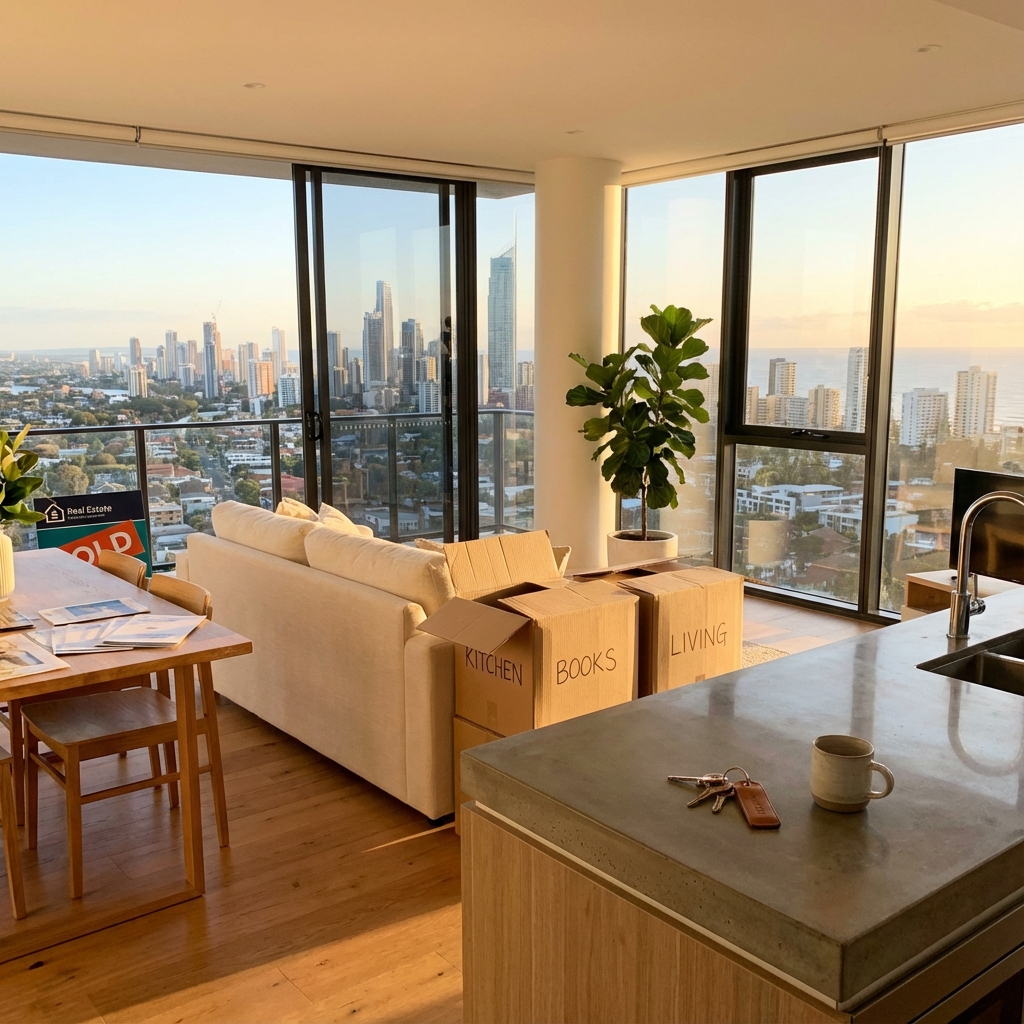
Finding a place to rent is often one of the most stressful experiences for anyone newly arrived in Australia. With competitive rental markets, unfamiliar application processes, and state-specific tenant laws, navigating the Australian rental landscape can feel overwhelming. This comprehensive guide breaks down everything you need to know-from submitting your first application to understanding your rights as a tenant.
Understanding the Australian Rental Market
Before diving into applications, it's essential to understand how renting in Australia works. Unlike some countries where you deal directly with landlords, most Australian rentals are managed through real estate agents who act on behalf of property owners.
Key Terminology
| Term | Meaning |
|---|---|
| Landlord/Lessor | The property owner |
| Tenant/Lessee | The person renting the property |
| Property Manager | Real estate agent managing the property |
| Bond | Security deposit held by a government authority |
| Rent in Advance | Usually 2-4 weeks rent paid upfront |
| Lease/Tenancy Agreement | Legal contract between landlord and tenant |
| Periodic Tenancy | Month-to-month arrangement after fixed term ends |
| Condition Report | Document recording property condition at move-in/out |
Typical Costs to Budget For
When preparing to rent, expect these upfront costs:
- Bond: Equivalent to 4 weeks' rent (varies by state and rent amount)
- Rent in Advance: 2-4 weeks (varies by state)
- Utilities Connection: $50-150 for electricity/gas setup
- Internet Setup: $0-100 depending on provider
- Renters Insurance: $4-30/week depending on coverage level
Example: For a $600/week apartment, expect to pay approximately $3,600-$4,800 upfront (4 weeks bond + 2-4 weeks advance rent).
Renters Insurance: Protect Your Belongings
Your landlord's building insurance does not cover your personal belongings. You need renters contents insurance:
| Coverage Level | Annual Cost | Weekly Cost |
|---|---|---|
| Basic ($20,000) | $230-490 | $4-10 |
| Standard ($30,000) | $420-780 | $8-15 |
| Comprehensive ($50,000+) | $600-1,440 | $12-30 |
This covers furniture, electronics, and clothing against theft, damage, or loss.
Finding a Rental Property
Popular Property Search Platforms
| Platform | Best For | Website |
|---|---|---|
| Domain | All property types | domain.com.au |
| realestate.com.au | Largest listings database | realestate.com.au |
| rent.com.au | Rental-focused listings | rent.com.au |
| Flatmates.com.au | Shared accommodation | flatmates.com.au |
| Gumtree | Private rentals, share houses | gumtree.com.au |
| Facebook Marketplace | Community listings | facebook.com/marketplace |
Tips for Property Inspections
- Arrive early (first 15 minutes) - Creates a positive impression on agents
- Take timestamped photos/videos: Document the current condition (your phone does this automatically)
- Check water pressure, power outlets, and appliances
- Ask about lease length flexibility
- Note proximity to public transport and amenities
- Ask about pet policies (if applicable)
- Inquire about minimum rental standards (especially in NSW and Victoria)
The Rental Application Process
Digital Application Platforms
The rental application process has become almost entirely digital. Most agencies use specialised platforms:
1Form (by realestate.com.au)
1Form allows you to create a reusable renter profile that can be submitted to multiple properties without re-entering your details. Widely accepted across NSW and Queensland.
What You'll Need:
- Government-issued ID (passport for newcomers)
- Proof of income (employment contract, bank statements, or offer letter)
- Rental history/references (or alternative references)
- 100 points of identification
Snug
Snug offers similar functionality with additional features. Popular in Victoria and South Australia. Less invasive data collection makes it faster to complete.
Key Features:
- Reusable renter resume
- Secure document storage
- "Match Score" based on profile completion
- Direct communication with agents
2Apply (by Domain)
Domain's platform with similar data requirements to 1Form, less commonly used but accepted by Domain-listed properties.
Privacy Note: All digital platforms store substantial personal data. In Queensland, data must be destroyed within 3 months for unsuccessful applicants and 7 years after tenancy ends for successful ones. Privacy-conscious applicants can request full profile deletion after approval.
⚠️ Platform Tips: These platforms use algorithms to rank applications. Snug's "Match Score" relies on historical data that newcomers lack-don't be discouraged by a low score if you can financially afford the property. 2Apply uses OCR scanning optimized for Australian documents; if your foreign passport is rejected by auto-scanner, request a manual override.
What is 100 Points of ID?
Australian rental applications typically require "100 points of identification":
| Document Type | Points |
|---|---|
| Passport | 70 |
| Australian Driver's Licence | 40 |
| Birth Certificate | 70 |
| Medicare Card | 25 |
| Bank Statement | 25 |
| Utility Bill | 25 |
For newcomers, a passport (70 points) plus a bank statement (25 points) and utility bill or Medicare card (25 points) typically meets the requirement.
Pro Tip: Convert your overseas driver's licence to an Australian licence immediately upon arrival. This serves dual purposes: driving privileges AND a high-value local ID document (40-70 points) that agents trust more than foreign passports.
Building a Competitive Application Without Australian Rental History
As a newcomer, you may lack Australian rental references. Here's how to strengthen your application:
| Strategy | How It Helps |
|---|---|
| Offer more rent in advance | 3-6 months upfront shows financial stability |
| Provide overseas references | Previous landlords, employers, or character references |
| Show strong income | Bank statements proving savings; aim for rent to be 30-40% of gross income |
| Write a cover letter | Personal introduction explaining your situation (increases approval by 10-15%) |
| Include visa details | Show you have a valid visa with work rights |
| Offer longer lease term | 24-month lease preference is viewed more favourably |
| Use a guarantor | Australian resident who co-signs the lease |
Savings Threshold Guidance:
- Standard rentals: Show savings equivalent to 6 months' rent plus living expenses
- High-end markets (Sydney Eastern Suburbs, etc.): ~$100,000 AUD may be needed to offset lack of employment history
Framing Rent in Advance: When offering to pay rent upfront, phrase it as: "To support my application and demonstrate financial security, I am willing to pay 6 months of rent in advance." This explicitly frames it as voluntary, keeping the agent compliant with laws that prohibit landlords from requesting excessive advance payments.
Documents Checklist for Applications
Identity Documents:
- ✅ Passport and visa grant notice
- ✅ Photo ID (driver's licence if available)
- ✅ Birth certificate (if needed for points)
Financial Proof:
- ✅ Employment contract or job offer letter
- ✅ Recent payslips (last 2-4 weeks, if already working)
- ✅ Bank statements showing savings (3 months)
Rental History:
- ✅ Previous landlord reference letter (from overseas is fine)
- ✅ Rental ledger or tenancy agreement (if available)
References:
- ✅ Professional references (employer/manager)
- ✅ Personal/character references (non-family)
Application Timeline
Standard processing takes 24-72 hours, though some agencies respond same-day in slower markets.
Common Rejection Reasons:
- Missed rental payments (>70% of rejections) - Database history of late payments
- Negative rental history (~60%) - Evidence of property damage or eviction
- Insufficient income (~50%) - Income less than required ratio
- Incomplete application (~40%) - Missing documents or mismatched details
- Unfavourable references (~30%) - Negative employer or landlord comments
Understanding Bond Requirements
What is a Rental Bond?
A rental bond is a security deposit that protects the landlord against property damage or unpaid rent. In Australia, bonds are held by government authorities-not by landlords or agents-which provides significant protection for tenants.
Critical Rules:
- ⚠️ It is illegal for landlords to request additional "pet bonds" in any state
- ⚠️ Only pay bond after signing the lease and receiving the signed condition report
- ⚠️ Bond cannot be used to pay rent
- ⚠️ Bond must be lodged with the regulatory authority (not kept by the landlord, except in NT)
Bond Limits by State/Territory
| State/Territory | Maximum Bond | Lodgement Timeframe | Holding Authority |
|---|---|---|---|
| NSW | 4 weeks' rent (or 1 month if rent ≥$800/week) | 14 days | NSW Fair Trading |
| VIC | 1 month (if weekly rent ≤$900; higher if above) | 10 business days | RTBA |
| QLD | 4 weeks' rent | 10 days | RTA |
| WA | 4 weeks' rent (6 weeks if >$1,200/week) | 14 days | Bond Administrator |
| SA | 4 weeks' rent (≤$800/week); 6 weeks (>$800/week) | Varies | Consumer and Business Services |
| TAS | 4 weeks' rent | 10 working days | Rental Deposit Authority |
| ACT | 4 weeks' rent | 2-4 weeks | ACT Revenue Office |
| NT | 4 weeks' rent | Held in trust by landlord | N/A |
Fees You Can and Cannot Be Charged
Legal Fees:
- ✅ Rent (as agreed in lease)
- ✅ Bond (limited to amounts above)
- ✅ Holding fee (maximum 1 week's rent, only if you're approved)
- ✅ Lease registration fee (NSW only, if applicable)
Illegal Fees:
- ❌ Application fees (illegal across all states)
- ❌ Reference checking fees
- ❌ Inspection fees
- ❌ "Pet rent" or additional pet fees/bonds
- ❌ Any upfront fees beyond bond and holding fee
Rent in Advance Limits by State
Landlords are limited in how much rent they can demand upfront (separate from bond):
| State/Territory | Maximum Landlord Can Request | Notes |
|---|---|---|
| NSW | 2 weeks | Can accept more if tenant voluntarily offers |
| VIC | 1 month (if rent <$900/wk) | Strict limits; higher threshold for luxury rentals |
| QLD | 2 weeks (periodic) / 1 month (fixed) | Strictly limited |
| SA | 2 weeks | Strict limit |
| WA | 2 weeks | Grey area if tenant specifically requests |
| TAS | 2 weeks (boarding) / 4 weeks (general) | Based on payment period |
| ACT | 2 weeks | Can accept more if tenant volunteers |
| NT | 1 rental period | Usually 2 weeks or 1 month |
Key Distinction: Landlords cannot ask for more than these amounts, but in most states they may accept voluntary offers from tenants. This is a strategic lever for newcomers.
Understanding Rent Bidding Laws
Rent bidding (offering more than the advertised price) is now heavily regulated:
Strict Bans (QLD & NT):
- Illegal for agents to solicit and accept higher bids
- Properties must be advertised at a fixed price-that's the price the lease must be signed at
Partial Bans (NSW, WA, TAS, ACT):
- Agents cannot solicit bids ("Can you offer more?")
- However, if a tenant voluntarily offers more, the landlord can accept it
- This creates a "shadow bidding" system where offering $20-$50 extra per week can secure a property
Victoria (from 2025):
- Moving to mirror the strict Queensland model, closing loopholes
Can't Afford the Bond?
Several states offer bond assistance programs:
| State | Program | Details |
|---|---|---|
| VIC | RentAssist Bond Loan | Interest-free, administered by Housing Victoria |
| NSW | Rentstart | Loans for low-income earners |
| QLD | Bond Loan Program | Through Queensland Government |
| SA | Housing Advice | Bond assistance programs available |
⚠️ Note for Temporary Visa Holders: Bond loan schemes are generally only accessible to permanent residents or citizens. Newcomers on temporary visas should budget to pay the full bond upfront.
NSW Portable Bond Scheme
A major innovation in NSW is the Portable Bond scheme. Previously, tenants moving between properties had to pay a new bond before receiving their old one back (the "double bond" problem). The new scheme allows bonds to digitally transfer from the old tenancy to the new one, significantly reducing upfront capital required when moving.
Getting Your Bond Back
At the end of your tenancy:
- Clean the property thoroughly (or hire professional end-of-lease cleaners)
- Complete a final inspection with the agent (within 10 days)
- Return all keys, remotes, and cards
- Provide forwarding address to bond authority
- Submit a bond refund claim through the relevant state authority
Bond Claim Timeline:
- Your claim goes to the bond authority
- Landlord has 14 days to respond or dispute
- If no dispute within 14 days, bond releases automatically
- If disputed, tribunal holds hearing to decide
Condition Reports: Your Most Important Protection
The condition report is conclusive evidence of property condition when you move in and move out. It's the primary tool for defending against unfair bond claims.
Entry Condition Report (Before Moving In)
- Landlord must provide 2 signed copies (or 1 electronic) before you move in
- Inspect thoroughly within 5-7 business days
- Note every existing issue: scratches, stains, damage, broken fixtures, appliance faults
- Take timestamped photographs (modern phones do this automatically)
- Disagree explicitly with any statements you don't accept-silence implies agreement
- Return 1 signed copy; keep the other for your records
⚠️ Common Mistake: Not noting pre-existing damage. If you fail to document damage, you'll be held liable when you move out.
Exit Condition Report (Moving Out)
- Landlord must inspect within 10 days after you leave
- Attend if possible
- Take final photographs
- Review the report carefully; request copies of photos
This report determines bond claims.
Normal Wear and Tear vs. Damage
Wear and Tear (Landlord Liable):
- Faded carpet or paint from sunlight
- Minor wall marks from picture hangers
- Worn carpet pile from foot traffic
- Loose door hinges from years of use
- Marks from furniture placement
Damage (Tenant Liable):
- Large stains or burns
- Holes in walls beyond picture hangers
- Broken windows or fixtures
- Significant scratches or gouges
- Water damage from neglect
Tenant Rights by State
Australian tenants have strong legal protections, but specific rights vary by state. Here's a summary of key protections:
New South Wales (NSW)
2024-2025 reforms have created one of Australia's strongest renter protections:
- Rent increases: Limited to once per 12 months; 60 days' notice required
- Pet laws: Landlords must respond within 21 days or pets are automatically approved; no extra pet fees permitted
- No-grounds evictions: Eliminated; landlords must provide valid reason
- Break lease fee: Maximum 4 weeks' rent if fixed term has 25% or less remaining
- Inspections: 7 days' notice; maximum 4 per year; 8 AM - 6 PM weekdays only
- Urgent repairs: Tenant can authorize repairs up to $1,000 if landlord doesn't respond promptly
- Portable Bond: Bonds can transfer digitally between properties (no "double bond" problem)
- Resource: NSW Fair Trading - fairtrading.nsw.gov.au
Victoria (VIC)
Major 2025 reforms (from 25 November 2025):
- Rent increases: 90 days' notice required (increased from 60); once every 12 months
- No-grounds evictions: Fully eliminated from 25 November 2025
- Standard application form: Mandatory from 31 March 2026; landlords cannot request information beyond this form
- Privacy protections: Sensitive information can only be requested in limited circumstances
- Minimum standards: Annual smoke alarm checks, blind/curtain cord safety (from 1 December 2025)
- Inspections: 7 days' notice; maximum once per 6 months; not within first 3 months
- Urgent repairs: Must be completed immediately (burst water, gas leak, electrical fault)
- Condition reports: Must be provided before move-in; 5 business days to return signed copy
- Urgent repairs: Tenant can authorize repairs up to $2,500 if landlord doesn't respond-landlord must reimburse within 7 days
- Minimum standards: Fixed heater in main living area, deadlocks on external doors, electrical safety checks every 2 years
- Resource: Consumer Affairs Victoria - consumer.vic.gov.au
Queensland (QLD)
- Rent increases: Once per 12 months-attached to the property, not the tenancy (landlord can't evict to reset rent with new tenant)
- Minimum standards: Apply to all tenancies from 1 September 2024 (weatherproof, structurally sound, free of mould, functioning locks)
- Data privacy: Personal information must be destroyed within 3 months (unsuccessful applicants) or 7 years after tenancy ends
- Domestic violence: Tenants can end tenancy immediately with proof of DV
- Inspections: 7 days' notice; maximum once per 3 months
- Dispute resolution: RTA provides free dispute resolution services
- Resource: Residential Tenancies Authority - rta.qld.gov.au
South Australia (SA)
Major 2023-2025 reforms:
- Rent bidding: Prohibited; properties advertised at fixed price
- No-grounds evictions: Eliminated; valid reason required
- Standard application form: Mandatory from 1 January 2026
- Bond reduction: Maximum 4 weeks (if rent ≤$800/week); was previously 6 weeks
- Domestic violence protections: Enhanced pathways to end tenancy
- Inspections: Maximum once per 4 weeks
- Resource: Consumer and Business Services - cbs.sa.gov.au
Western Australia (WA)
- Rent increases: 60 days' notice; not during fixed term unless lease allows
- Bond threshold: Different rules apply for properties over $1,200/week
- Inspections: 7-14 days' notice; maximum 4 per year
- Entry notice: Reasonable notice required (typically 72 hours)
- Resource: Consumer Protection WA - commerce.wa.gov.au
Australian Capital Territory (ACT)
- "The Renting Book": Landlords must provide this booklet before tenancy begins-failure to do so can invalidate rent increase or termination notices
- Ceiling insulation: First jurisdiction to mandate minimum energy efficiency standards for rentals
- Excessive rent increases: Tenants can challenge increases significantly above CPI; burden of proof is on landlord
- Inspections: Twice per year (plus initial and final inspection)
- Resource: Access Canberra
Tasmania (TAS)
- Rent control: Rent can only be increased if the written lease explicitly allows it-if silent, rent stays fixed for the lease duration
- Bond: Lodged with Rental Deposit Authority (MyBond); tenants pay online after owner initiates
- Inspections: Once every 3 months
- Pets: Landlords retain significant discretion to refuse
- Resource: Consumer, Building & Occupational Services
Northern Territory (NT)
- Rent bidding: Prohibited-landlords cannot accept offers above advertised price
- Trust accounts: Private landlords can hold bonds themselves but must use a designated Trust Account; tenants can request account details
- Rent in advance: Cannot require more than one rental period
- Inspections: Once every 3 months
- Resource: NT Consumer Affairs
General Rights Across All States
Regardless of your state, you generally have the right to:
- ✅ Live in a property that's safe, clean, and fit for habitation
- ✅ Quiet enjoyment without unreasonable interference
- ✅ Know who your landlord is and have their contact details
- ✅ Have urgent repairs completed promptly (24-48 hours)
- ✅ Challenge unfair terms in a lease
- ✅ Not be discriminated against based on race, gender, family status, or disability
Repairs and Maintenance
Urgent/Emergency Repairs
Urgent repairs include:
- Electrical faults, gas leaks
- Water supply failure, burst water service
- Blocked or broken toilet
- Lack of hot water, heating, cooking facilities
- Serious roof leak, flooding, storm damage
Your Action Required:
- Call landlord/agent immediately
- Follow up in writing (email or text) within hours-creates written record
- Keep all communication proof
Landlord's Obligation:
- Arrange qualified repairer within 24 hours (NSW/SA) to 48 hours (varies by state)
- Complete repair "as soon as practicable" (typically 1-2 days)
- In genuine emergency, you may arrange repair yourself and claim reimbursement
Non-Urgent Repairs
- Report in writing to landlord/agent (email is sufficient)
- Landlord must complete within 14 days of written request
- If not completed, document attempts to contact, then apply to tribunal
Photo Privacy During Inspections
New reforms in VIC, QLD, and SA now restrict landlords from taking photos during inspections that reveal your personal belongings or identity (e.g., family photos on walls). You have the right to object to such photos being published when the property is advertised for sale.
Avoiding Rental Scams
Rental scams are unfortunately common. Protect yourself:
Common Rental Scams
- ❌ Requesting advance rent/deposit before inspecting property in person
- ❌ Overpayment cheques for refunds (cheque is fraudulent)
- ❌ Listing properties they don't own; scammers pose as owners
- ❌ Pressure for immediate cash payments
Red Flags in Landlords/Agents
- Requesting excessive personal information unrelated to suitability
- Refusing to provide lease agreement
- Unwilling to lodge bond with authority
- Excessive fees (application, inspection, reference-checking)
- Reluctance to provide previous tenant references
How to Verify
- ✅ Always inspect property in person
- ✅ Verify listing on realestate.com.au or domain.com.au
- ✅ Check agent credentials with fair trading authority
- ✅ Reverse image search: Use Google Lens to check if listing photos appear elsewhere (e.g., on old sale listings)
- ✅ Title search: For private rentals, a land title search ($15-$30 via state Land Titles Office) verifies if the "landlord" actually owns the property
- ✅ Verify agent license: Check the agent's license number on your state's Fair Trading public register
- ✅ Get everything in writing
- ✅ Report scams to your state's fair trading authority
Common Mistakes to Avoid
- Not reading the lease carefully - Know your obligations before signing
- Skipping the condition report - Document any existing damage in detail with photos
- Paying cash without receipts - Always get written confirmation of payments
- Not requesting repairs in writing - Verbal requests are hard to prove
- Breaking the lease without understanding costs - This can be expensive
- Paying bond before signing lease - Never pay until you have the signed agreement
Tips for Newcomers in a Competitive Market
The Australian rental market can be highly competitive, especially in major cities like Sydney and Melbourne. Here are strategies to increase your chances:
- Apply for multiple properties simultaneously
- Be ready to submit applications immediately after inspections
- Have all documents pre-uploaded to 1Form or Snug
- Write a compelling cover letter (10-15% higher approval rate)
- Be flexible with move-in dates
- Consider starting in share accommodation while building local references (3-6 months)
- Look slightly outside popular suburbs for better availability
Pro Tip: For recent arrivals, temporary accommodation (hostels, Airbnb, serviced apartments) for 3-6 months whilst building employment history and local references significantly increases later rental success. This strategy is standard and expected in the market.
What to Do If You Face Issues
If you encounter problems with your tenancy:
- Talk to your property manager first - Many issues can be resolved informally
- Put complaints in writing - Email creates a paper trail
- Contact your state's tenancy authority - Free advice and dispute resolution
- Community legal centres - Free legal help for renters
Tenant Advocacy Services
| State/Territory | Organisation | Phone Number |
|---|---|---|
| NSW | Tenants' Union NSW | 1800 242 801 |
| VIC | Tenants Victoria | 1800 242 801 |
| QLD | Tenants Queensland | 1300 144 008 |
| SA | Tenancy Services | 1800 013 245 |
| WA | Consumer Protection WA | 1300 304 054 |
Tribunal applications cost minimal fees; advocates help prepare cases.
State Tenancy Authority Helplines
| State/Territory | Phone Number | Website |
|---|---|---|
| NSW | 1300 135 399 | fairtrading.nsw.gov.au |
| VIC | 1300 558 181 | consumer.vic.gov.au |
| QLD | 1300 366 311 | rta.qld.gov.au |
| WA | 1300 304 054 | commerce.wa.gov.au |
| SA | 131 882 | cbs.sa.gov.au |
How First Migration Can Help
While we specialise in migration services rather than real estate, understanding the rental market is an essential part of settling in Australia. Many of our clients face challenges securing accommodation while navigating visa requirements, and we understand how interconnected these challenges are.
If you're planning to relocate to Australia and have questions about visa requirements, work rights, or any other aspect of your migration journey, we're here to help.
Ready to start your Australian journey? We invite you to submit a free visa assessment so we can understand your situation and provide tailored migration advice.
MARA Registered Agent
Registration No. 1569835
Certified by the Migration Agents Registration Authority. Your trusted partner for Australian visa applications.

189 Visa Quota Exhausted for 2025-26: Your Best Skilled Migration Options Right Now

Civil Engineers: CDR Writing, Skills Assessment & PR Pathway to Australia (2026)

Mechanical Engineers: CDR Guide, Skills Assessment & Australian PR Pathway (2026)

Working Holiday Health Insurance: Do You Need OVHC, Medicare & What's Actually Covered?

Working Holiday Visa Country Comparison: Which Passport Gets the Best Deal in Australia?
Office Hours
Mon-Fri: 9AM-5PM Sat: 10AM-2PM