
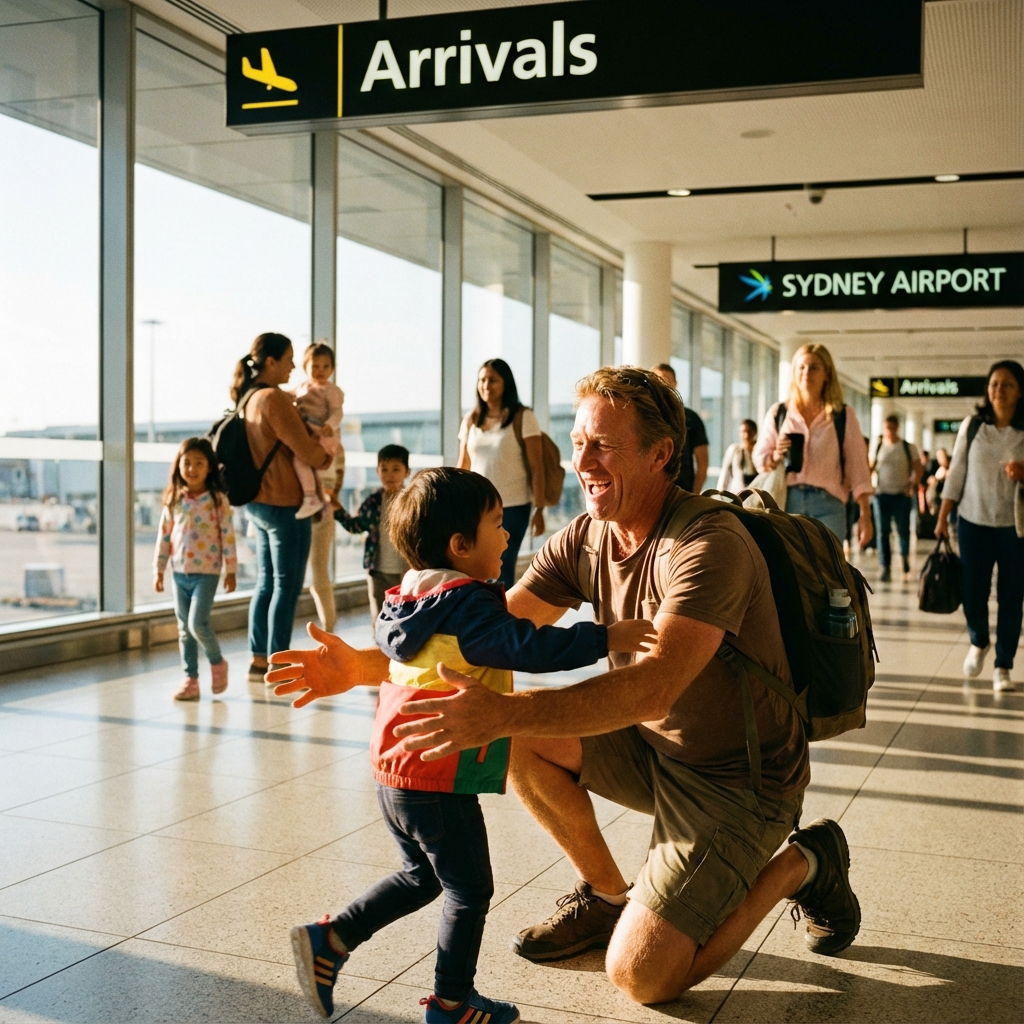
One of the most emotional visa applications is reuniting families-bringing your children to live with you permanently in Australia. Whether your child is overseas and waiting to join you, or already in Australia on a temporary visa, the Child Visa (Subclass 101 or 802) provides a pathway to permanent residency.
This guide explains the key differences between the two subclasses, who qualifies as a "dependent child," the specific rules for adopted children and custody situations, and what you need to know about costs and processing times in 2026.
Subclass 101 vs 802: Which One Do You Need?
The primary difference between the two Child visas is your child's location at the time of application.
| Feature | Subclass 101 (Offshore) | Subclass 802 (Onshore) |
|---|---|---|
| Child's Location | Must be outside Australia when applying and when the visa is granted | Must be inside Australia when applying and when the decision is made |
| Visa Type | Permanent | Permanent |
| Travel Rights | Can travel to and from Australia for 5 years | Can travel to and from Australia for 5 years |
| Common Scenario | Parent migrated first; child stayed with other parent overseas | Child is in Australia on a student or visitor visa |
Important: If your child is in Australia on a visa with a "No Further Stay" condition (Condition 8503), they cannot apply for an 802 visa without first having that condition waived. The waiver requires demonstrating a "major change in circumstances" beyond the applicant's control.
Key Strategic Considerations
For Subclass 101 (Offshore):
- No Bridging Visa: Your child has no right to live in Australia while the application is processed (this can take 19-34 months). Processing happens while the child remains overseas.
- Visitor Visa Risk (Dual Intent): If you apply for a Visitor Visa (600) to allow your child to visit during processing, be cautious. The Department must be satisfied your child is a "Genuine Temporary Entrant" (GTE). If the officer believes the child's true intention is to stay permanently, the visitor visa may be refused-even though "dual intent" is legally permitted.
For Subclass 802 (Onshore):
- Bridging Visa A (BVA): Your child receives a BVA automatically, allowing them to stay lawfully in Australia until a decision is made.
- BVA Travel Warning: The BVA ceases if your child leaves Australia. To travel and return, they must first apply for a Bridging Visa B (BVB). Leaving without a BVB will result in loss of lawful status.
- Work Rights: If your child applied while holding a Visitor Visa (no work rights), the BVA will also have no work rights. They must apply for a new BVA and demonstrate "financial hardship" to obtain work permission.
Who Can Sponsor a Child?
To sponsor a child for a Subclass 101 or 802 visa, you must be:
- An Australian citizen, or
- An Australian permanent resident, or
- An eligible New Zealand citizen
You must be the child's:
- Biological parent
- Adoptive parent (with specific timing requirements-see below)
- Step-parent (with legal responsibility for the child)
Sponsor Obligations: You must commit to providing adequate accommodation and financial support for the child during their first two years in Australia.
Who Qualifies as a "Dependent Child"?
The definition of "dependent child" is strict and varies by age. Your child must meet all of the following criteria:
Age Requirements
| Age Group | Requirement |
|---|---|
| Under 18 | Generally eligible as a dependent child |
| 18-25 years old | Must be a full-time student AND financially dependent on the sponsoring parent (not working full-time) |
| Over 18 with disability | Must have a physical or mental disability that prevents them from working AND be financially dependent on the parent |
Other Requirements
- Single: The child must not be married, engaged, or in a de facto relationship.
- Health & Character: Must meet Australia's health and character requirements. Police certificates are required for applicants aged 16 or older.
Proving Financial Dependency (18-25 Year Olds)
If your child is between 18 and 25, you must provide strong evidence that they are financially dependent on you. This means you provide for their basic needs (food, clothing, shelter) on an ongoing basis-not just occasional support.
Evidence includes:
- Bank statements showing regular transfers from parent to child
- Proof of full-time enrolment in education
- Rent receipts or accommodation evidence showing parent pays
- Evidence that the child does not work full-time
The "But For" Test: The Department applies a strict test: "But for the parent's support, would the child be able to survive and maintain a reasonable standard of living?" Occasional gifts or contributions are not enough-the parent must be the primary source of support.
Gap Year = Loss of Eligibility. The child must have commenced full-time study since turning 18 OR within 6 months of leaving secondary school. If your child takes a gap year longer than 6 months between high school and university, they permanently lose eligibility as a dependent child-even if they return to study later. This is one of the most common reasons for refusal in the 18-25 age group.
Adoption: Which Visa Is Correct?
The rules for adopted children depend on when the adoption occurred relative to when the parent became an Australian citizen or permanent resident.
| Scenario | Correct Visa |
|---|---|
| Child was adopted before the parent became a citizen/PR (and before the child turned 18) | Subclass 101 or 802 (Child Visa) |
| Child was adopted after the parent became a citizen/PR | Subclass 102 (Adoption Visa) |
| Child is currently being adopted from overseas | Subclass 102 (Adoption Visa) |
Adoption Recognition
For the adoption to be valid for visa purposes, it must:
- Be legally recognised in Australia or the child's home country
- Confer full parental rights and responsibilities
Hague Convention on Intercountry Adoption
If the adoption occurred after you became an Australian citizen/PR, it must generally have been processed through:
- An Australian state or territory central authority (intercountry adoption program), or
- An intercountry adoption between two Hague Convention countries (excluding Australia)
Warning: If a country does not issue an adoption compliance certificate, the adoption may not be recognised under Australian law until it is finalised within Australia. In these cases, a Subclass 102 Adoption Visa is typically required first.
Expatriate Adoption: The 12-Month Residence Rule
If you are an Australian citizen/PR living overseas and you adopt a child through the local legal system (not through Australia's official intercountry program), you must satisfy the 12-month residence rule.
- Requirement: You must have been residing outside Australia for more than 12 months immediately before lodging the visa application.
- Purpose: This prevents "forum shopping"-moving overseas temporarily just to adopt a child under less stringent foreign laws.
- Evidence: Tax returns, employment contracts, lease agreements, and utility bills proving genuine overseas residence for 12+ months.
If the Department determines the residence was "contrived" to facilitate the adoption, the visa will be refused, leaving the child unable to enter Australia.
Custody Requirements: Consent is Critical
For children under 18, the Australian government takes custody and consent requirements very seriously.
Mandatory Requirements
- Written consent from all individuals with legal custody of the child (including the other parent if they share custody)
- Evidence that the child's country of residence legally permits their departure
- Compliance with any existing Australian child orders (e.g., Family Court orders)
Step-Children
If you are sponsoring a step-child, you must have:
- An Australian parenting order in force, OR
- Guardianship or custody rights under Australian or foreign law
Tip: If the other parent does not consent, you may need to obtain Australian Family Court orders before lodging the visa application. This can significantly delay the process.
Form 1229: Consent to Grant a Visa
The standard method for providing consent is Form 1229 ("Consent to grant an Australian visa to a child under the age of 18 years"). It must be:
- Signed by the non-migrating parent or any other person with custodial rights
- Accompanied by a certified copy of their government-issued ID (passport or driver's license) bearing their signature
Children with Disabilities: Health Waiver Available
If your child has a disability (e.g., autism, Down syndrome, cerebral palsy), they may fail the health requirement if their care is deemed to impose "significant cost" on the Australian community (currently >$86,000 over the visa period).
However, Child Visas are eligible for a PIC 4007 health waiver. The Department may waive the health requirement if:
- The costs are not "undue" in the circumstances
- There are compelling and compassionate reasons to grant the visa (e.g., the Australian parent is the only carer)
- The sponsor has financial capacity to mitigate the costs (e.g., private health insurance, personal assets)
This waiver is a vital strategic mechanism for families with disabled children, turning a likely refusal into a potential grant through careful submission writing.
Costs in 2026
| Fee | Amount (AUD) |
|---|---|
| Main applicant (child) | $3,235 |
| Additional applicant aged 18+ | $1,615 |
| Additional applicant under 18 | $810 |
Fees are subject to change on 1 July each year. Always verify on the Department of Home Affairs website.
Processing Times (2026 Estimates)
Processing times for Child visas can vary significantly based on the complexity of the case and how quickly you respond to requests for information.
| Percentile | Estimated Processing Time |
|---|---|
| 50% of applications | 14-22 months |
| 90% of applications | 23-29 months |
Factors that can speed up processing:
- Complete application with all evidence provided upfront
- Quick response to health and character checks
- No complex custody or adoption issues
Factors that can delay processing:
- Missing or incomplete documents
- Complex custody disputes requiring Family Court involvement
- Overseas adoptions requiring Hague Convention verification
Step-by-Step: What to Expect
- Check eligibility: Ensure your child meets the age, dependency, and relationship requirements.
- Gather documents: Birth certificates, custody orders, evidence of dependency, health exams, police checks.
- Obtain consent: If custody is shared, get written consent from the other parent.
- Lodge application: Online via ImmiAccount (as of July 2025, paper applications can be imported).
- Wait for processing: Respond promptly to any requests for additional information.
- Visa decision: Once granted, arrange travel (for 101) or the child's status is updated (for 802).
How First Migration Can Help
Child visa applications can be straightforward-or they can become extremely complex when custody disputes, overseas adoptions, or dependency challenges arise. Our registered migration agents can:
- Assess your child's eligibility before lodging
- Prepare a complete application to avoid delays
- Navigate complex custody and consent issues
- Liaise with adoption authorities where required
Ready to bring your child to Australia? We invite you to submit a free visa assessment so we can help you reunite your family.
MARA Registered Agent
Registration No. 1569835
Certified by the Migration Agents Registration Authority. Your trusted partner for Australian visa applications.

Health Professionals: How to Get Victoria State Nomination in 2026
Victoria Construction Trades Nomination 2026: 14 Trades Fast-Tracked for State Sponsorship

Victoria 491 Visa 2026: Stricter Regional Employment Rules Explained

Victoria 190 ROI Strategy: Why Your Salary is the Hidden Tie-Breaker

Victoria State Nomination 2026: Your Complete 190 & 491 Visa Guide
Office Hours
Mon-Fri: 9AM-5PM Sat: 10AM-2PM