
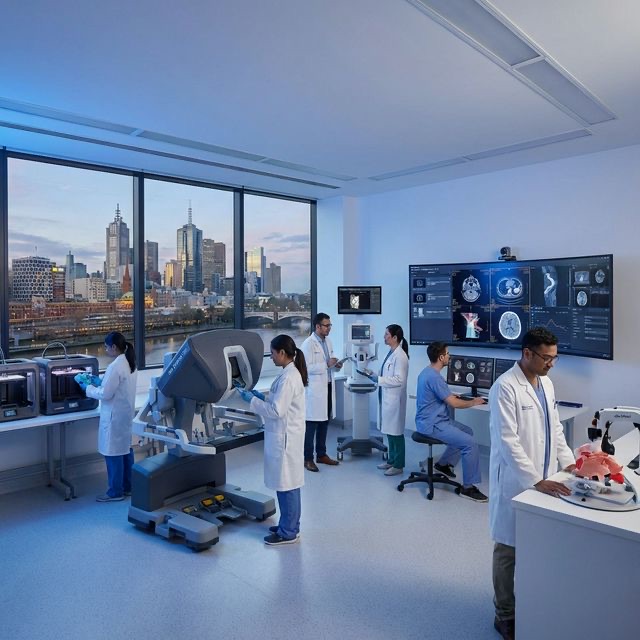
Australia's MedTech industry is booming - valued at over $11 billion and growing at roughly 5-6% annually, driven by an ageing population, rising chronic diseases, and massive government investment in medical research and digital health. For biomedical engineers from the USA, Germany, the UK, India, and Japan, this expansion has created an unusual migration sweet spot: ANZSCO 233913 sits on the Core Skills Occupation List (CSOL), multiple visa pathways lead to permanent residency, and senior professionals with cutting-edge expertise can access the elite National Innovation Visa (NIV). Very few migration guides cover this niche - until now.
This guide explains how Biomedical Engineers (ANZSCO 233913) can navigate skills assessment, visa selection, and strategic positioning to build a permanent career in Australia's rapidly expanding health-tech sector.
Why Biomedical Engineers Are in Demand
Australia is investing heavily in its health-tech future. The medical devices market alone is projected to reach AUD 17.63 billion by 2035, with the government committing over $65.5 million specifically to biomedical and medical technologies. Melbourne and Sydney are the epicentres of this growth - hosting innovation hubs, world-class research hospitals, and a thriving ecosystem of MedTech startups and global manufacturers.
| Factor | Detail |
|---|---|
| Industry value | MedTech sector contributes over $11 billion to Australia's economy |
| Growth rate | Medical devices market growing at ~6.3% CAGR (2026-2035) |
| Key locations | Melbourne (BioMelbourne Network, AMMA), Sydney (NSW innovation hubs), Brisbane (emerging) |
| ANZSCO code | 233913 - Biomedical Engineer |
| Occupation list | CSOL (Core Skills Occupation List) - eligible for 482/SID and 186 Direct Entry |
| MLTSSL status | Also on MLTSSL - eligible for 189, 190, 491 |
| Specialisations | Clinical Engineer, Bioengineer, Medical Engineer, Medical Device Engineer |
ANZSCO 233913 covers Biomedical Engineers who apply knowledge of engineering, biology, and biomechanics to design medical devices, diagnostic equipment, and healthcare systems. If your work is primarily software-focused (e.g., health informatics), you may fall under a different ANZSCO classification. Use our ANZSCO Search tool to confirm your exact code before proceeding.
Visa Pathways at a Glance
Because Biomedical Engineer is on both the CSOL and the MLTSSL, you have access to a wide range of visa pathways - including the prestigious NIV for senior professionals.
| Visa | Type | Key Feature | PR Outcome |
|---|---|---|---|
| 189 Skilled Independent | Points-tested | No sponsor or state nomination needed | Immediate PR |
| 190 State Nominated | Points-tested | +5 points from state nomination | Immediate PR |
| 491 Skilled Work Regional | Points-tested | +15 points; live in regional area 3 years | PR via 191 |
| 482/SID Core Skills | Employer-sponsored | Employer nominates; listed on CSOL | PR via 186 TRT (2 years) |
| 482/SID Specialist Skills | Employer-sponsored | Salary ≥$141,210; no skills assessment needed | PR via 186 TRT (2 years) |
| 186 Direct Entry | Employer-sponsored | Immediate PR; 3-year experience requirement | Immediate PR |
| 858 NIV | Invitation-only | Health & Medical Sciences sector; no sponsor needed | Immediate PR |
Senior biomedical engineers working in medical device R&D, digital health AI, or regenerative medicine may qualify for the National Innovation Visa (Subclass 858) under the Health Industries sector. This pathway offers permanent residency without employer sponsorship - but requires internationally recognised achievements and a nominator with a national reputation.
Skills Assessment: Engineers Australia CDR
For points-tested visas (189, 190, 491) and employer-sponsored visas requiring assessment (SID Core Skills, 186 Direct Entry), you need a positive skills assessment from Engineers Australia - the designated assessing authority for ANZSCO 233913.
Assessment Pathways
| Pathway | Who It's For | Processing Time |
|---|---|---|
| Accredited qualification | Graduates of Washington Accord-accredited degrees (e.g., Australian, US, UK, German universities) | 4-8 weeks |
| Competency Demonstration Report (CDR) | Engineers with non-accredited qualifications (e.g., India, Japan, some European universities) | 8-12 weeks |
| Fast-track option | Available for additional fee | ~20 business days |
What the CDR Requires
If your biomedical engineering degree is not accredited under the Washington Accord, you must submit a CDR containing:
- Three Career Episodes (1,000-2,500 words each) - personal narratives demonstrating your engineering competency in biomedical-specific projects
- Summary Statement - a matrix cross-referencing your career episodes against Engineers Australia's competency elements
- Continuing Professional Development (CPD) list - training, certifications, and conferences since graduation
- Academic transcripts and degree certificates
- Passport copy and employment reference letters
Biomedical-specific competencies matter. Your career episodes must demonstrate competencies specific to biomedical engineering - medical device design, biomechanics analysis, clinical systems integration, regulatory compliance (TGA/FDA/CE), biocompatibility testing, or diagnostic imaging systems. Generic engineering narratives will weaken your application. Engineers Australia uses plagiarism detection tools; all content must be original and written in the first person ("I designed…" not "We designed…").
English Language for Skills Assessment
Engineers Australia requires a minimum of Competent English for the skills assessment itself:
| Test | Minimum Score |
|---|---|
| IELTS | 6.0 in each band |
| PTE Academic | 50 in each component |
| TOEFL iBT | L12, R13, W21, S18 |
| OET | B in each component |
Note: Some visa subclasses (e.g., 189) and state nominations may require higher English scores. Check specific visa requirements separately.
Points Test Strategy for Biomedical Engineers
For 189, 190, and 491 visas, you must score at least 65 points (including any nomination points). Here's how a typical biomedical engineer might build their score:
| Factor | Points | Notes |
|---|---|---|
| Age (25-32) | 30 | Maximum age points |
| English (Superior - IELTS 8.0 each) | 20 | Significant point boost |
| Overseas experience (8+ years) | 15 | MedTech professionals often have deep experience |
| Qualification (Bachelor's degree) | 15 | PhD or research Master's scores 20 points instead |
| State nomination (190) | +5 | Or +15 for 491 |
Use our free GSM Points Calculator to estimate your score and identify where you can gain additional points.
Points thresholds and test scores are indicative. Invitation rounds vary by occupation and programme year. Always verify current requirements with the Department of Home Affairs.
State Nomination: Where Biomedical Engineers Are Wanted
Victoria (Melbourne)
Melbourne is Australia's undisputed MedTech capital, home to the BioMelbourne Network and the Australian Medtech Manufacturing Alliance (AMMA).
| Criterion | Detail |
|---|---|
| 190 requirements | Must live/work in Victoria; valid skills assessment; employment in field |
| 491 requirements | Must live/work in regional Victoria (Geelong, Ballarat, Bendigo) |
| MedTech presence | CSL, Cochlear, Smith+Nephew, Stryker, plus 100+ MedTech firms |
| Research hospitals | Royal Melbourne, Alfred, Monash Health - all with biomedical R&D divisions |
New South Wales (Sydney)
| Criterion | Detail |
|---|---|
| 190 requirements | Must live/work in NSW; employment typically required in nominated occupation |
| Innovation hubs | Sydney Biomedical & Nanoscale Analysis Centre, Macquarie University MedTech Park |
| Industry strength | NSW dominates the Australian MedTech market by revenue |
South Australia (Adelaide)
| Criterion | Detail |
|---|---|
| 190/491 status | SA has historically been favourable for engineering occupations |
| MedTech presence | Growing biomedical manufacturing sector |
| Advantage | Lower competition; regional concessions available |
State nomination requirements and occupation lists change frequently. Always confirm current list availability and specific criteria before submitting an EOI. Contact a registered migration agent for up-to-date advice.
The NIV Pathway: For Senior Biomedical Professionals
The National Innovation Visa (Subclass 858) - formerly the Global Talent Visa - is Australia's premium pathway for exceptionally talented individuals. Health & Medical Sciences is one of the priority sectors, making it directly relevant to senior biomedical engineers.
Who Should Consider the NIV?
- Medical device innovators with patents, commercialised products, or significant regulatory approvals
- Digital health AI researchers with published papers and international recognition
- Regenerative medicine engineers working on cell/gene therapies or nanotechnology
- Clinical engineering leaders who have led hospital-wide system implementations
- PhD holders with post-doctoral research in biomedical engineering
Key Requirements
| Requirement | Detail |
|---|---|
| Sector | Health & Medical Sciences (includes MedTech, digital health, biotech) |
| Achievement level | Internationally recognised; exceptional and outstanding |
| Nominator | Australian citizen, PR, or organisation with national reputation |
| Salary benchmark | Earning at or above the Fair Work high-income threshold is favourable |
| No employer needed | Self-nomination through Expression of Interest to Home Affairs |
| Age | No strict limit, but over-55 applicants must show exceptional benefit |
| Application fee | $4,985 (current as of July 2025) |
Not sure if you qualify for the NIV or a standard skilled visa? Start with a free visa assessment to get personalised guidance on the best pathway for your profile.
The NIV requires truly exceptional achievement - a PhD alone is typically not sufficient. You need a combination of publications, patents, industry leadership, media recognition, or significant commercial impact. Refer to our guide: National Innovation Visa: Why a PhD is No Longer Enough.
Employer-Sponsored Pathways
For biomedical engineers with job offers from Australian hospitals, MedTech companies, or research institutions, employer sponsorship provides the most direct route:
| Pathway | Minimum Salary | Skills Assessment | Best For |
|---|---|---|---|
| SID Core Skills | $76,515 (CSIT) | Required | Mid-career engineers at hospitals or device firms |
| SID Specialist Skills | $141,210 (SSIT) | Not required | Senior R&D leads, clinical engineering directors |
| 186 Direct Entry | $76,515 (CSIT) | Required | Offshore senior hires wanting immediate PR |
Visa Application Fees
| Visa | Primary Applicant | Partner | Child (under 18) |
|---|---|---|---|
| 189 | $4,910 | $2,455 | $1,230 |
| 190 | $4,910 | $2,455 | $1,230 |
| 491 | $4,910 | $2,455 | $1,230 |
| 482/SID | $3,210 | $3,210 | $805 |
| 186 | $4,910 | $2,455 | $1,230 |
| 858 NIV | $4,985 | $2,495 | $1,250 |
Fees shown are current as of July 2025 and are subject to annual indexation (typically 1 July each year). Verify the latest fees on the Department of Home Affairs fees page.
Typical Timeline: Biomedical Engineer to PR
| Step | Timeframe | Notes |
|---|---|---|
| 1. English test (IELTS/PTE) | 2-4 weeks | Book early; results valid 3 years for skills assessment |
| 2. Engineers Australia assessment | 8-12 weeks | Allow extra time if CDR pathway |
| 3. Submit EOI in SkillSelect | 1 day | Select 189 + preferred states |
| 4. Receive invitation | Variable | Depends on points score and round frequency |
| 5. Lodge visa application | 60 days from invitation | Health exams, police checks within this period |
| 6. Visa grant (189/190) | 6-12 months | Processing times vary |
For the NIV pathway: Submit EOI → Receive invitation to apply → Lodge visa application. Processing may be faster for strong candidates.
How First Migration Can Help
Biomedical engineer migration sits at the intersection of technical skills assessment, complex visa pathway selection, and niche industry positioning. The difference between navigating the standard points-tested route and qualifying for the NIV can determine whether you wait years for an invitation - or receive permanent residency within months.
At First Migration Service Centre, our registered migration agents specialise in skilled visa pathways and can help you:
- Select the optimal visa pathway based on your points score, salary, research profile, and family situation
- Navigate the Engineers Australia CDR with biomedical-specific career episode guidance
- Assess NIV eligibility for senior professionals with internationally recognised achievements
- Target the right state nomination (Victoria, NSW, SA, or others) based on current list availability
- Coordinate employer sponsorship if you have a job offer from an Australian hospital or MedTech company
Ready to take the next step? We invite you to submit a free visa assessment so we can understand your situation and provide tailored advice.
RMA R. Weng
MARA 1569835Registered Migration Agent | Master of Laws (ANU) | Bachelor of Laws (Deakin)
Certified by the Migration Agents Registration Authority (MARA). Specializing in skilled migration, employer-sponsored visas, and partner visas. Admitted to practice law in Victoria.
Related Articles
Subclass 407 Training Visa: The Hidden Stepping Stone to Employer Sponsorship in Australia (2026)
Student Visa Show Money 2026: The New $29,710 Financial Requirement
CELPIP, MET & LanguageCert: Australia's New English Tests Explained (2026 Guide)
Disclaimer: This information is general in nature and does not constitute formal migration advice. Immigration laws and policies change frequently. Always consult a MARA-registered migration agent for advice specific to your circumstances. First Migration Service Centre (MARA 1569835) provides this content for informational purposes only.
MARA Registered Agent
Registration No. 1569835
Certified by the Migration Agents Registration Authority. Your trusted partner for Australian visa applications.
Subclass 407 Training Visa: The Hidden Stepping Stone to Employer Sponsorship in Australia (2026)
Student Visa Show Money 2026: The New $29,710 Financial Requirement
CELPIP, MET & LanguageCert: Australia's New English Tests Explained (2026 Guide)

Mining Engineers: Complete Migration Guide to Australia 2026
How to Migrate as a Paramedic or Ambulance Officer to Australia in 2026: Visa, AHPRA & VETASSESS Guide
Office Hours
Mon-Fri: 9AM-5PM Sat: 10AM-2PM