
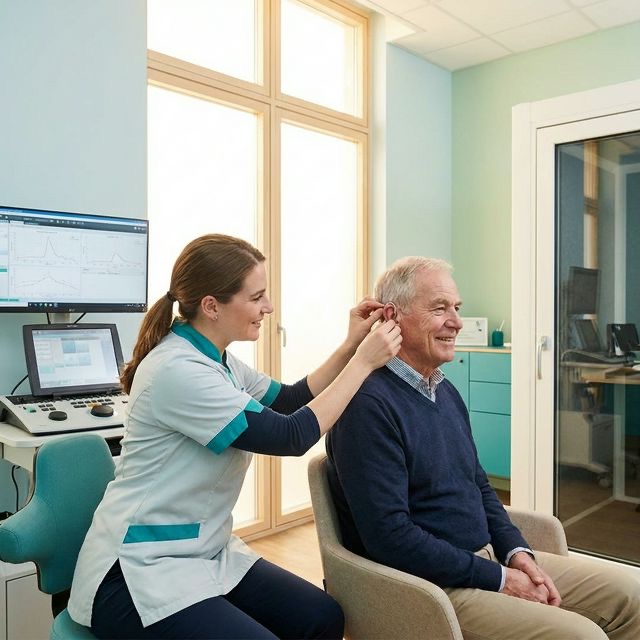
Australia is facing a confirmed nationwide shortage of audiologists - and it's only getting worse. An ageing population, expanded NDIS hearing services, and Medicare rebates for diagnostic audiology have created sustained demand across every state and territory. For audiologists from the UK, USA, India, South Africa, Taiwan, Hong Kong, and China, this opens a rare migration window: ANZSCO 252711 sits on the Core Skills Occupation List (CSOL), VETASSESS handles the skills assessment, and the profession is transitioning to full AHPRA regulation - a move that will formalise (and potentially streamline) overseas practitioner pathways. No comprehensive migration guide for audiologists exists until now.
This guide covers the complete pathway - from VETASSESS skills assessment and Audiology Australia clinical recognition through to visa selection, points strategy, and the upcoming AHPRA transition - so you can plan your move with confidence.
Why Audiologists Are in Demand
Jobs and Skills Australia (JSA) has classified Audiologist as a national shortage occupation across all states and territories. Three converging forces are driving this demand:
| Factor | Detail |
|---|---|
| Ageing population | 1 in 6 Australians has hearing loss; projected to rise to 1 in 4 by 2050 |
| NDIS expansion | NDIS funds hearing aids, cochlear implant services, and auditory rehabilitation for eligible participants |
| Medicare rebates | Since March 2023, GPs can refer patients directly for diagnostic audiology under Medicare |
| ANZSCO code | 252711 - Audiologist |
| Occupation list | CSOL - eligible for 482/SID and 186 Direct Entry; also eligible for 189, 190, and 491 via SkillSelect |
| Skill level | Skill Level 1 (Bachelor's degree or higher) |
| Median salary | ~$102,000 AUD per year (government data); senior roles $110,000-$130,000+ |
| Assessing authority | VETASSESS |
ANZSCO 252711 covers audiologists who provide diagnostic assessment and rehabilitative services for hearing and balance disorders. This includes audiometry, vestibular testing, tinnitus management, cochlear implant programming, and auditory processing assessments. If your role is primarily in hearing aid sales or acoustics engineering, you may fall under a different ANZSCO classification. Use our ANZSCO Search tool to confirm your code.
Industry Snapshot: Audiology in Australia
The audiology sector in Australia is growing - and shows no sign of slowing:
| Metric | Value |
|---|---|
| People with hearing loss | 3.6 million (2024); projected 7.8 million by 2060 |
| Audiologists employed | ~3,767 (2025, IBISWorld) |
| Audiology businesses | 626 nationally (3.4% annual growth 2020-2025) |
| Industry revenue growth | 3.6% in 2024-25; 1.7% annualised over 5 years |
| Demand growth rate (NSW) | 1.2-1.4% annually (NSW Health workforce modelling) |
| Age-related prevalence | 5% under 50; 33% in 50s; 50% in 60s; 75% over 70 |
The numbers tell a clear story: Australia needs more audiologists, and the gap between supply and demand is widening - particularly in regional areas and for paediatric services.
Visa Pathways at a Glance
Because Audiologist is on the CSOL and eligible for points-tested visas through SkillSelect, you have access to Australia's most favourable skilled visa pathways - including permanent residency and employer sponsorship.
| Visa | Type | Key Feature | PR Outcome |
|---|---|---|---|
| 189 Skilled Independent | Points-tested | No sponsor or state nomination needed | Immediate PR |
| 190 State Nominated | Points-tested | +5 points from state nomination | Immediate PR |
| 491 Skilled Work Regional | Points-tested | +15 points; live in regional area for 3 years | PR via 191 |
| 482/SID Core Skills | Employer-sponsored | Employer nominates; listed on CSOL | PR via 186 TRT (2 years) |
| 186 Direct Entry | Employer-sponsored | Immediate PR; 3-year experience requirement | Immediate PR |
Audiologists working in regional and remote areas are in particularly high demand. The 491 Skilled Work Regional visa gives you +15 points and a clear pathway to permanent residency - and regional Australia includes major centres like Gold Coast, Perth, and the entire ACT (Canberra). Explore your options on our skilled visa pathways page.
State nomination requirements and occupation lists are subject to change. Please confirm current availability before applying.
Skills Assessment: VETASSESS
For points-tested visas (189, 190, 491) and employer-sponsored visas requiring assessment, you need a positive skills assessment from VETASSESS - the designated assessing authority for Audiologist (ANZSCO 252711).
What VETASSESS Requires
| Requirement | Detail |
|---|---|
| Qualification | Bachelor's degree or higher in Audiology, Clinical Audiology, or Audiological Studies (AQF comparable) |
| Employment | At least 1 year of post-qualification, highly relevant employment in the last 5 years |
| Hours | 20+ hours per week |
| Skill level | Employment must be at an appropriate skill level (Skill Level 1) |
| Processing time | Approximately 12-16 weeks |
Both qualifications and employment must be assessed positively for an overall positive outcome.
What Counts as "Highly Relevant"
VETASSESS will assess whether your qualification and employment are directly relevant to audiology. Core duties should include:
- Diagnostic audiometric assessment (pure-tone audiometry, speech audiometry, OAE, ABR)
- Vestibular and balance function testing
- Tinnitus assessment and management
- Hearing aid fitting, programming, and rehabilitation
- Cochlear implant mapping and post-operative care
- Auditory processing disorder assessment
- Paediatric audiology
Common rejection trap: If your degree is titled "Speech and Hearing Sciences" or a combined speech pathology/audiology qualification, VETASSESS will scrutinise the course content carefully. You must demonstrate that the audiology component of your degree is equivalent to a standalone Australian audiology programme. Provide a detailed curriculum breakdown showing course hours specifically in audiology subjects.
English Language for VETASSESS
VETASSESS itself does not set an English language requirement for the skills assessment. However, your visa application will require at least Competent English - and higher scores earn valuable points:
| Test | Competent (minimum) | Proficient (+10 pts) | Superior (+20 pts) |
|---|---|---|---|
| IELTS | 6.0 each band | 7.0 each band | 8.0 each band |
| PTE Academic | 50 each component | 65 each component | 79 each component |
| OET | B each component | B each component | A each component |
OET is well-suited for health professionals - the test uses clinical healthcare scenarios, making it a natural fit for audiologists.
How Much Does a VETASSESS Assessment Cost?
| Item | Fee (AUD) | Notes |
|---|---|---|
| Full skills assessment | $1,096 | Effective from 22 October 2025 |
| Priority processing (optional) | $825 | Reduces turnaround time significantly |
| Skills assessment renewal | $473 | If your original assessment has expired |
| Appeal (if needed) | $1,082 | Formal reconsideration of outcome |
| Reassessment - change of occupation | $745 | If switching ANZSCO code |
GST applies if you lodge from within Australia. Fees are indexed annually - check the VETASSESS website for current prices.
Country-Specific Qualification Guide
Audiologist qualifications vary significantly by country. The table below shows how your home-country degree maps to the Australian standard for the VETASSESS skills assessment and Audiology Australia overseas pathway:
| Country | Typical Qualification | Registration Body | Key Considerations for VETASSESS |
|---|---|---|---|
| United Kingdom | BSc Healthcare Sciences (Audiology) - 3 years | HCPC | Generally well-aligned; ensure clinical audiology hours are documented |
| United States | Doctor of Audiology (AuD) - 4 years post-BSc | State License + ASHA/ABA | Exceeds minimum qualification level; strong assessment outcome expected |
| India | BASLP (4 years) or BSc/MSc Audiology | Rehabilitation Council of India | Combined BASLP degrees need curriculum breakdown proving audiology content equivalent to standalone programme |
| South Africa | BSc Audiology (4 years) + community service | HPCSA | English test exemption for Audiology Australia Stage 1; generally strong alignment |
| Taiwan (台灣) | BSc Speech-Language Pathology & Audiology (4 years) | MOHW (衛福部) | Must demonstrate audiology-specific coursework hours separately from SLP content |
| Hong Kong (香港) | BSc/MSc Audiology or Speech & Hearing Sciences | HKISHP | Ensure degree curriculum shows sufficient standalone audiology subjects |
| China (中國) | BSc Audiology or BSc Rehabilitation Sciences | - | Master's level preferred for stronger VETASSESS outcome; provide detailed curriculum translation |
For applicants from India and Taiwan: Your combined audiology/speech pathology degree is the most common cause of VETASSESS queries. Proactively request a detailed curriculum breakdown from your university showing the total hours dedicated to audiology-specific subjects (pure-tone audiometry, vestibular testing, amplification, paediatric audiology, etc.) versus speech pathology subjects. This single document can make or break your assessment outcome.
Audiology Australia does not maintain a list of pre-approved equivalent degrees. All overseas qualifications are assessed individually against the competencies required of an Australian Master of Clinical Audiology graduate. A Master's degree is not required, but it significantly strengthens your Stage 1 application.
Professional Registration: Audiology Australia (Current) & AHPRA (Future)
Skills assessment and visa approval get you into Australia - but to practise as an audiologist, you need professional recognition. This is currently managed by Audiology Australia, though a major transition to AHPRA regulation has been announced.
Current Pathway: Audiology Australia
Overseas-qualified audiologists must complete a three-stage pathway through Audiology Australia:
| Stage | What's Involved | Timing |
|---|---|---|
| Stage 1 | Submit qualifications, transcripts, detailed curriculum, and proof of 200+ clinical experience hours | Rolling applications |
| Stage 2 | Sit the Audiology Australia Overseas Exam (held April and October each year) | Exam sittings twice yearly |
| Stage 3 | Membership acceptance - become an Audiology Australia member | Post-exam |
| Stage 4 | Complete a supervised clinical internship to become an Accredited Audiologist | ~1 year |
New Zealand-accredited audiologists may be exempt from the Stage 2 overseas exam. Contact Audiology Australia for specific exemption criteria.
Future: AHPRA Regulation (Announced September 2025)
In September 2025, Australia's health ministers agreed to regulate audiology under the National Registration and Accreditation Scheme (NRAS) through AHPRA. This is a landmark change that will bring audiologists in line with other regulated health professions such as nursing, physiotherapy, and optometry.
| Milestone | Expected Timing |
|---|---|
| Policy development begins | First half 2026 |
| Targeted and public consultations | Second half 2026 |
| Legislative amendments | 2028 |
| National Board established; registration commences | ~2030 |
What this means for overseas audiologists:
- The current Audiology Australia pathway remains the operative route for the foreseeable future
- Once AHPRA assumes regulation (~2030), a formal national registration system will apply - similar to AHPRA-registered professions like nursing and optometry
- AHPRA is exploring streamlined pathways for experienced internationally qualified practitioners, which may eventually benefit audiologists
- Early movers who arrive and register via the current pathway will likely transition seamlessly into the new AHPRA framework
The AHPRA transition is a multi-year process. Do not wait for it to complete before beginning your migration - the current pathway through Audiology Australia is fully operational, and the national shortage means jobs are available now.
Points Test Strategy for Audiologists
For 189, 190, and 491 visas, you must score at least 65 points (including any nomination points). Here's a realistic scenario:
| Factor | Points | Notes |
|---|---|---|
| Age (25-32) | 30 | Maximum age points |
| English (Proficient - IELTS 7.0) | 10 | Superior (8.0) earns 20 points |
| Overseas experience (3-4 years) | 5 | 5+ years = 10 points; 8+ years = 15 points |
| Qualification (Bachelor's degree) | 15 | Master's in clinical audiology also scores 15 |
| Australian study (if applicable) | 5 | 2+ years of study in Australia |
| State nomination (190) | +5 | Or +15 for 491 regional nomination |
| Estimated total (190) | 70 | Well above the 65-point minimum |
Use our free GSM Points Calculator to estimate your score and identify where you can gain additional points.
Points thresholds and invitation rounds vary by occupation and programme year. Always verify current requirements with the Department of Home Affairs.
Audiologist Salary Guide: What to Expect in Australia
Audiologist salaries in Australia vary by setting, location, and experience level:
| Setting | Salary Range (AUD) | Notes |
|---|---|---|
| Public hospital - new graduate | $72,000-$85,000 | Federal/state enterprise agreement rates |
| Public hospital - senior | $90,000-$115,000 | Clinical specialist or team lead roles |
| Private practice - employee | $80,000-$110,000 | Varies by clinic size and patient volume |
| Private practice - owner | $120,000-$180,000+ | Depends on NDIS/HSP/Medicare billing volume |
| Mining/occupational audiometry | $110,000-$140,000 | FIFO roles; premium for remote locations |
| Cochlear implant specialist | $100,000-$130,000 | Hospital-based; requires advanced CI mapping skills |
| Paediatric audiologist | $85,000-$115,000 | High demand; often public health sector |
| Research/academic | $95,000-$130,000 | University clinics; NAL research positions |
| Teleaudiology/remote services | $85,000-$120,000 | Growing rapidly; particularly in regional service delivery |
The median annual salary for audiologists is approximately $102,000 (government data). Regional and remote positions often attract a 10-25% salary premium plus relocation packages.
Where Audiologists Are Needed Most
The national shortage means audiologists are in demand across Australia, but some areas offer particularly strong opportunities:
Regional & Remote Australia
Regional areas face the most acute shortages. The 491 visa pathway is especially attractive here:
| Region | Why It's Strong |
|---|---|
| Tasmania | Small population, limited audiology services; state nomination favourable |
| South Australia | Adelaide and regional SA actively seeking allied health professionals |
| Northern Territory | Indigenous hearing health is a national priority; remote service demand |
| Western Australia | Mining regions require occupational audiometry services |
| Regional Queensland | Ageing population in regional centres; NDIS service gaps |
Metropolitan Centres
| City | Key Employers |
|---|---|
| Melbourne | Major hospital audiology departments, Cochlear Ltd (HQ), private practices |
| Sydney | National Acoustic Laboratories (NAL), Macquarie University Hearing Hub, hospital clinics |
| Brisbane | Growing allied health sector; university-linked clinics |
| Perth | Mining sector audiometry; clinical audiology positions at major hospitals |
State nomination requirements and occupation lists change frequently. Always confirm current list availability and specific criteria before submitting an EOI. Contact a registered migration agent for up-to-date advice.
NDIS, Medicare & Business Opportunities
Working as an audiologist in Australia offers revenue streams beyond standard clinical appointments:
NDIS (National Disability Insurance Scheme)
The NDIS provides funding for hearing-related supports for eligible Australians aged 0-65 with permanent and significant hearing loss. Services include:
- Hearing aid fitting and maintenance
- Cochlear implant services
- Assistive listening devices
- Auditory rehabilitation programmes
- Auditory processing disorder therapy
Audiologists can register as NDIS providers and bill directly for these services.
Medicare Rebates
Since March 2023, Medicare provides rebates for diagnostic hearing tests when referred by a GP, ENT specialist, or neurologist. This means patients can access bulk-billed or gap-billed diagnostic audiology - expanding the client base for private practices.
Additionally, patients with chronic conditions may access audiology services under a Chronic Disease Management Plan (CDMP), which provides Medicare rebates for up to five allied health services per calendar year.
Hearing Services Program (HSP)
The Australian Government's Hearing Services Program provides free or subsidised hearing assessments and hearing aids for pensioners, veterans, individuals under 26, and eligible Aboriginal and Torres Strait Islander Australians. Accredited audiologists can participate in this programme as contracted providers.
Employer-Sponsored Pathways
For audiologists with job offers from Australian hospitals, clinics, or hearing services providers:
| Pathway | Minimum Salary | Skills Assessment | Best For |
|---|---|---|---|
| SID Core Skills | $76,515 (CSIT) | Required | Mid-career audiologists at hospitals or clinics |
| SID Specialist Skills | $141,210 (SSIT) | Not required | Senior clinical research leads; hearing programme directors |
| 186 Direct Entry | $76,515 (CSIT) | Required | Senior hires wanting immediate PR |
Visa Application Fees
| Visa | Primary Applicant | Partner | Child (under 18) |
|---|---|---|---|
| 189 | $4,910 | $2,455 | $1,230 |
| 190 | $4,910 | $2,455 | $1,230 |
| 491 | $4,910 | $2,455 | $1,230 |
| 482/SID | $3,210 | $3,210 | $805 |
| 186 | $4,910 | $2,455 | $1,230 |
Fees shown are current as of July 2025 and are subject to annual indexation (typically 1 July each year). Verify the latest fees on the Department of Home Affairs fees page.
Total Migration Cost Estimate
Planning your budget? Here's a realistic breakdown of the total costs involved in migrating to Australia as an audiologist:
| Cost Item | Estimated Cost (AUD) | Notes |
|---|---|---|
| English test (IELTS/PTE/OET) | $300-$600 | Varies by test and location |
| VETASSESS skills assessment | $1,096 | From October 2025; priority processing +$825 |
| Audiology Australia Stage 1 assessment | $500-$800 | Documentary assessment fee |
| Audiology Australia overseas exam | $800-$1,200 | Stage 2 examination fee |
| Audiology Australia membership | $300-$500/year | Annual membership fee |
| Visa application fee (189/190/491) | $4,910 | Primary applicant; partner/child additional |
| Health examination | $400-$600 | Required for visa; varies by country |
| Police clearances | $50-$200 | Per country; varies |
| Migration agent fees | $3,000-$6,000 | Optional but recommended for complex cases |
| Estimated total (single applicant) | $11,000-$16,000 | Excluding relocation and settlement costs |
Many Australian employers - particularly hospitals and large audiology networks - offer relocation packages that cover visa costs and flights for sponsored positions. If you have a job offer, ask about employer-funded migration support before paying out of pocket.
Typical Timeline: Audiologist to PR
| Step | Timeframe | Notes |
|---|---|---|
| 1. English test (IELTS/PTE/OET) | 2-4 weeks | Book early; OET recommended for health professionals |
| 2. VETASSESS skills assessment | 12-16 weeks | Ensure 1+ year of post-qualification experience |
| 3. Submit EOI in SkillSelect | 1 day | Select 189 + preferred states for 190/491 |
| 4. Receive invitation | Variable | Depends on points score and round frequency |
| 5. Lodge visa application | 60 days from invitation | Health exams, police checks within this period |
| 6. Visa grant (189/190) | 6-12 months | Processing times vary; healthcare may receive priority |
| 7. Audiology Australia pathway | 6-12 months | Can begin concurrently with visa processing |
Start the Audiology Australia overseas exam pathway early. Since the exam is only held in April and October, align your application timeline to avoid waiting 6 months for the next sitting. You can begin this process while your visa is being processed.
Frequently Asked Questions
How long does it take to migrate to Australia as an audiologist?
From start to finish, expect 12-18 months for the entire process. The main milestones are: VETASSESS assessment (12-16 weeks), SkillSelect EOI and invitation (variable), visa lodgement and grant (6-12 months), and Audiology Australia pathway (6-12 months, can run concurrently with visa processing). The Audiology Australia overseas exam schedule (April and October only) is the most common cause of delay - plan around it.
Do I need a Master's degree to migrate as an audiologist?
No. VETASSESS requires a Bachelor's degree or higher in Audiology at AQF-comparable level. However, for the Audiology Australia overseas practitioner pathway, a Master's degree significantly strengthens your Stage 1 documentary assessment, as the Australian standard is a Master of Clinical Audiology. Applicants with Bachelor's degrees should provide comprehensive curriculum evidence showing equivalent audiology content.
Is audiology regulated by AHPRA?
Not yet. As of 2026, audiology is not registered under AHPRA. Australia's health ministers agreed in September 2025 to bring audiology under AHPRA regulation, but full implementation is expected around 2030. Until then, the Audiology Australia pathway remains the operative professional recognition route. Do not wait for the AHPRA transition - it is years away, and jobs are available now.
Can I work as an audiologist before completing the Audiology Australia overseas pathway?
You can work in audiology-adjacent roles (e.g., audiometrist, hearing aid dispenser assistant, research assistant) while completing the pathway. However, to practise independently as an Accredited Audiologist, you must complete all four stages of the Audiology Australia overseas pathway: documentary assessment, overseas exam, membership acceptance, and the supervised clinical internship.
What is the difference between an audiologist and an audiometrist in Australia?
An audiologist holds a university degree in clinical audiology (typically Master's level in Australia) and can perform diagnostic assessments, vestibular testing, cochlear implant programming, tinnitus management, and complex rehabilitation. An audiometrist completes a TAFE diploma and performs hearing screening and basic hearing aid fitting. Both roles are in demand, but they have different ANZSCO codes and migration pathways. This guide covers audiologists (ANZSCO 252711) only.
Which English test is best for audiologists?
The OET (Occupational English Test) is widely regarded as the best choice for health professionals, including audiologists. The test uses clinical healthcare scenarios - case notes, patient consultations, and referral letters - that closely mirror your daily work. IELTS and PTE Academic are also accepted. For maximum points, aim for Superior English (IELTS 8.0 / PTE 79 / OET A in each component) to gain 20 additional points.
Can my spouse work in Australia on my visa?
Yes. Partners included on 189, 190, and 186 visas receive full work rights with no restrictions. Partners on a 491 visa can work, but only in a designated regional area. Partners on a 482/SID visa also receive full work rights. If your partner is also a skilled professional, their occupation may qualify for additional points (partner skills points) on your application.
How much does an audiologist earn in Australia compared to the UK, USA, and India?
| Country | Typical Salary (AUD equivalent) | Notes |
|---|---|---|
| Australia | $80,000-$130,000+ | Plus super (11.5%); Medicare/NDIS billing |
| UK | $55,000-$80,000 | NHS Band 6-7 |
| USA | $90,000-$120,000 | Varies significantly by state |
| India | $8,000-$15,000 | Major metro private hospitals |
| South Africa | $15,000-$30,000 | Public and private sector |
Australian salaries include 11.5% employer superannuation (retirement) on top of base salary. Regional positions often include additional salary loadings and relocation packages.
What are the Audiology Australia overseas exam dates?
The Audiology Australia overseas exam is held twice per year: typically in April and October. Exact dates are published on the Audiology Australia website. Study materials, including past papers and workshop recordings, are provided after your Stage 1 documentary assessment is approved. Plan your timeline around these fixed exam dates to avoid a 6-month wait.
How First Migration Can Help
Audiologist migration requires careful coordination across three parallel processes: VETASSESS skills assessment, visa application, and Audiology Australia professional recognition. Timing each step correctly - and choosing the right visa pathway for your circumstances - can make the difference between a smooth transition and months of unnecessary delay.
At First Migration Service Centre, our registered migration agents specialise in skilled visa pathways and can help you:
- Select the optimal visa pathway based on your points score, work experience, and family situation
- Navigate the VETASSESS assessment with guidance on qualification matching and employment evidence
- Time your Audiology Australia registration alongside your visa processing for maximum efficiency
- Target the right state nomination (Tasmania, SA, NT, or others) based on current list availability
- Coordinate employer sponsorship if you have a job offer from an Australian hospital, clinic, or hearing services provider
Ready to take the next step? We invite you to submit a free visa assessment so we can understand your situation and provide tailored advice.
RMA R. Weng
MARA 1569835Registered Migration Agent | Master of Laws (ANU) | Bachelor of Laws (Deakin)
Certified by the Migration Agents Registration Authority (MARA). Specializing in skilled migration, employer-sponsored visas, and partner visas. Admitted to practice law in Victoria.
Related Articles

CCS 3-Day Guarantee + 1 July 2026 Reset: What PR-Pathway Families Actually Get
HECS-HELP 2.8% Indexation on 1 June 2026: Why PR Doesn't Unlock the Loan
Paid Parental Leave 26 Weeks + 12% Super: 1 July 2026 Visa Guide
Disclaimer: This information is general in nature and does not constitute formal migration advice. Immigration laws and policies change frequently. Always consult a MARA-registered migration agent for advice specific to your circumstances. First Migration Service Centre (MARA 1569835) provides this content for informational purposes only.
MARA Registered Agent
Registration No. 1569835
Certified by the Migration Agents Registration Authority. Your trusted partner for Australian visa applications.
CCS 3-Day Guarantee + 1 July 2026 Reset: What PR-Pathway Families Actually Get
HECS-HELP 2.8% Indexation on 1 June 2026: Why PR Doesn't Unlock the Loan
Paid Parental Leave 26 Weeks + 12% Super: 1 July 2026 Visa Guide

Onshore vs Offshore Partner Visa in 2026-27: Why the 820 Queue Now Moves Faster Than 309
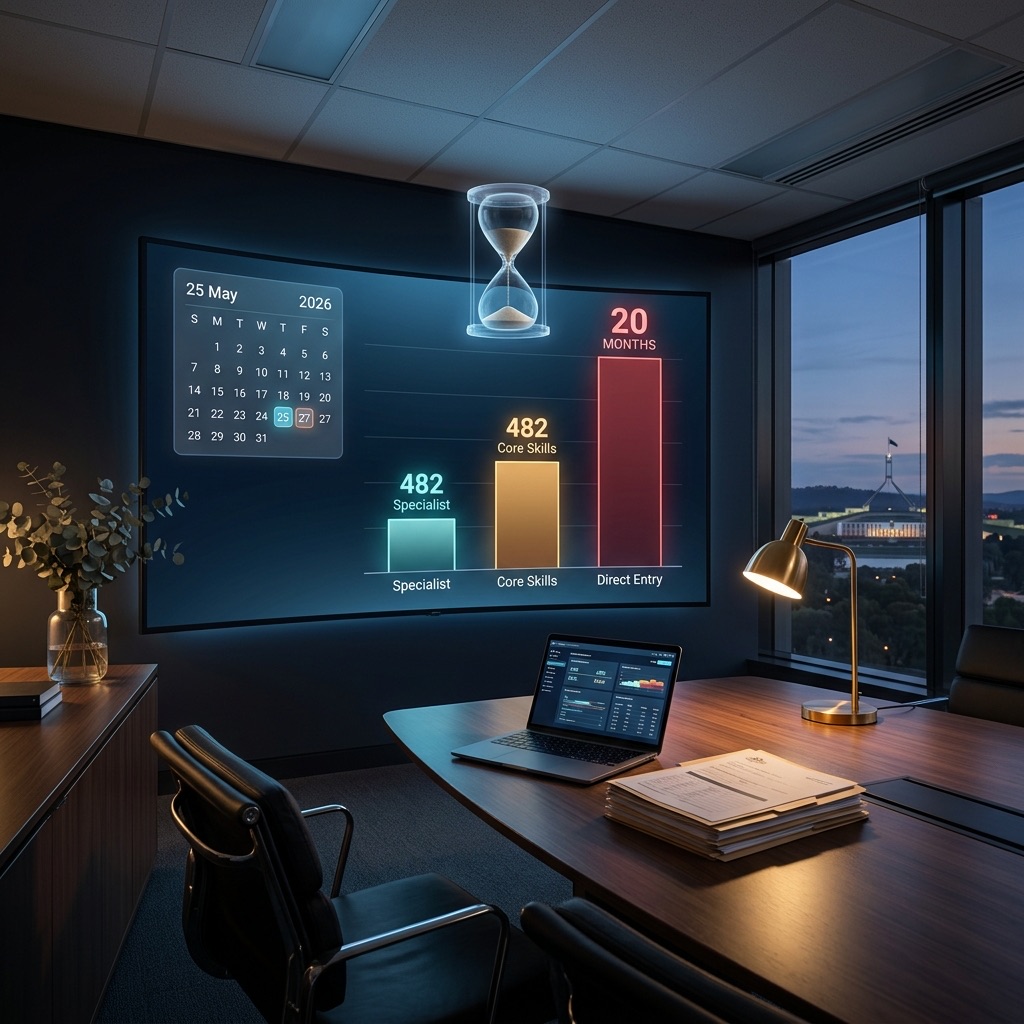
Home Affairs Processing Times May 2026: 186 Now 20 Months at 90%
Office Hours
Mon-Fri: 9AM-5PM Sat: 10AM-2PM